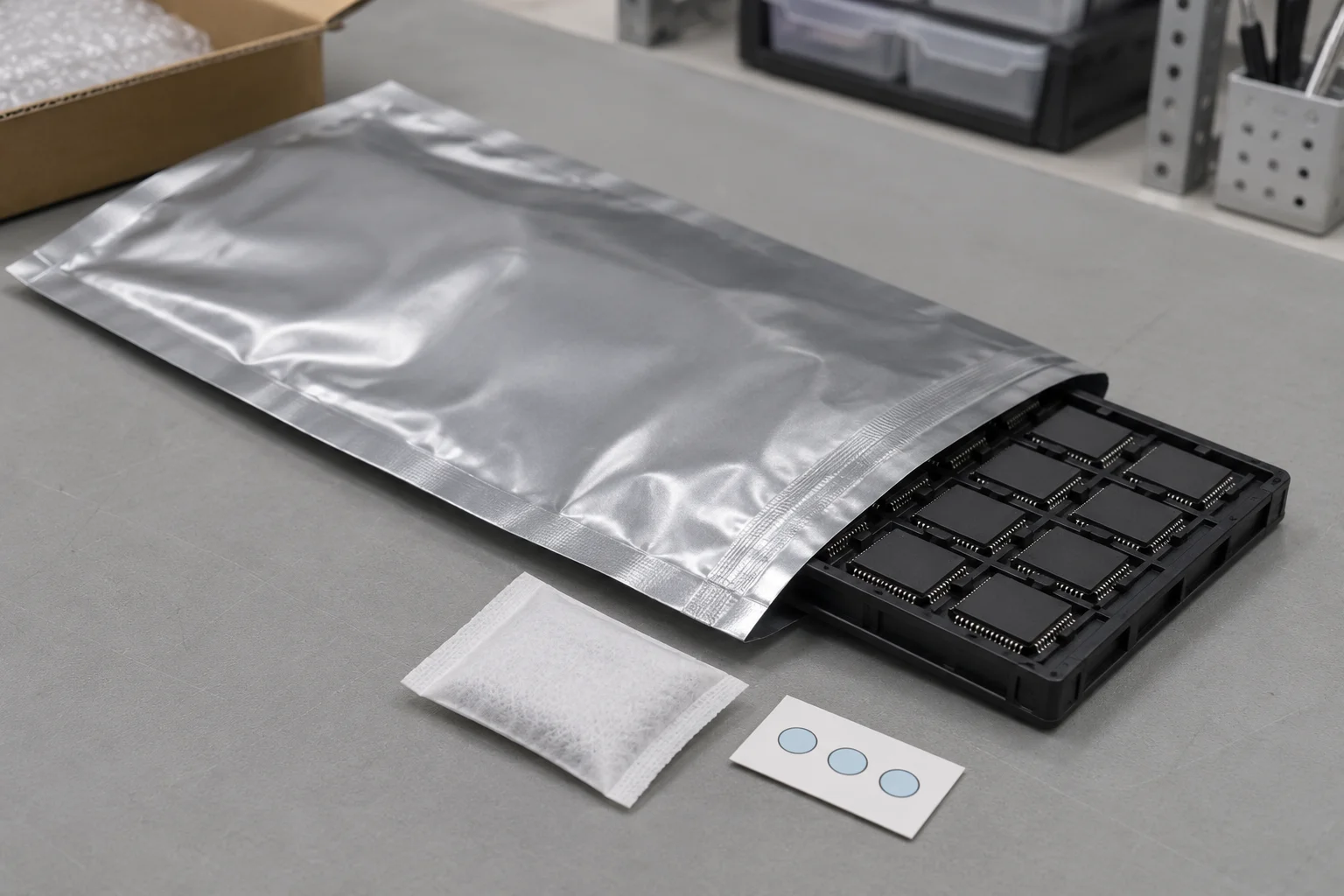
A buyer may select a pouch with excellent moisture barrier film and a convenient zipper, then assume that every reclosure restores the original protection. It does not. Once a bag is opened, the internal environment changes; after it is closed, the zipper, user technique and the condition of the contents all affect what happens next.
Resealable moisture barrier bags can be highly practical for repeated-access inventory. The question is whether the product needs moisture resistance between accesses or a qualified, controlled dry-pack environment. Those are different specifications and should not be marketed as equivalent.
What “resealable” actually promises
Resealable describes a closure function, usually a press-to-close zipper or another reusable mechanism. Moisture barrier describes the material and package's resistance to water vapor movement. Neither claim automatically establishes the other.
A pouch may be fabricated with foil or metallized laminate and include a zipper above or below an initial heat seal. Before its first opening, the heat seal may be the principal closure. Once that seal is cut away, protection depends on the zipper and how users close it. The initial film WVTR still matters, but it is not a measure of repeated-use zipper leakage.
The distinction matters for distributors opening a package several times per day, a repair center retrieving small parts, or a kit assembly line replenishing stations from a common bulk bag. In these settings, user convenience and access frequency are real operating costs—not just ergonomic extras.
Three use cases, three acceptable closure strategies
Inventory situation | Likely strategy | What must be proven |
|---|---|---|
Noncritical industrial components accessed daily | Resealable pouch with suitable moisture resistance | Zipper durability, useful reduction in ambient exposure |
Sensitive goods stored between infrequent withdrawals | Resealable high-barrier laminate with validated procedure | Closed-package performance after repeated cycles, humidity monitoring if needed |
Moisture-sensitive surface-mount devices requiring formal dry packing | Appropriate heat-sealed dry-pack system; reusable features only if qualified | Device handling standard, dry-pack process, HIC/desiccant and seal requirements |

The last row is particularly important. Texas Instruments' dry-pack handling report discusses preserving material for possible resealing, examining humidity indication and using new dry desiccant when repacking. It references an older JEDEC edition; the governing requirements for a current assembly process should be checked with the device manufacturer and the applicable IPC/JEDEC document. Closing a zipper does not automatically reset the component's moisture-exposure history.
Film WVTR does not measure a repeatedly closed zipper
The usual film-level measure of moisture barrier performance is WVTR. ASTM F1249-25 describes a method for testing water vapor transmission through film. It is highly relevant when comparing candidate laminates—but a flat specimen cannot tell you how much humidity enters at the pouch opening after operators have used the zipper repeatedly.
A finished-bag evaluation should separately address the perimeter seals, zipper area, opening geometry and user handling. If the product is sensitive, the acceptance criteria should include a credible way to check package condition over time. A seal-strength method such as ASTM F88/F88M-23 can support heat-seal process control, but is not a universal test for all zipper leakage pathways.
For example, a pouch can pass a flat-film WVTR comparison and still fail operationally because powder collects inside the zipper profile. Conversely, a more convenient reclosure may be sufficient for low-risk items where humidity control is only a precaution, not a validated dry-pack obligation.
Zipper durability is an operational quality question
A practical trial should resemble actual inventory handling. Fill the pouch with the real parts and protective materials. Have operators open and reclose it at the expected frequency, including when wearing gloves if applicable. Observe whether the track stays clean, whether the seal fully engages, whether the bag creases near the zipper ends, and whether the closure remains usable after handling.
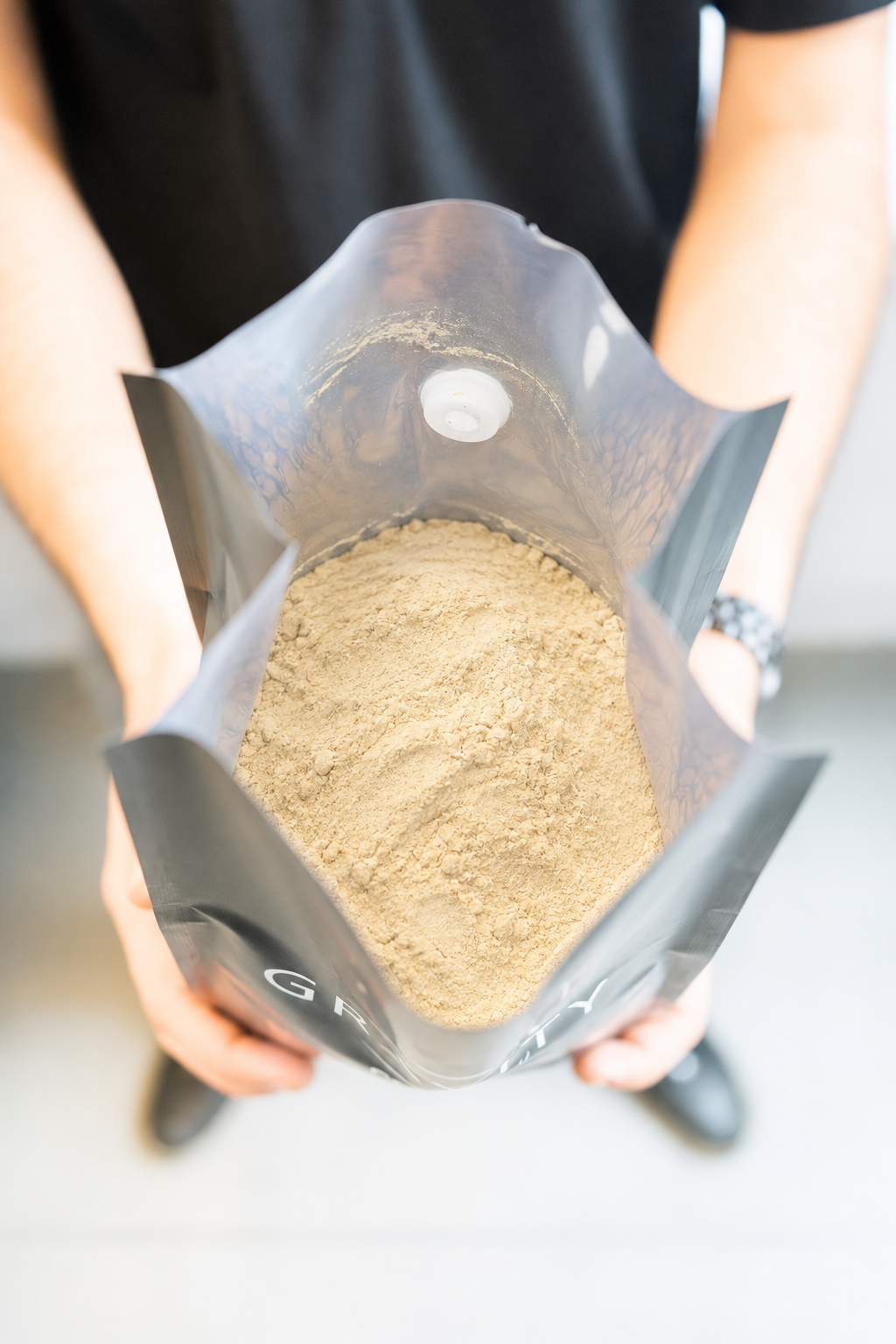
Do not confuse a subjective “tight snap” with a measured vapor barrier. If closed-package moisture performance is critical, agree on an application-specific test plan with the supplier or laboratory before sampling. Record opening cycles, temperature, ambient humidity, duration, sampling method and pass/fail criteria. Avoid inventing a generic number of cycles that every bag must survive.
The physical pouch should also be sized to leave clearance for the contents and closures. A bag that is overfilled or whose sharp contents rub the top track can lose practical reusability despite high-quality film.
When do ESD requirements change the choice?
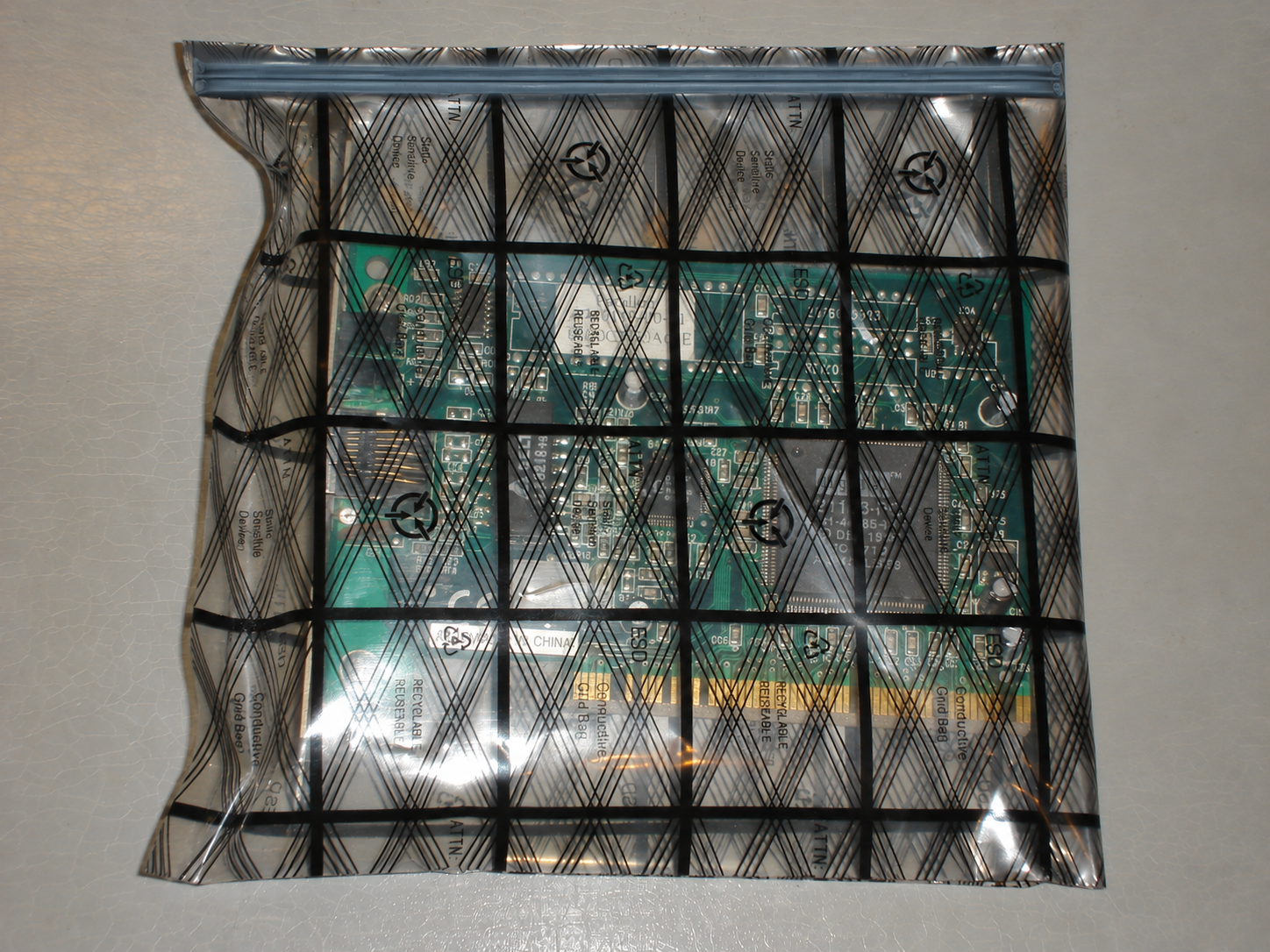
Electronics and static-sensitive components add a separate protection dimension. ANSI/ESD S541-2026 defines packaging properties intended to protect ESD-sensitive items through manufacturing, transport and storage. The phrases “antistatic zipper pouch,” “moisture barrier” and “ESD shielding bag” should not be treated as synonyms.
A resealable bag can use a moisture-resistant laminate yet lack suitable electrical shielding. Alternatively, a static-control bag can have electrical properties without enough water vapor resistance for a moisture-sensitive device. Request the actual material's applicable electrical data and confirm how the complete package fits the handling process.
As a useful market comparison—not a claim that every zipper product qualifies—SCS sells Dri-Shield 2000 as a specified moisture/ESD protective heat-sealable construction. That illustrates why functional performance data must come from a named product rather than generic words printed on a bag.
What to put in a repeat-use packaging RFQ
Ask for the bag's material construction, nominal dimensions, film WVTR with test conditions, intended closure design, availability of an initial heat seal, physical durability and applicable ESD properties. Then specify your own repeated-use scenario: contents, ambient exposure, expected cycles, storage duration and whether an HIC or desiccant is part of the process.
The supplier should be able to distinguish tested data from recommended use. If no closed-package or cycle data exist, treat that as a qualification gap—not a reason to invent a performance claim. A sample trial may show that a basic zipper works for general parts, while another product requires rebagging or renewed heat sealing after every opening.
What this means for CPG and packaging leaders
For packaging and operations leaders, resealability is valuable only when it supports a clear use model. Map how often stock is accessed, who recloses it, and what failure would cost. Give quality ownership of moisture and closure acceptance criteria. Give procurement ownership of cost per successful use cycle, not simply the cost per empty bag. For formal electronics dry-pack programs, prioritize the qualified protection process over zipper convenience.
Bottom line: Buy resealable moisture barrier bags for a validated repeated-access workflow, not on the assumption that every zipper reproduces a factory heat seal.