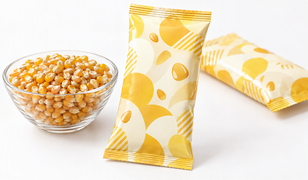
Unpopped popcorn kernels
Raw popcorn kernels need moisture-resistant packaging to maintain freshness and preserve popping performance during storage.
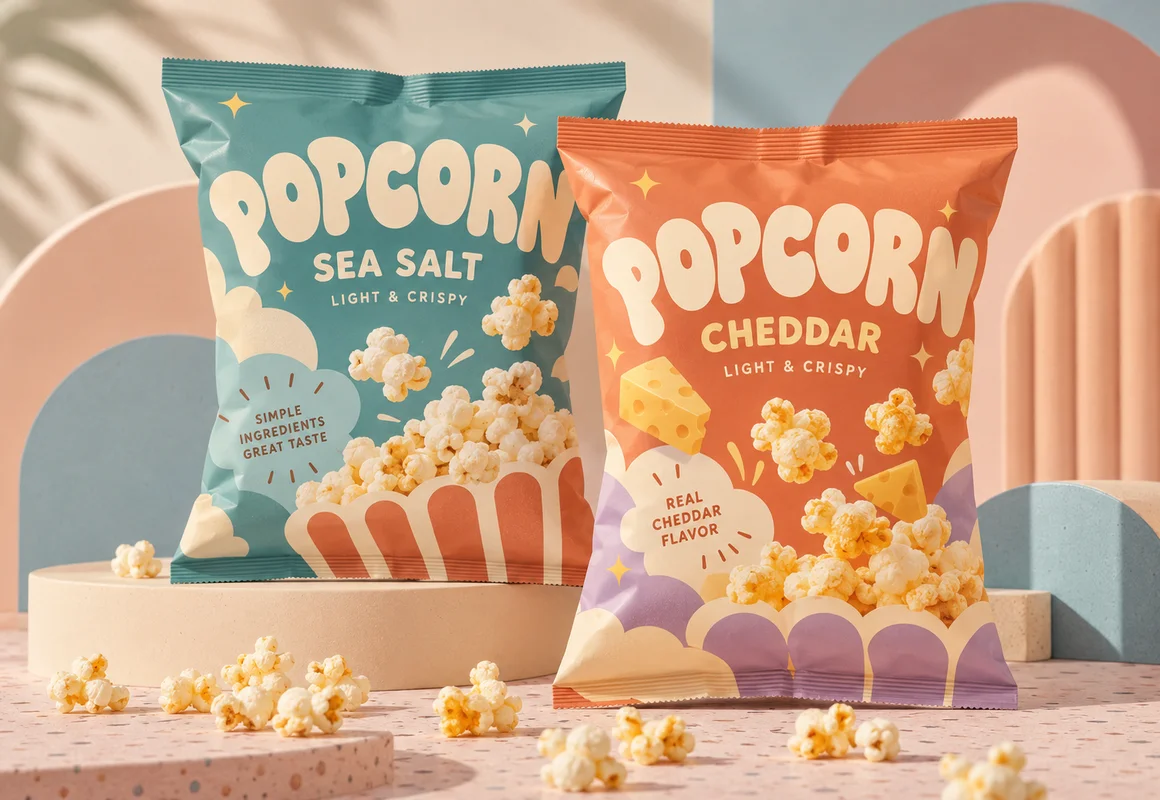
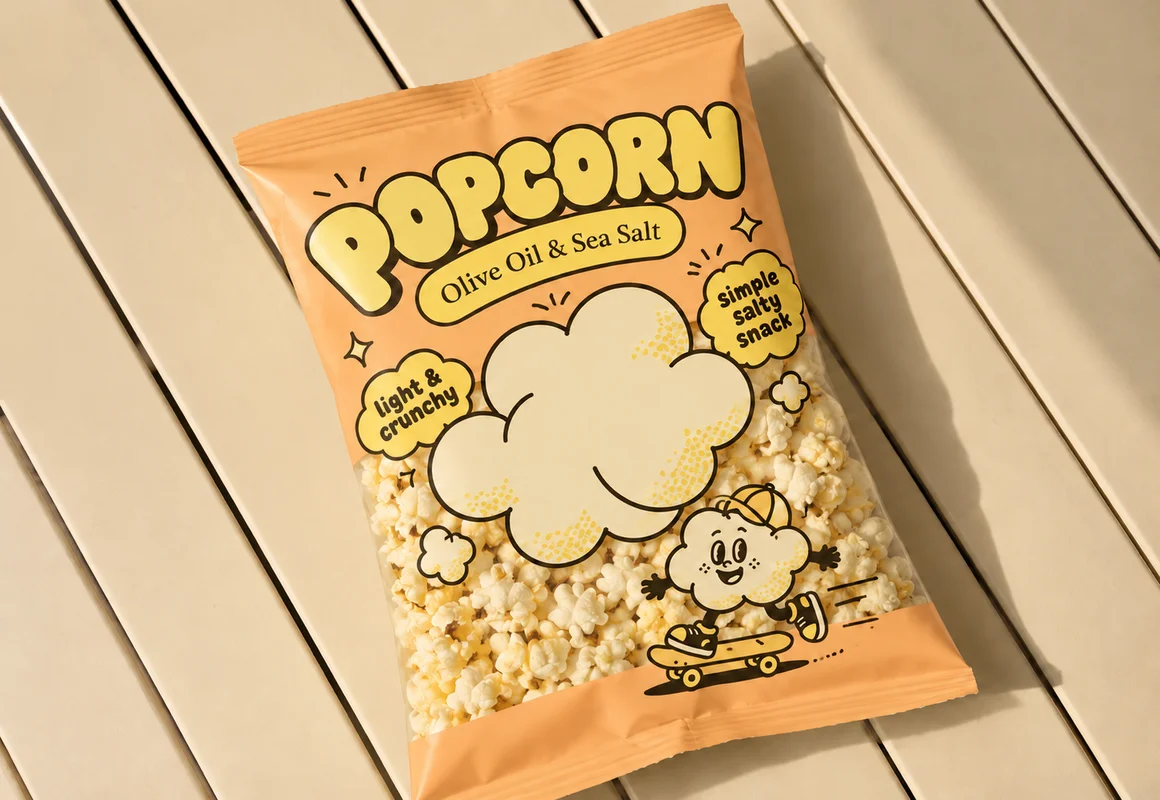
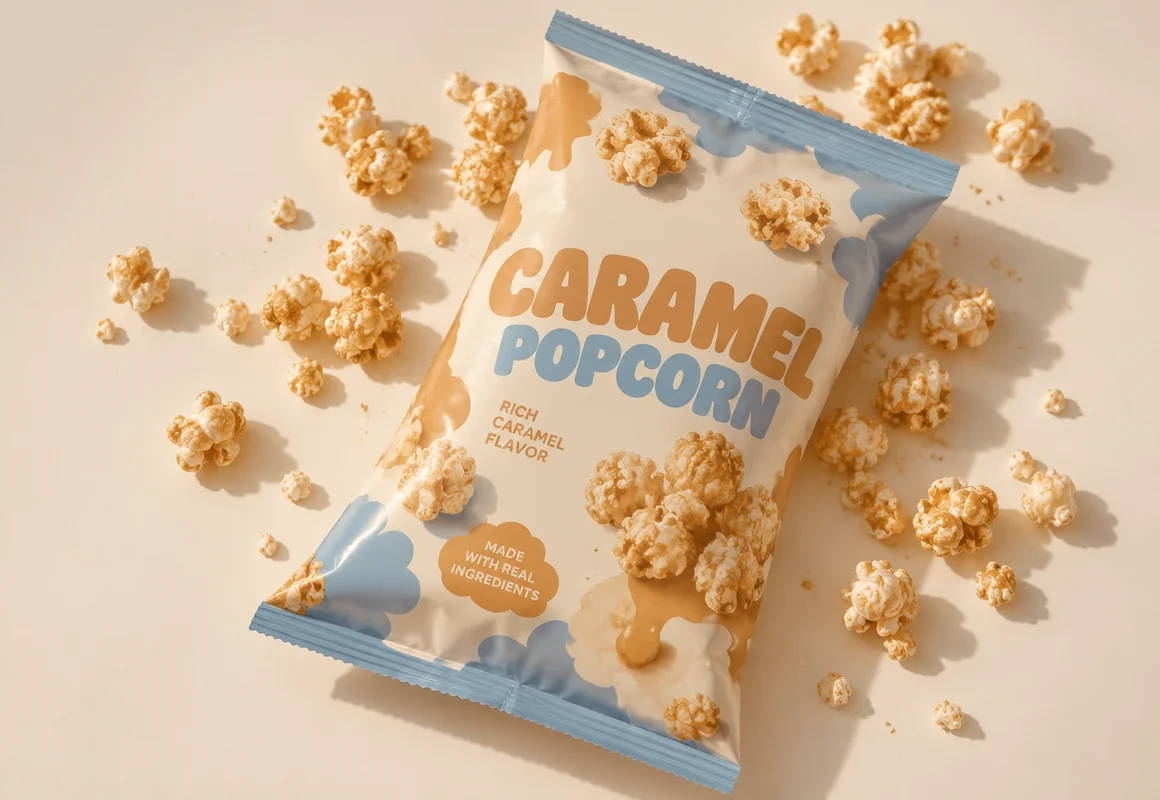
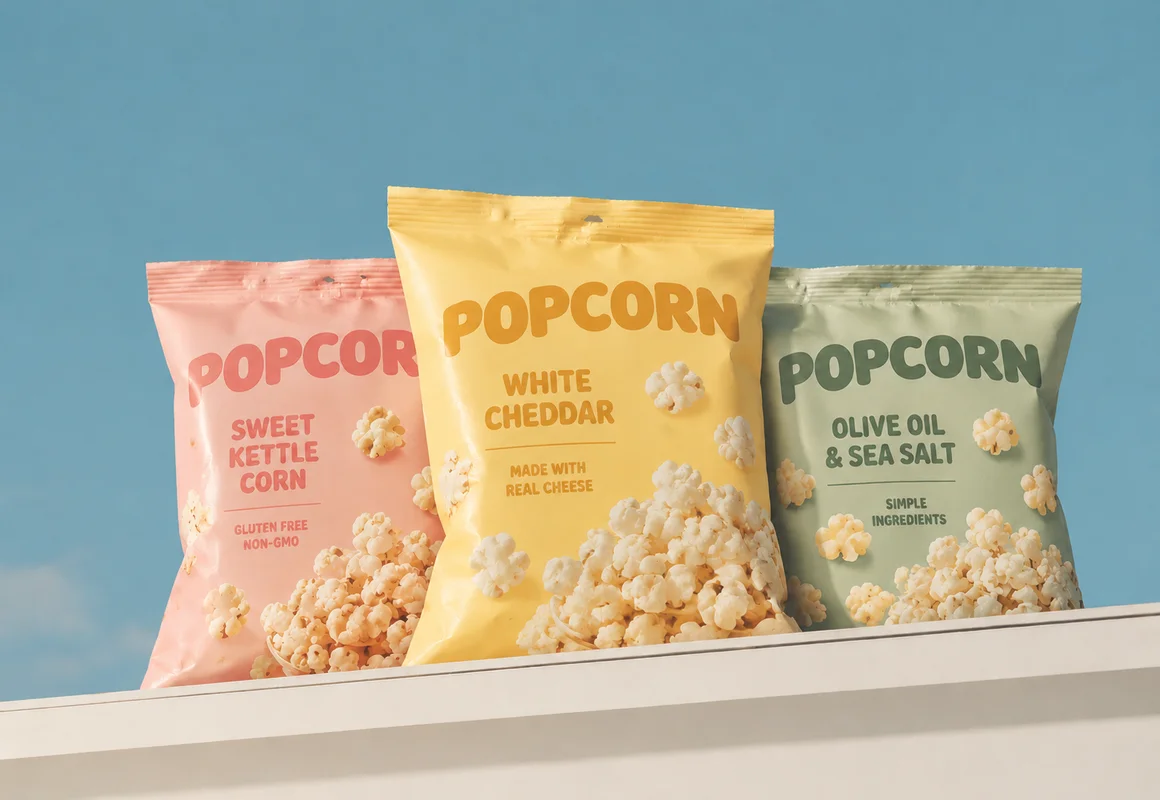
Create branded back-seal popcorn bags for ready-to-eat snacks, with a flexible pillow-style format that helps organize portions, present flavors, and guide decisions about sizing, sealing, and printed artwork.
From 100 Units
Sustainable Options
Instant Quotes
3D Design Preview
Ready-to-eat popcorn takes up considerable space relative to its weight, so packaging needs to account for the filled shape as well as the labeled serving. Back-seal popcorn bags bring the film together along the rear panel, leaving the front available for product identity, flavor navigation, and shelf-facing artwork. For single-use retail snacks, this format can be evaluated for portion control, handling, and display within a broader snack packaging system.
These bags function as primary packaging when popcorn is filled directly inside an appropriately specified food-contact structure. The finished packs may then be grouped in cartons or other secondary packaging for distribution. Before finalizing a design, check the popcorn's actual fill volume, clearance around the seals, the required material protection, the opening direction, and artwork placement using approved specifications and physical samples.
From light butterfly kernels to coated popcorn clusters, explore snack forms that vary in volume, surface texture, and filling behavior.
Raw popcorn kernels need moisture-resistant packaging to maintain freshness and preserve popping performance during storage.
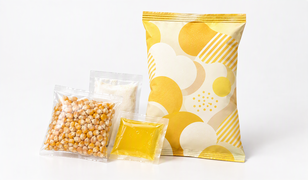
Microwave popcorn kits need packaging that keeps kernels and preparation ingredients protected, organized, and ready to use.
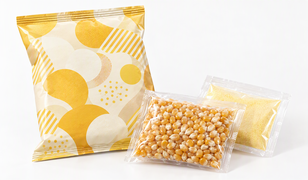
Stovetop popcorn kits require packaging that keeps kernels and cooking ingredients properly portioned and easy to prepare.
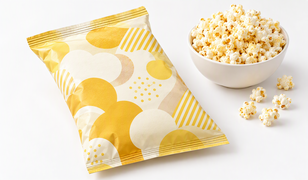
Ready-to-eat popcorn needs packaging that maintains freshness while protecting its lightweight, delicate texture from crushing.
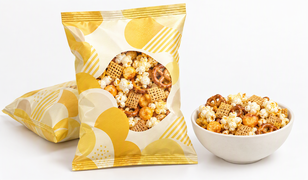
Popcorn snack mixes need packaging that accommodates different ingredient sizes and prevents damage during handling and transport.
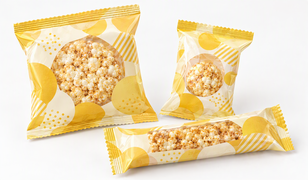
Popcorn cakes, balls, and bars require properly sized packaging to prevent crushing and breakage during handling.
Popcorn's airy volume and delicate texture create specific packaging challenges. From choosing the right bag dimensions to managing moisture exposure, sealing, and opening, each detail helps support product quality and convenient snacking.
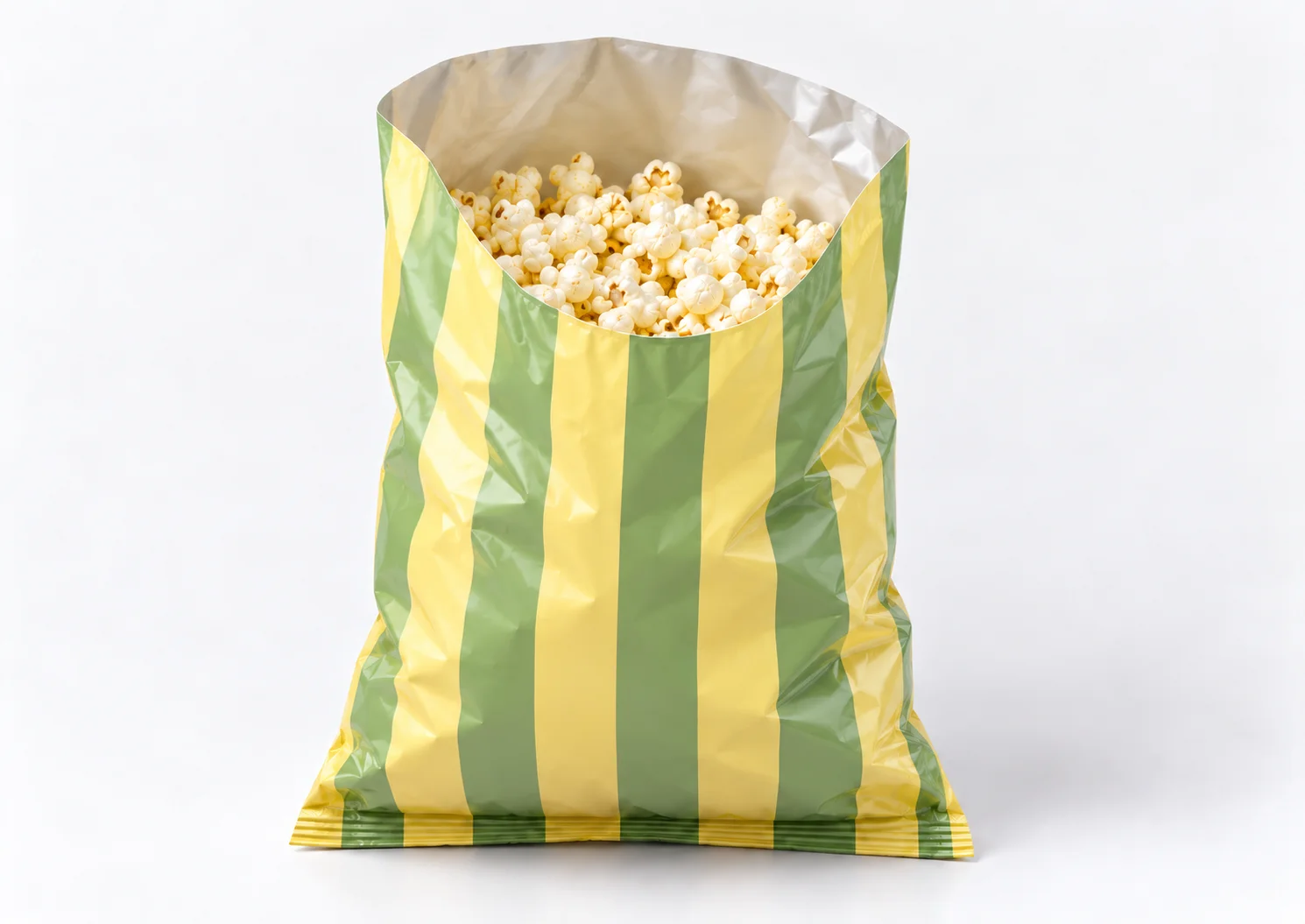
Popcorn may carry oil, seasoning, or fine particles that contact the film and sealing areas, making intended food contact and filling conditions important.
Fix: Review the complete food-contact material specification and test sealing with the actual seasoned popcorn.
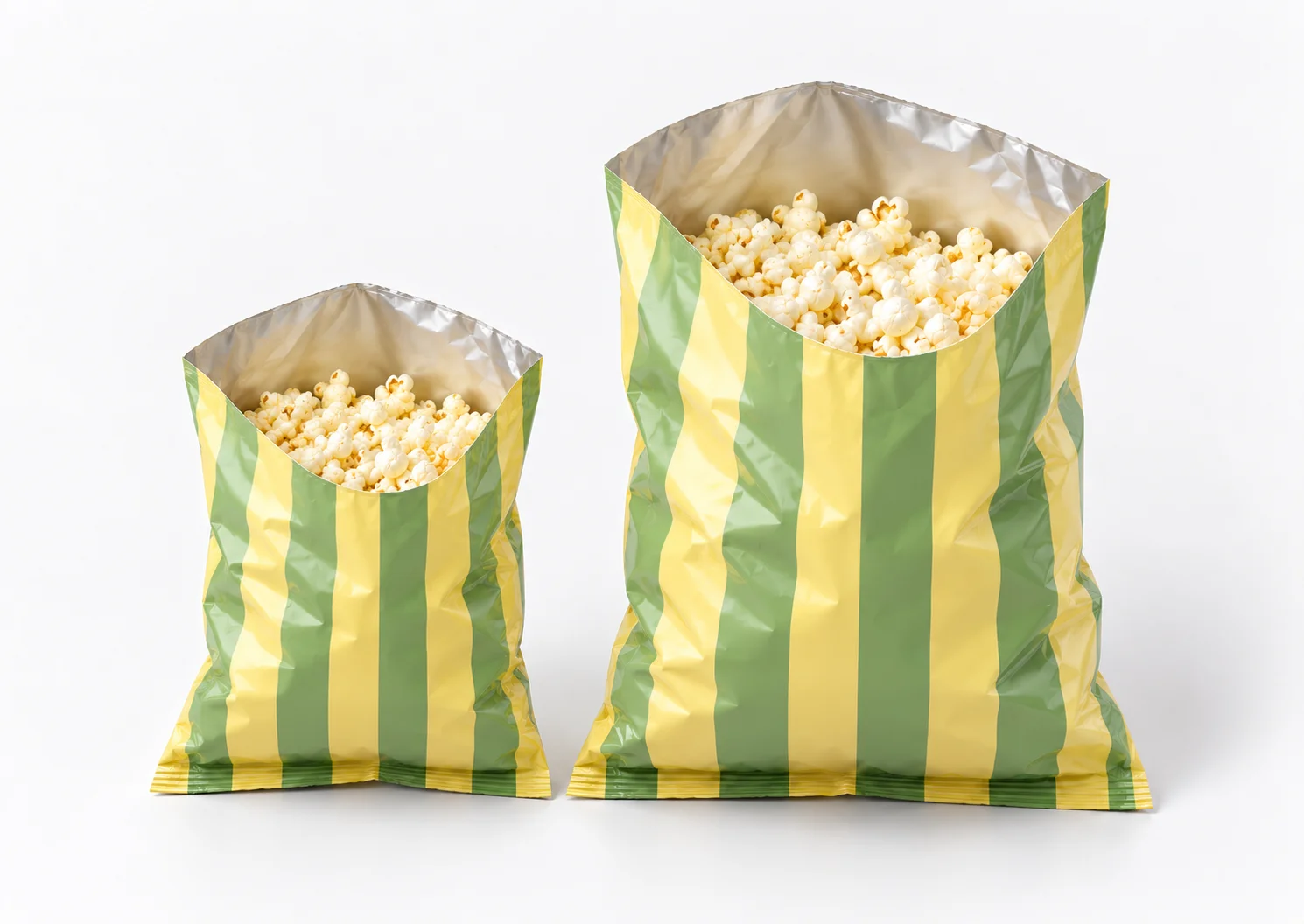
Popped kernels create a bulky, irregular fill, so a bag sized only by product weight may lack sufficient usable space.
Fix: Measure the actual filled volume and test the finished pack shape with the intended portion.
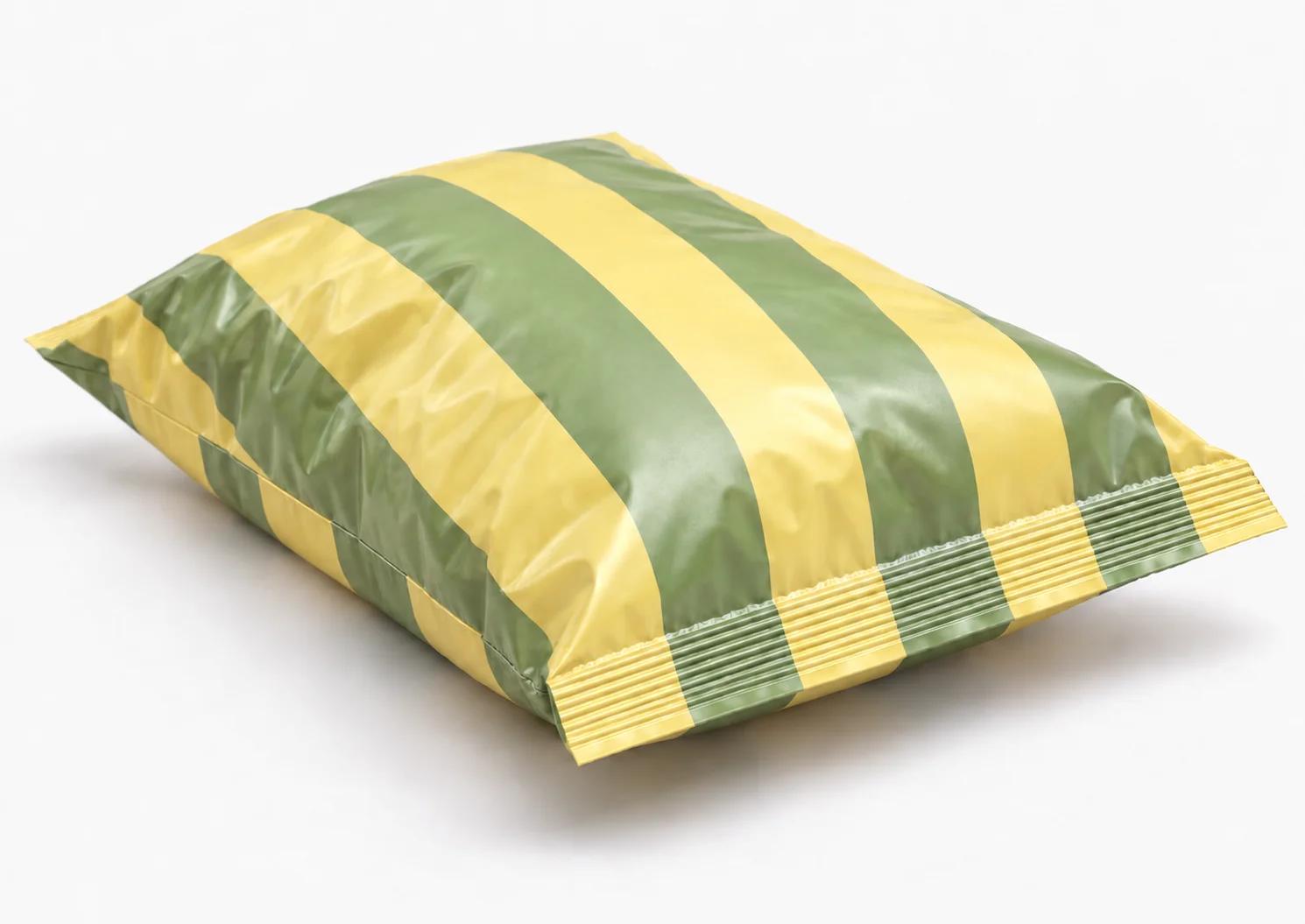
Popcorn texture and flavor may change during storage, while seasoning particles or product trapped in a seal can affect closure integrity.
Fix: Confirm barrier requirements and conduct seal-integrity and shelf-life testing under intended storage conditions.
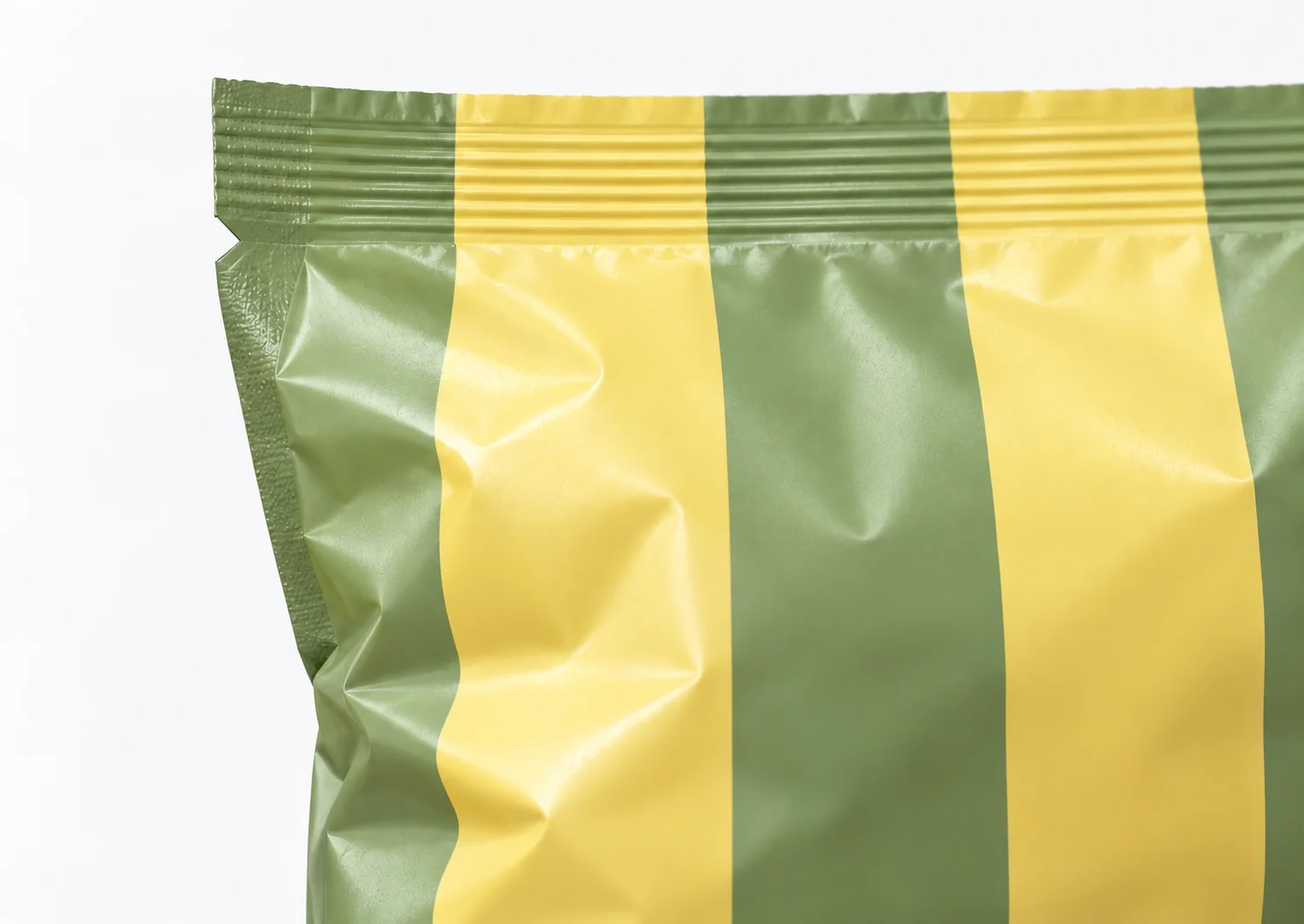
An awkward opening direction or excessive tearing force can scatter loose popcorn and interrupt the snacking experience.
Fix: Test the approved opening design and tear direction with filled bags before approving production artwork.
Material Guide
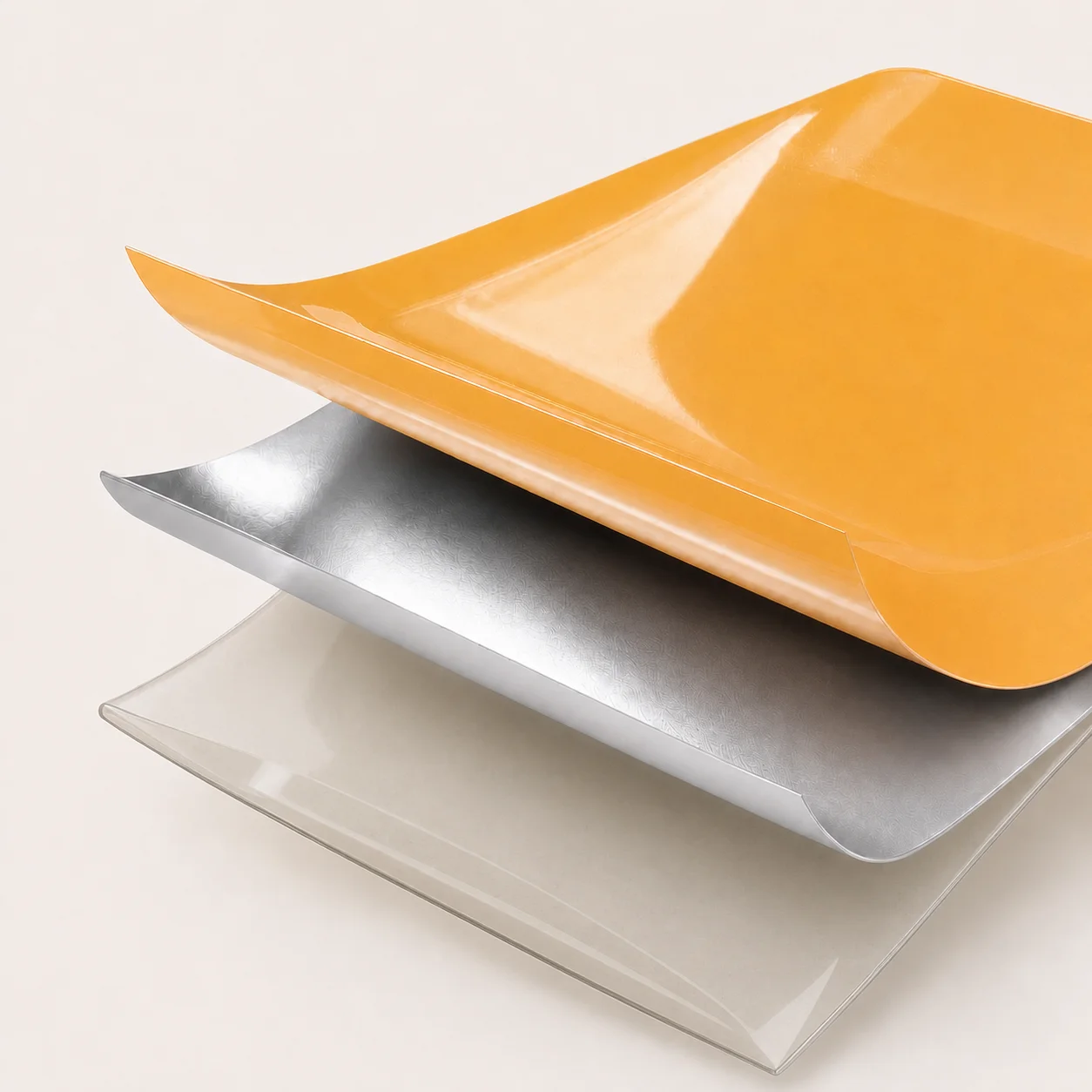
OPP 0.98 mil
METPET 0.47 mil
PE 1.57 mil
A durable, highly printable structure in matte, gloss, or soft touch. Strong oxygen, light, and aroma barrier for everyday products.
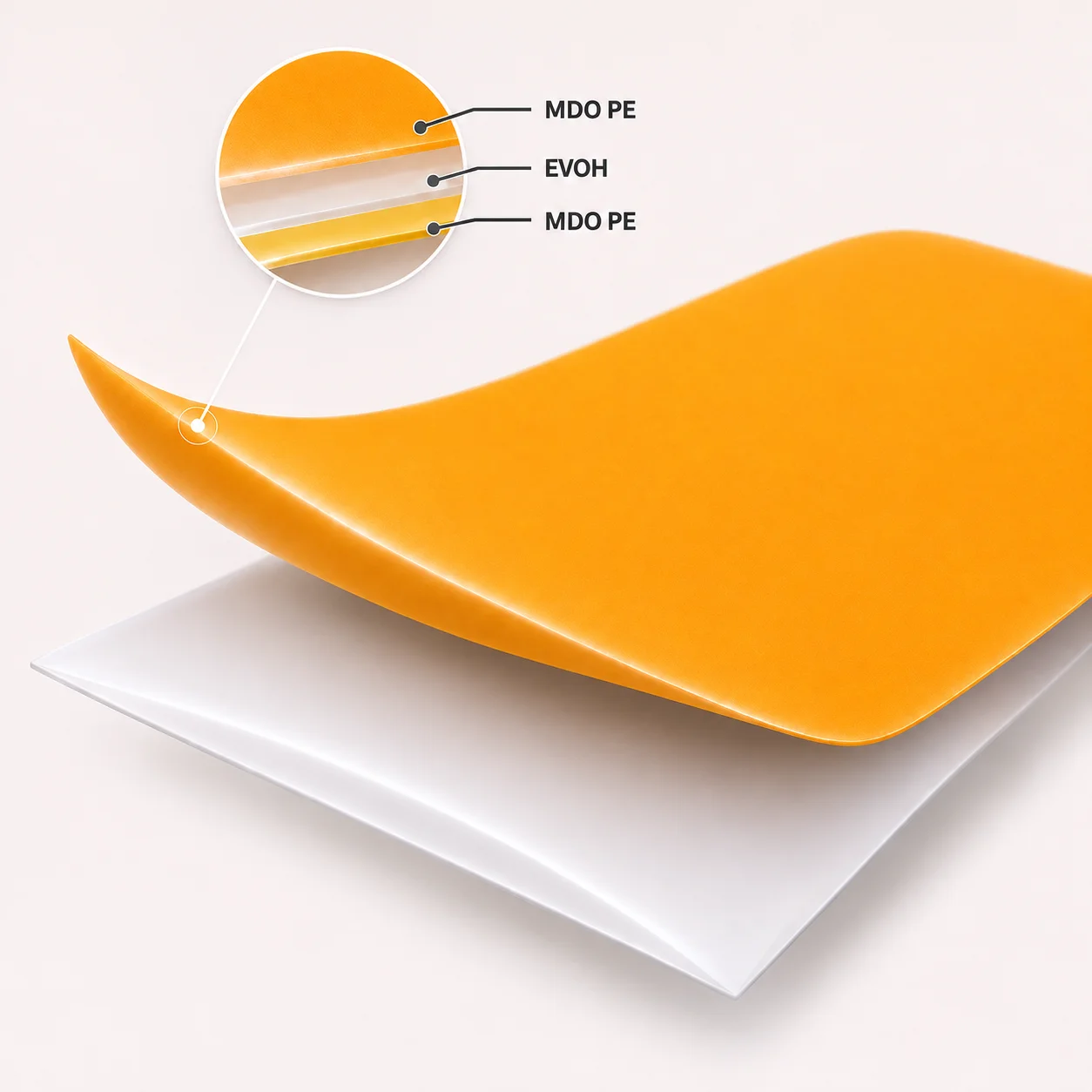
EVOH-Barrier MDO PE 1.97 mil
PE 1.57 mil
A mono-PE structure combining EVOH-Barrier MDO PE with a PE sealant layer. The MDO PE film features a co-extruded EVOH layer that provides excellent oxygen and aroma barrier protection while supporting recyclability.
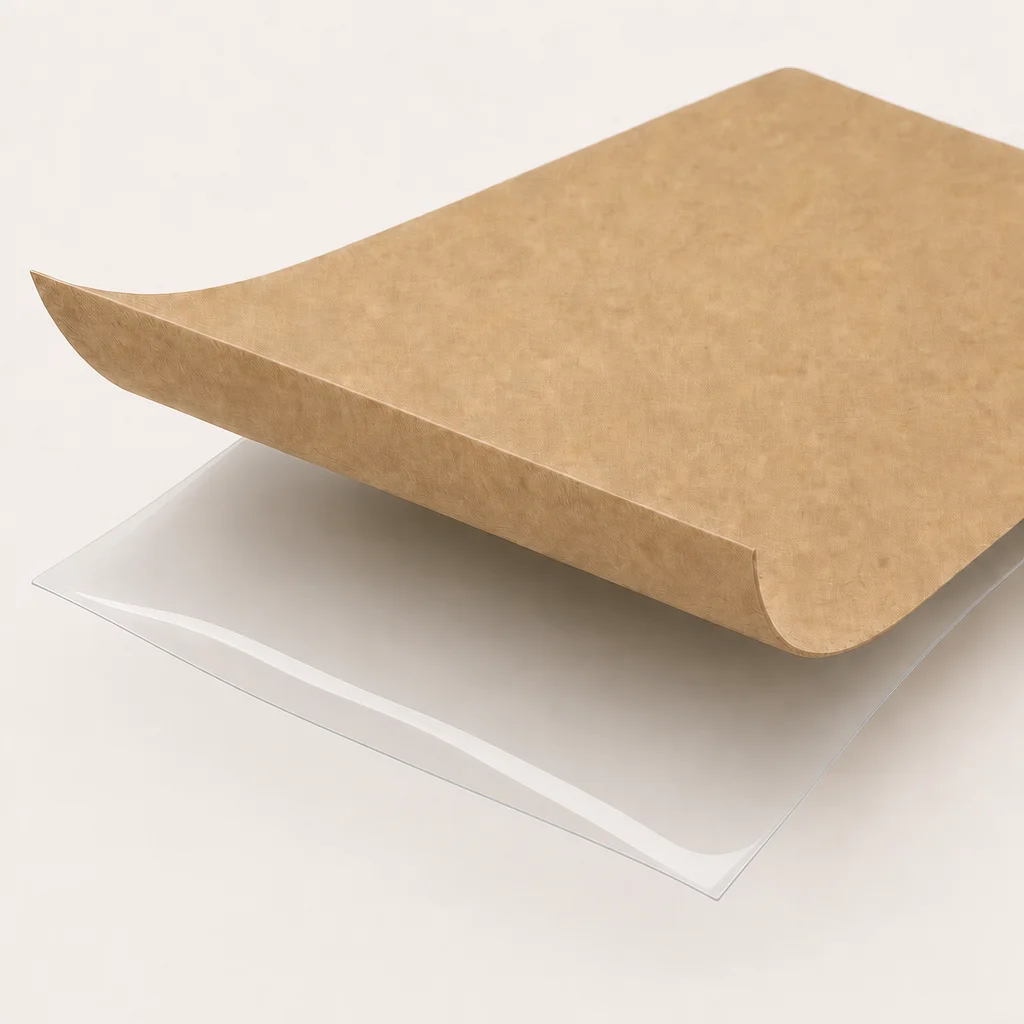
Kraft paper 2.76 mil (50 gsm)
PLA 1.18 mil
For brands going fully circular. Shorter shelf-life window than Classic or Recyclable, best for dry goods, lighter protection needs, and faster turnover.
Not sure where to start? Think about what matters most for your product: protection, sustainability, or cost. The table below compares all four options.
| Feature | Classic (Standard) | Classic (High Barrier) | Recyclable | Compostable |
|---|---|---|---|---|
| Best for |
|
|
|
|
| Barrier (O₂ / moisture / light) |  |  |  |  |
| Shelf life | Long | Longest | Long | Shortest |
| End of life |  Standard waste | Standard waste |  PE recycling |  Industrial compost |
| Finishes | Gloss / Matte / Soft Touch | Gloss / Matte / Soft Touch | Gloss / Matte | Natural / White kraft |
| Structure | OPP / METPET / PE | OPP / PET / AL / PE | EVOH-Barrier MDO PE / PE | Kraft paper / PLA |
Food-grade and SGS tested. Our classic structure passes US FDA, TPCH, PFAS and CA Prop 65 testing.
PE food-contact layer passes FDA extractables testing.
Lead, cadmium, mercury and hexavalent chromium: none detected.
Total fluorine: none detected (under 20 ppm).
Lead and 10 phthalates: none detected.
Why Dylign rollstock is reliable, order after order
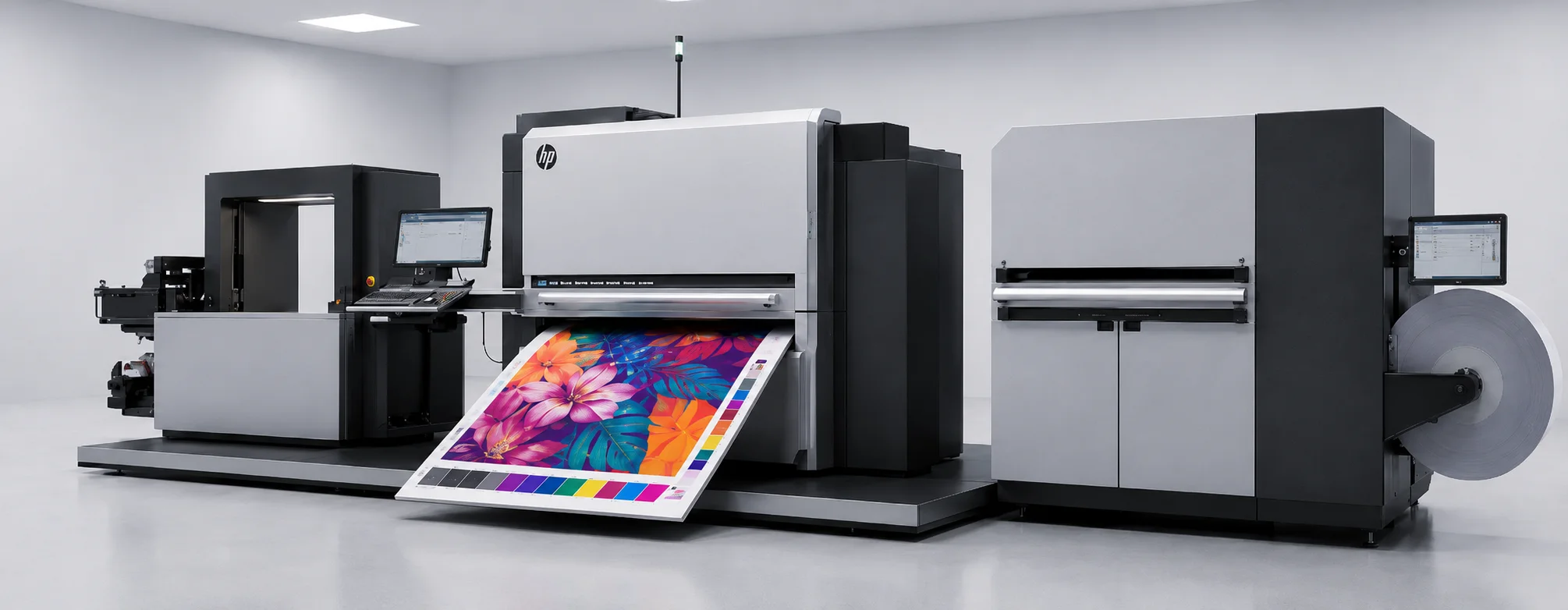
Offset printing with Pantone-accurate color and sharp, clean text.
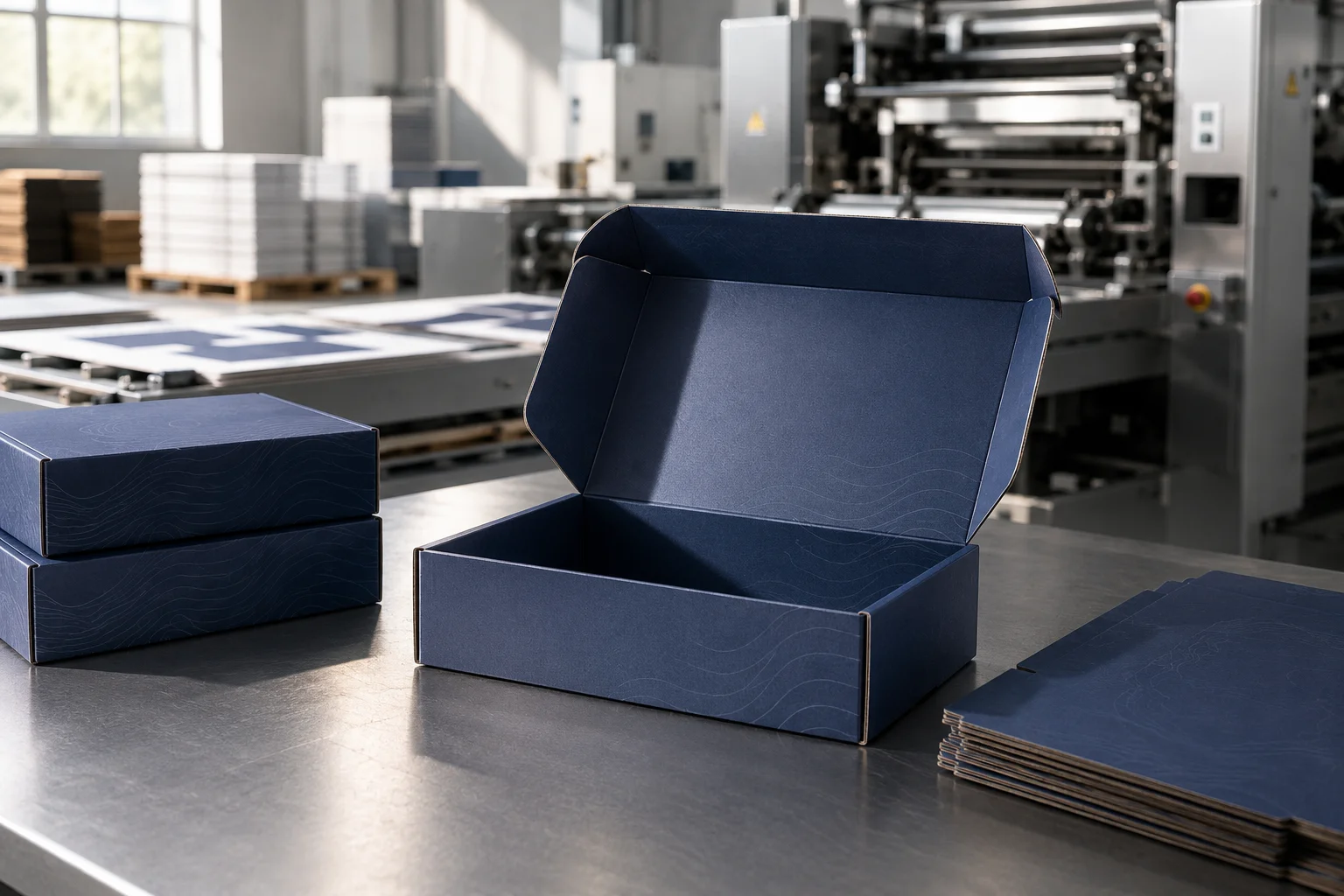
Clean folds and solid corners keep every piece sharp and sturdy.
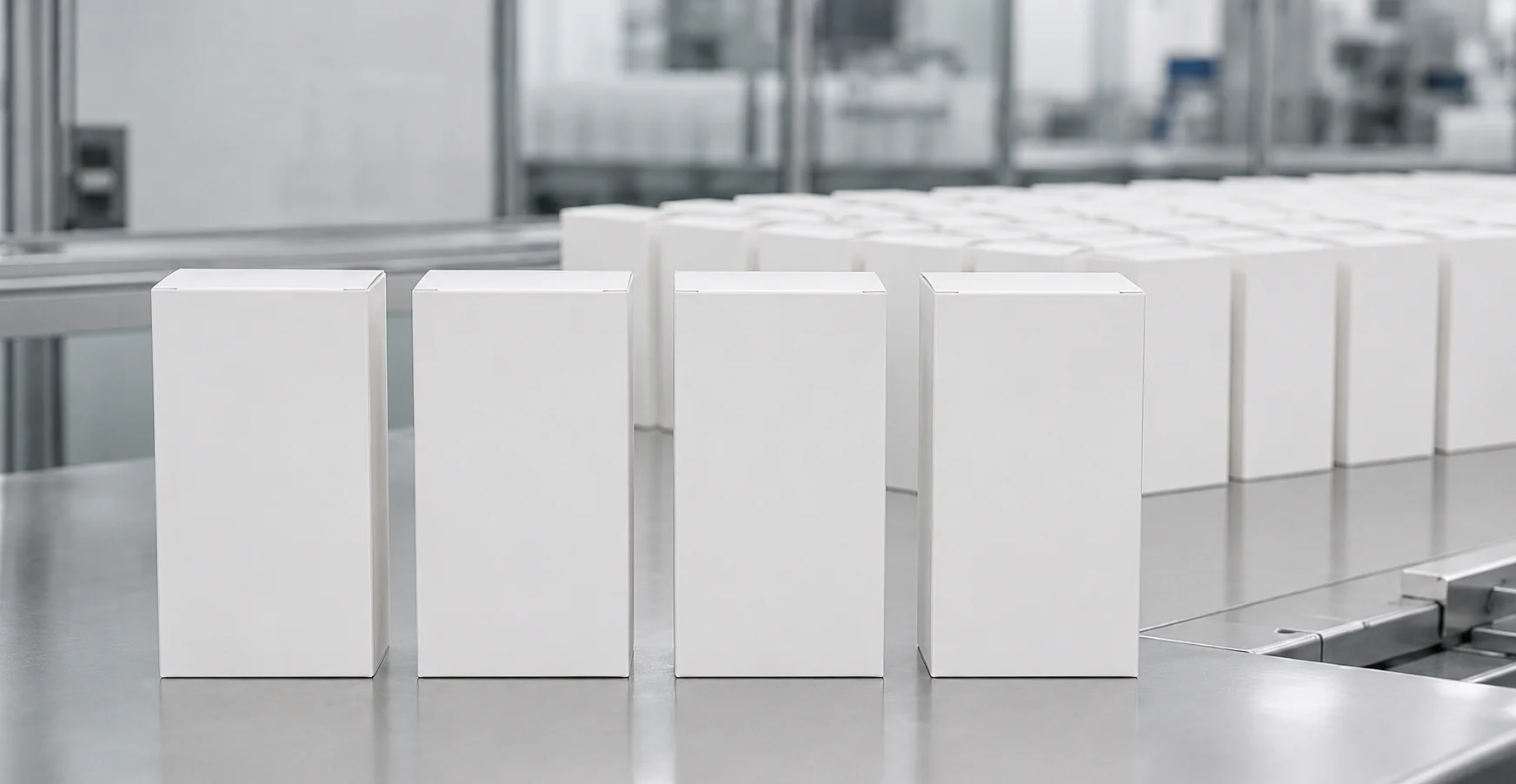
Your tenth reorder looks like your first, from a 100-piece test run to full production.

Every order is inspected against your approved specs before it leaves.

Start small, test your design, and scale when you’re ready.

360° preview and landed price in one second.

Direct savings, back into your product

Recyclable and compostable options on all products.
1
Customize your packaging and see your design come to life.
2
View your total landed cost instantly, with no hidden fees.
3
Review and approve your digital proof before production.
4
Check your packaging in person before full production.
5
Confirm your order and let us handle production and delivery.
Start with a sealed package designed for your popcorn's storage conditions. Moisture exposure, oxygen, seasoning composition, and seal integrity may all affect quality. Select the film structure according to the actual product and required distribution period, then verify its suitability through relevant barrier and finished-product shelf-life tests. A back seal alone does not establish a shelf-life guarantee.
Popcorn should be packed under validated product and process conditions rather than sealed at an arbitrary temperature. Residual heat and moisture can affect the environment inside the bag. Review the cooling process, product moisture condition, filling hygiene, and sealing parameters for your specific recipe. Confirm the process with your food production team before establishing a repeatable packing procedure.
Excessive compression may damage delicate popped kernels, so vacuum sealing should not be assumed to suit every popcorn product. A back-seal bag does not inherently require vacuum packing. Evaluate the intended filling and sealing process using the actual popcorn, including coated products, and inspect samples for breakage and finished-pack appearance before choosing any air-removal or gas-management process.
Yes, these products should be evaluated separately. Unpopped kernels are relatively dense, while ready-to-eat popcorn occupies more volume at a comparable weight. Their moisture requirements, filling behavior, and use conditions can also differ. Check the actual product properties, target portion, sealing process, and material requirements before applying a bag specification developed for one form to the other.
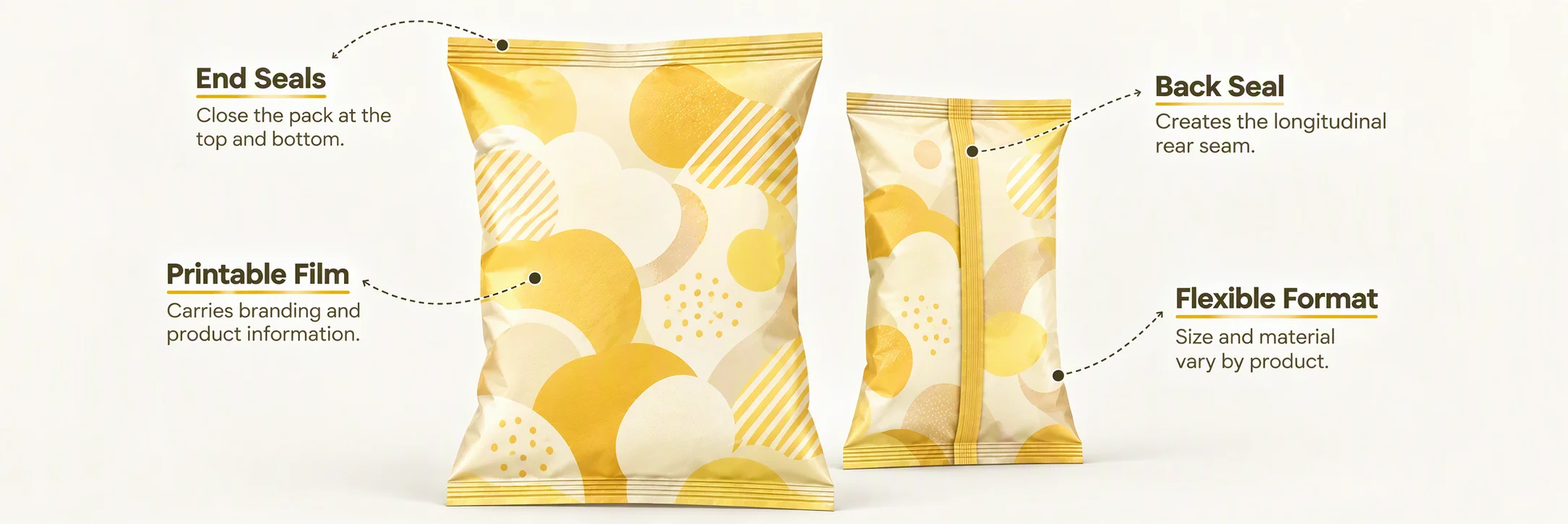
No. A back-seal bag is identified by its longitudinal rear seal and end seals, while a conventional stand-up pouch uses a base structure designed for upright presentation. Back-seal popcorn bags may be supplied in wider snack-pack proportions and should not be limited to narrow sticks. Choose the format according to your filling process, display method, desired opening, and approved SKU options.
Prepare your product type, intended portion weight, measured fill volume, expected distribution conditions, artwork, and packing method. It also helps to specify whether the popcorn contains oil-based or powdered seasoning. Use these details to review an appropriate bag size, material specification, sealing method, and print layout. Confirm the available configurations, samples, pricing, and production terms through Dylign's current product and operations sources.
SAMPLES FROM
Loading...
VS
PRODUCTION ERROR
$7,000
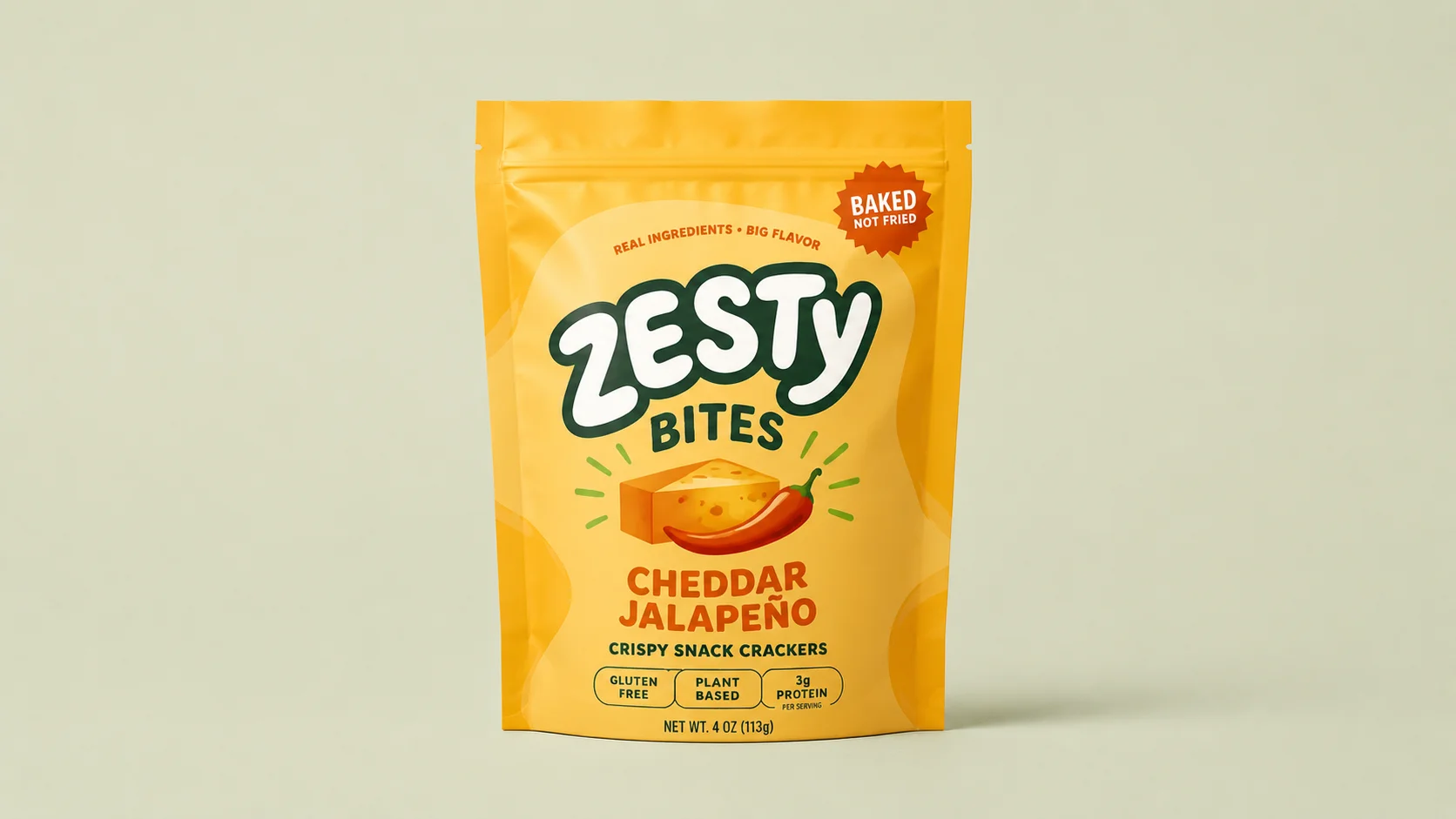 100 MOQ
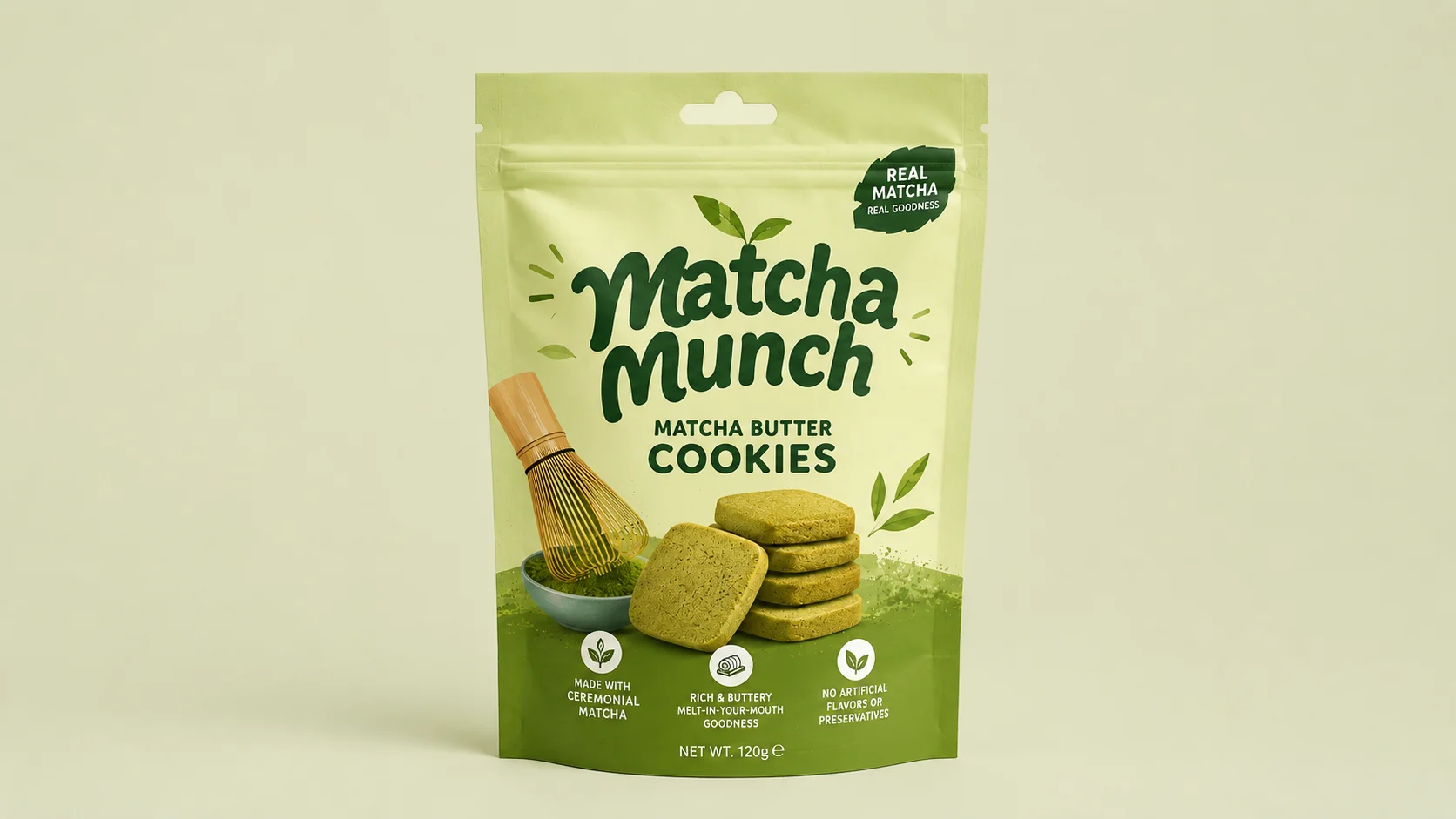 100 MOQ
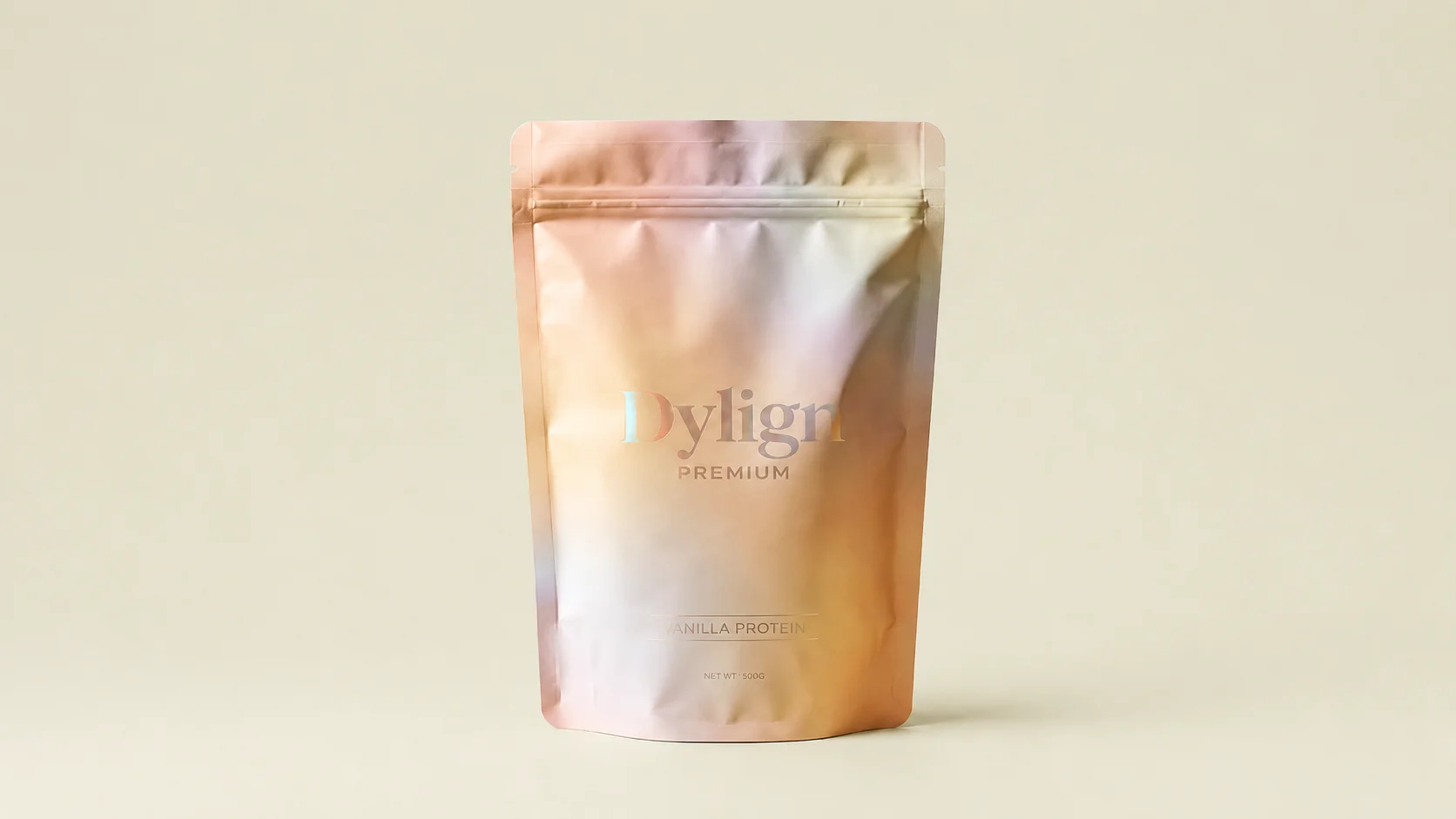 100 MOQ
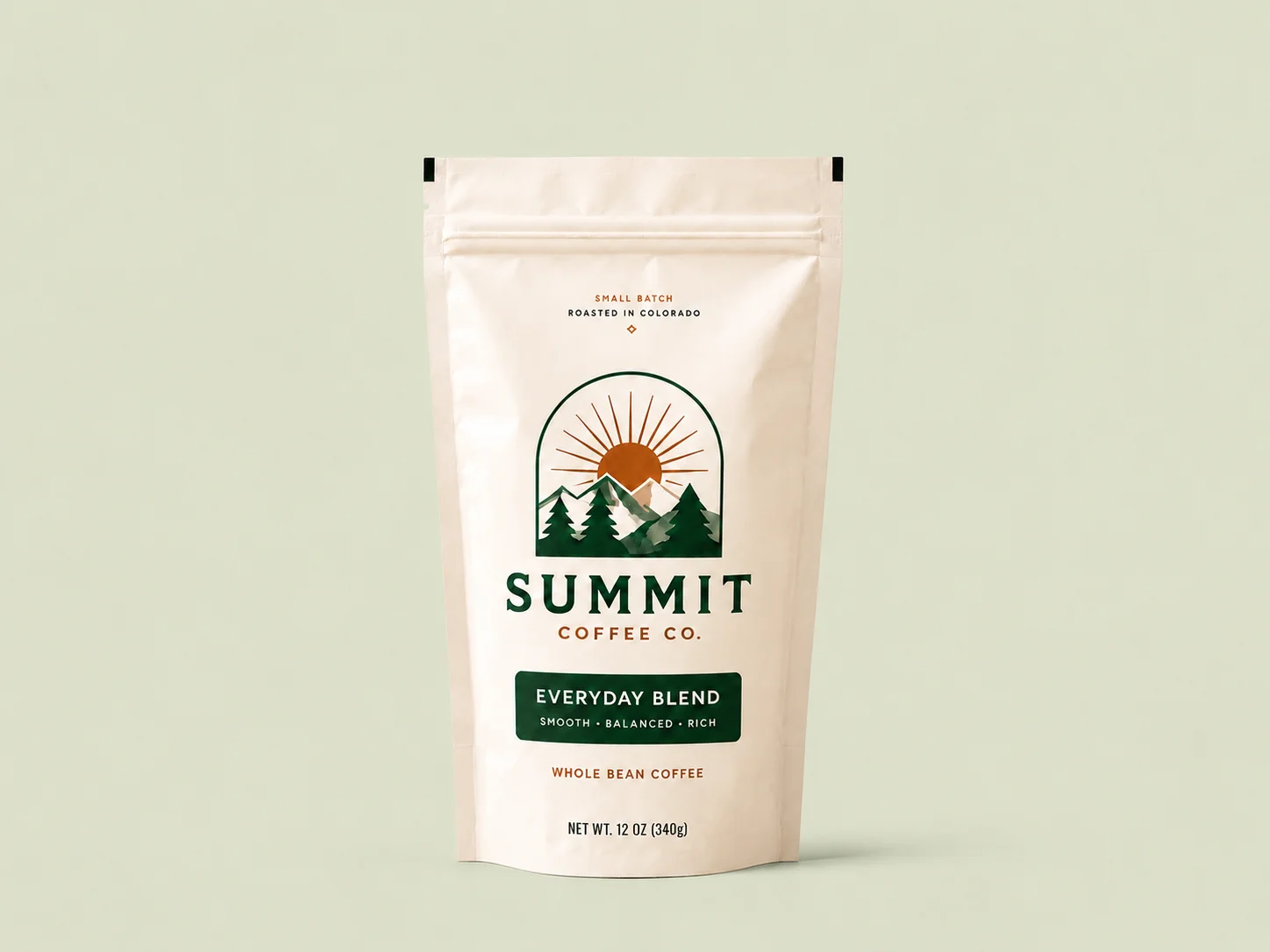 100 MOQ
A structured pouch with a box-like base and stronger shelf presence.
From$0.50/unit
 Candy
 Snacks
 Baked goods
 Coffee
 Pet food
 Supplements
 Refills
 Home care
 Personal care
 Tea
 Dried fruit
 Superfood powders