
A semiconductor tray can arrive in a perfectly intact shipping carton and still have a moisture-control problem. The critical question is not whether the shipping case looks undamaged. It is whether the devices were kept in a suitable dry-pack system, with a qualified moisture barrier, the right desiccant, a usable humidity indicator and a reliable final seal.
That is the job of moisture barrier bags (MBBs). For electronics buyers, the difficult part is sorting real specifications from superficial product descriptions: a 4.4 mil bag is not automatically safer than a 3.6 mil bag; an antistatic bag is not necessarily a moisture barrier; and an apparently clear or reusable pouch may not be qualified for dry packing.
A dry-pack bag protects a process, not just a product
Some moisture-sensitive surface-mount devices absorb water vapor while exposed to ambient air. When subsequently heated during reflow, absorbed moisture can create package stress, delamination or cracking. Device-specific moisture sensitivity and handling instructions govern the relevant exposure limits. Texas Instruments' Moisture Barrier Dry Packing application report describes the roles of the bag, humidity indicator card (HIC), desiccant, opening and resealing procedures. The report cites older editions of JEDEC guidance, so its procedural details should not substitute for the applicable current specification.
An electronics dry pack normally involves several coordinated elements: components in the required dry condition, appropriate moisture barrier material, a calculated desiccant supply, an HIC, identification/handling labels and a validated closure. A bag by itself does not remove moisture already absorbed by a component or restart its permissible floor life.
For static-sensitive devices, there is a second independent requirement. ANSI/ESD S541-2026 addresses ESD protective packaging properties for production, storage and transportation. Moisture barrier and ESD protection describe different functions; buyers need evidence for both when both matter.
What the laminate must do
Industrial MBBs often combine polyester, metallized layers or foil, and a heat-sealable polymer. The layers are selected to balance water vapor resistance, handling strength, electrical performance and sealing compatibility. A metallic-looking outside surface does not establish a bag's construction or specification.
The key moisture metric is water vapor transmission rate (WVTR), also called MVTR. It quantifies vapor passing through a defined material area over time at specified test conditions. ASTM F1249-25 is a current test method for measuring WVTR using a modulated infrared sensor. When comparing offers, require identical or clearly convertible units, temperature and relative humidity; a number without its test basis is not a purchasing criterion.
Film WVTR also does not prove finished-package integrity. Leaky perimeter seals, punctures and wrinkles can defeat an otherwise strong film. ASTM F88/F88M-23 provides a method for testing seal strength, although it does not by itself establish the complete package's moisture performance.
3.6 mil versus 4.4 mil: a comparison that needs context
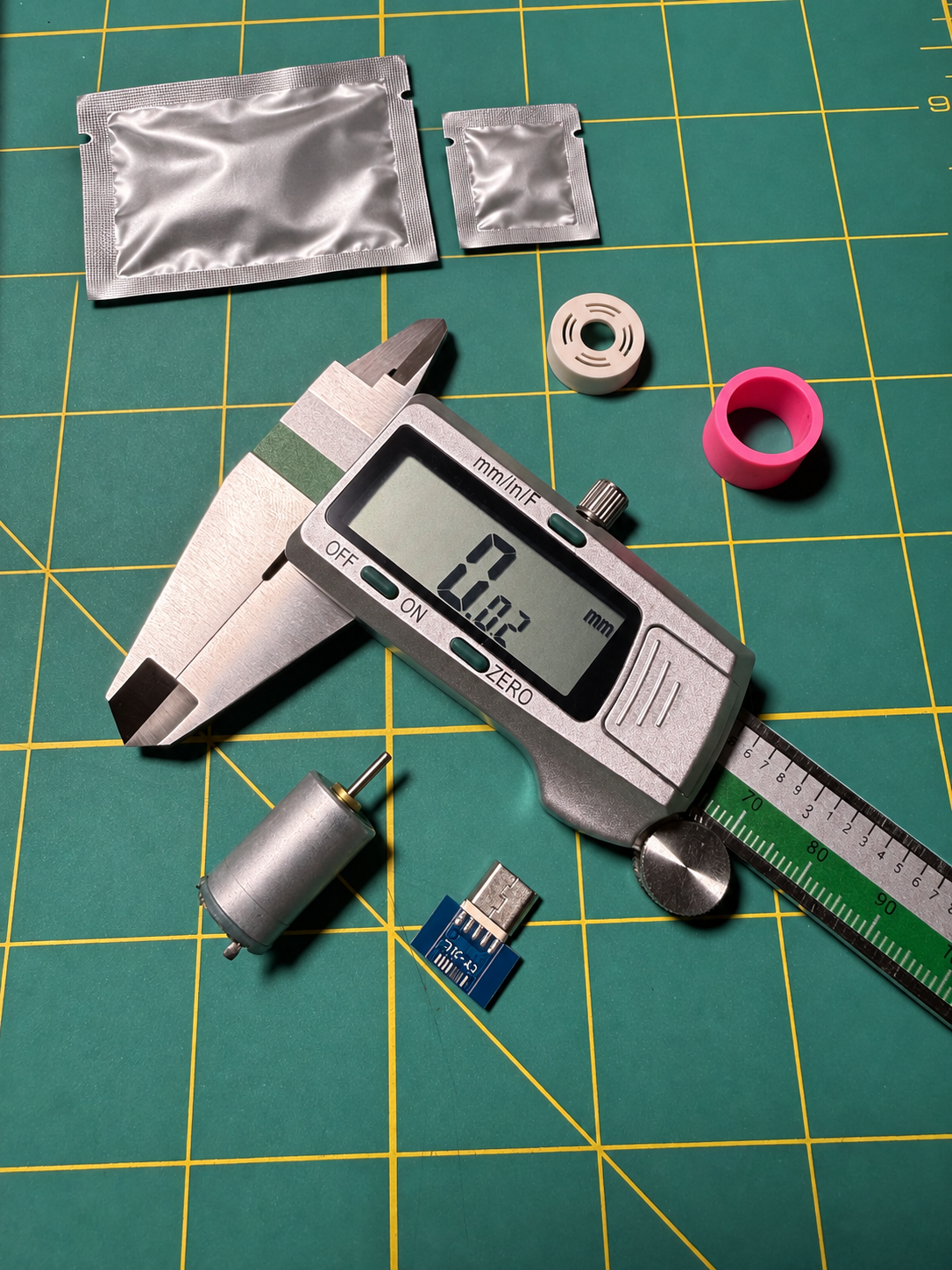
A mil is one-thousandth of an inch. Therefore, 3.6 mil is about 91 micrometers and 4.4 mil is about 112 micrometers. That difference describes nominal thickness, not a universal barrier grade.
For an actual market example, SCS Dri-Shield 2000 is listed as a 3.6 mil multilayer aluminized-polyester/polyethylene bag intended for moisture- and ESD-sensitive items. Its supplier also lists specified electrical and mechanical performance. That product demonstrates why an engineered thin laminate can have a meaningful, documented application; it does not establish that every 3.6 mil material performs identically.
A 4.4 mil construction may use different materials or offer different handling properties, but buying by the extra 0.8 mil alone is not defensible.
Purchasing question | 3.6 mil option | 4.4 mil option |
|---|---|---|
What does thickness tell you? | Approx. 91 µm nominal | Approx. 112 µm nominal |
Can it serve electronics dry packing? | Only with suitable tested construction | Only with suitable tested construction |
Is its WVTR necessarily higher? | No: obtain the actual report | No: obtain the actual report |
Is it ESD protective? | Verify electrical test data | Verify electrical test data |
What decides suitability? | Device requirement, laminate, seal and tests | Device requirement, laminate, seal and tests |
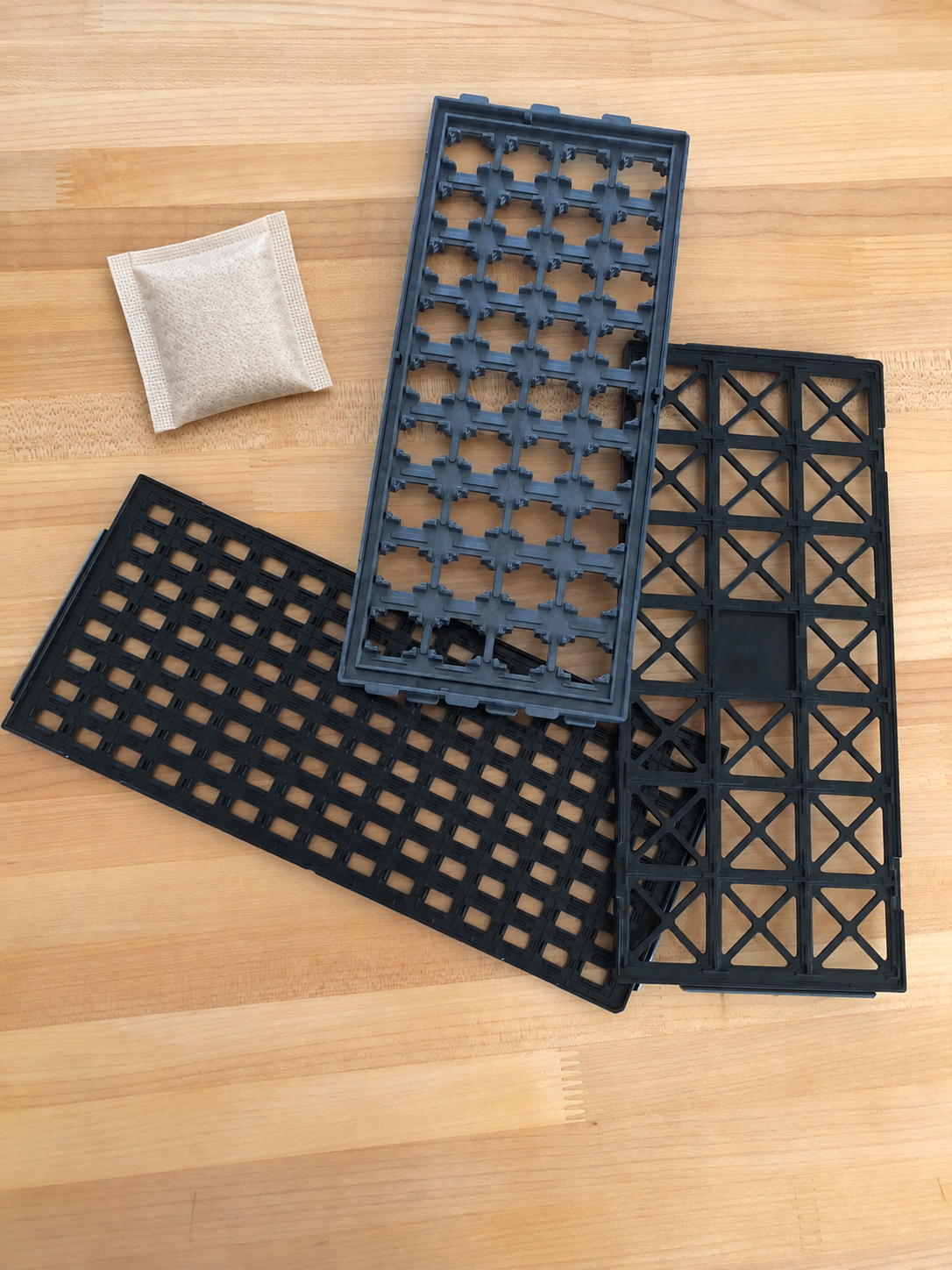
If suppliers provide different WVTR units or use different temperatures, do not place the numbers into a ranking until the methods are reconciled. Mechanical durability, flexing and seal-window tolerance can matter just as much as nominal thickness.
Three buying questions beyond film thickness
Does the bag protect the electronics from ESD? A low-WVTR film is not automatically static dissipative or discharge shielding. Request the exact product's electrical properties, testing methods and applicability under ESD Association packaging guidance. Do not treat “anti static moisture barrier bags” or “moisture barrier esd bags” as self-certifying categories.
Does the format fit the loaded product? Large moisture barrier bags must accommodate trays, reels or assemblies, including cushioning, sharp-edge protection and enough clean material for sealing. A larger surface area also changes moisture-ingress calculations and may change the desiccant requirement. Confirm internal usable dimensions with a physically filled sample, not nominal bag dimensions alone.
Is it meant to be transparent, resealable or vacuum packed? Clear moisture barrier bags may be useful for identification, but transparent constructions must be independently verified for barrier and ESD performance. Resealable moisture barrier bags offer handling convenience, yet a zipper alone should not be assumed equivalent to a validated dry-pack heat seal. For ESD moisture barrier vacuum bags, verify that evacuation and sealing will not damage the devices or carrier system. TI's dry-pack guidance describes carefully opening a pack for possible resealing and using fresh desiccant when repacking; follow current device and process requirements.
What should be on the supplier specification sheet?
A useful request for quotation should ask for the film construction and nominal thickness; WVTR with method, units and test conditions; relevant electrical/ESD performance; seal-strength data and recommended sealing parameters; puncture/handling data; available dimensions; lot traceability; and samples for filled-package trials. The supplier should identify which values are typical marketing figures and which are release or acceptance requirements.
For a validated electronics process, the receiving team should also decide how it will verify the incoming lot and what to do when sealing, HIC or package condition fails inspection. A bag's purchase price is only one cost: losses from repacking, delayed production and compromised components can dominate a low unit-price advantage.
The query “moisture barrier bags manufacturing plant cost” belongs to a different decision. Establishing a conversion or laminating plant requires a capacity, equipment, labor, utilities, test infrastructure and yield model. It should not be confused with the procurement price of finished bags; there is no meaningful universal plant-cost figure without project assumptions.

What this means for CPG and packaging leaders
For teams buying protective packaging alongside consumer-product materials, keep the specification tied to the actual failure mode. An electronics dry pack needs its own quality protocol rather than a generic “high barrier” statement borrowed from food packaging. Assign engineering to define the requirement, quality to approve the tests, and procurement to compare qualified suppliers on total delivered cost. Where the package is intended for moisture-sensitive devices, confirm the applicable version of the device maker's instructions and IPC/JEDEC J-STD-033 before release.
Bottom line: Choose moisture barrier bags against the component's protection specification and the sealed package's validated performance—not the advertised mil count.