That system-level distinction is the central procurement rule. A clear PET bottle and a multilayer PET structure are not equivalent. An uncoated paperboard carton and a fiber pack with a difficult-to-separate polymer barrier are not equivalent. A commercially compostable cup is not automatically accepted by the organics facility serving the customer, and ASTM D6400, ASTM D6868, or EN 13432 does not by itself establish home compostability.
For U.S. CPG teams, the right question is therefore not simply, “Which material is recyclable?” It is: Which complete packaging specification can meet product, safety, recovery, consumer-communication, and claim-substantiation requirements in the intended market?
Recyclable Is a System Outcome, Not a Material Attribute
The U.S. Environmental Protection Agency describes recycling as a chain of collection, processing, and remanufacturing. If a package cannot pass through one of those stages at useful scale, technical material recoverability alone does not prove that it will be recycled. (EPA: The U.S. Recycling System)
Use this five-part test:
package design → collection access → sortation → reprocessing → end market
Test | Decision question | Typical evidence |
|---|---|---|
Package design | Is the complete package compatible with the target stream? | Full bill of materials, dimensions, color, labels, adhesives, closures, coatings, inks, and test results |
Collection access | Can consumers or businesses place it in an established program? | Current community, retailer, deposit, or commercial collection data for the sales footprint |
Sortation | Will the item be recognized and captured rather than screened out or mis-sorted? | Material recovery facility criteria, size/shape review, optical-sort testing, or design-guide assessment |
Reprocessing | Can the collected package be converted into usable secondary material without unacceptable yield or quality loss? | Reclaimer testing, wash/separation compatibility, bale or mill specifications |
End market | Is there a buyer and manufacturing use for the recovered material? | Reclaimer acceptance, offtake evidence, or established commodity specifications |
EPA’s 2024 national infrastructure assessment identified paper products, HDPE plastic, PET plastic, and aluminum as the materials most commonly accepted by the majority of state and territory recycling programs. The same assessment also shows why national generalizations are risky: only 15% of states and territories collected community-program capture-rate data, and 88% did not collect data on the types of single-use plastics in commerce. (EPA: U.S. Recycling Infrastructure Assessment)
How the Main Packaging Materials Compare
The table below is a screening tool, not a recyclability claim. Final eligibility depends on the package format, components, intended market, local access, and current law.
Material or format | Common CPG uses | Likely U.S. recovery route | Design advantages | Common reasons the finished package may fail |
|---|---|---|---|---|
Corrugated fiberboard | Shipping cases, e-commerce mailers, displays | Curbside, drop-off, or commercial OCC collection | Mature fiber stream; easy to flatten; strong secondary-market familiarity | Wax or difficult coatings, excessive tape, wet strength, food or chemical contamination, mixed-material attachments |
Folding carton / paperboard | Cereal, snacks, cosmetics, OTC and personal-care cartons | Curbside or drop-off where paperboard is accepted | Lightweight, printable, often compatible with fiber recovery | Plastic windows, foil laminates, heavy barrier coatings, magnetic closures, wet or food-soiled fiber |
Paper cups, bowls, and coated fiber packs | Foodservice, frozen and refrigerated foods | Selected fiber or organics programs; highly location-dependent | Fiber content may be recoverable in compatible mills; compostable versions can support food-scrap collection in approved programs | Polymer lining, coatings, lids, food residue, limited mill or compost-facility acceptance |
Aluminum containers | Beverage cans, tins, trays, closures | Curbside, deposit, drop-off, or commercial metal collection | Established metal value and end markets; high barrier performance | Product residue, mixed-material laminates, nonseparable plastic components, very small pieces or formats |
Steel containers | Food cans, aerosols where accepted, closures | Curbside or commercial metal recovery | Magnetic sortation; strong barrier and structural performance | Residual product, pressure/aerosol handling restrictions, coatings or attachments that conflict with local requirements |
Glass bottles and jars | Food, beverages, sauces, cosmetics | Curbside, drop-off, or deposit systems where accepted | Inert product-contact surface; established container-glass remanufacturing | Local programs that exclude glass, ceramics or heat-resistant glass contamination, breakage, incompatible decoration or closures |
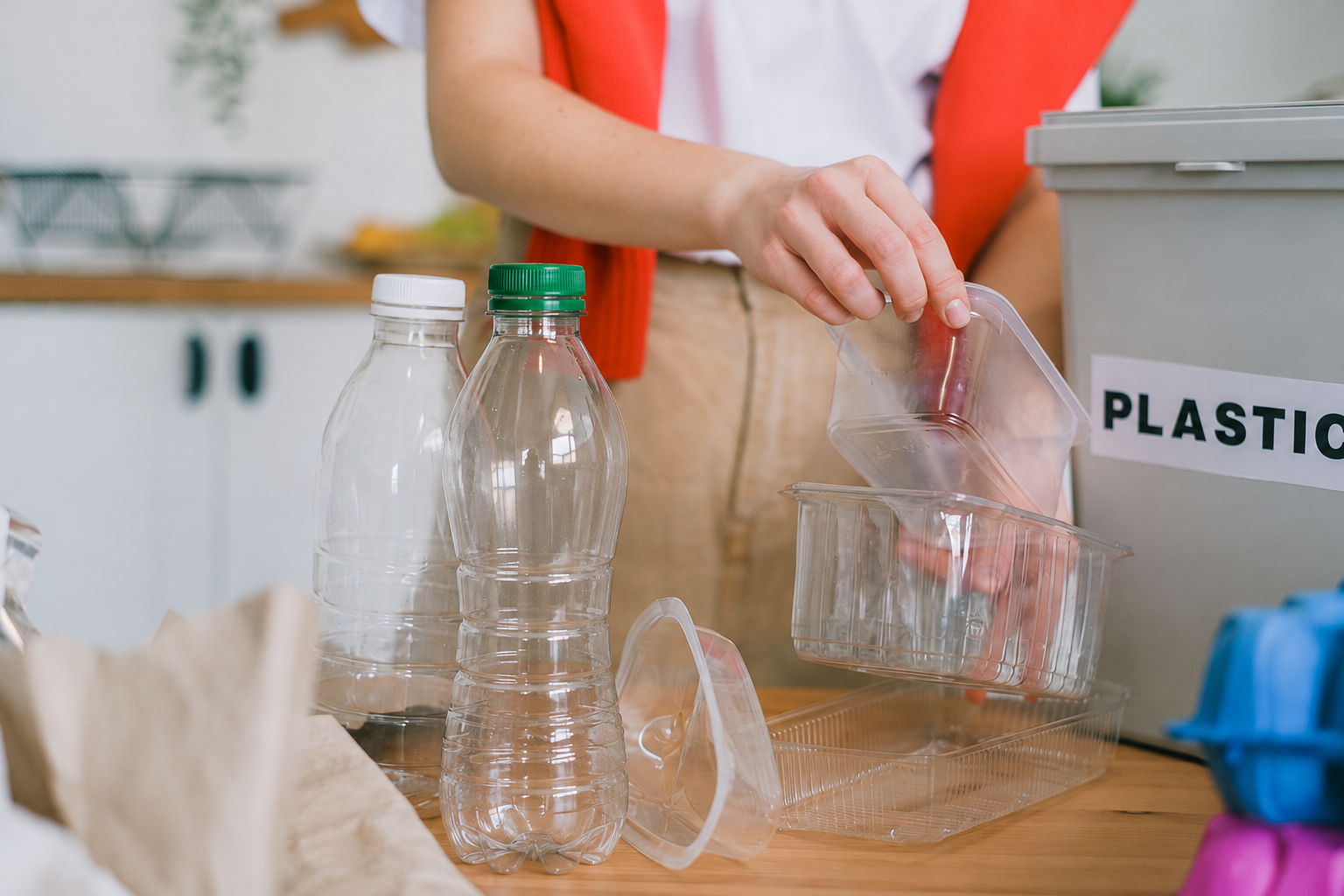
Clear PET rigid packaging | Beverage bottles, jars, some thermoforms | Commonly curbside or deposit for bottles; thermoform access varies | Established bottle stream; transparency supports optical sorting and higher-value output | Full-body sleeves, problematic labels or adhesives, dark color, multilayers, metal parts, small format, thermoform-specific market limits |
Natural or colored HDPE rigid packaging | Milk, household, personal-care and cleaning-product bottles | Commonly curbside for bottles and selected rigid formats | Established #2 stream and broad packaging use | Carbon-black or difficult pigments, incompatible closures, labels, barriers, silicone parts, residual hazardous product |
PP rigid packaging | Tubs, cups, closures, caps, dispensing components | Curbside or drop-off in participating programs | Heat resistance and versatile package formats | Uneven collection access, small parts, multi-resin assemblies, labels, fillers, barrier layers, or pigment effects |
PE film and flexible packaging | Bags, wraps, overwraps, some pouches | Store drop-off or specialty collection when the complete structure qualifies | Lightweight and efficient product-to-package ratio | Not accepted curbside in most programs, food residue, non-PE layers, metallization, zippers or attachments, labels and inks |
Multimaterial flexible laminate | Retort, high-barrier snack, coffee, pet-food and refill pouches | Usually no conventional curbside route; specialty programs require verification | High product protection at low material weight | Layers cannot be economically separated; metal foil, PET, nylon, EVOH, adhesives, spouts, and inks may disrupt the target stream |
Certified compostable package | Foodservice items, food-scrap liners, selected food-soiled applications | Separately collected commercial organics program that explicitly accepts the item | Can help carry food scraps into an approved organics stream | Incorrect certification scope, noncertified finished item, no local facility acceptance, consumer confusion, contamination with conventional plastics |

For plastics, small changes can determine whether a package is compatible with a recycling stream. APR’s PET thermoform guidance examines base resin, color, size, shape, labels, inks, adhesives, lids, additives, and multilayer construction—and explicitly notes that good technical design alone does not justify a recyclability claim where collection is unavailable. (Association of Plastic Recyclers: PET Thermoform Packaging Design Resources)
Food-Contact Safety Is a Separate Approval Gate
“Recyclable,” “recycled content,” and “suitable for food contact” describe different attributes. A package can be technically recyclable but unsuitable for a particular food use. It can contain post-consumer recycled material but lack the evidence needed for direct contact with the intended food under the intended temperature and duration.
FDA identifies three main concerns for post-consumer recycled plastics used in food-contact articles: contaminants may remain in the recycled material, non-food-contact material may enter the feedstock, and additives may not comply with applicable food-contact requirements. For relevant proposed uses, FDA describes a case-by-case review and asks for information on source control, the recycling process, contaminant removal, and conditions of use; its current page also identifies specific situations in which it no longer performs individual process evaluations. (FDA: Recycled Plastics in Food Packaging)
Before approving a recyclable or recycled-content food package, obtain documentation tied to the exact resin, grade, color, additive system, recycled-content source, manufacturing process, and finished construction.
Food-contact verification | What the file should establish |
|---|---|
Regulatory basis | Applicable regulation, effective Food Contact Notification, threshold exemption, FDA opinion/advice where relevant, or another documented basis |
Intended food type | Dry, aqueous, acidic, alcoholic, fatty, or other relevant food category |
Conditions of use | Fill and storage temperature, heating or retort exposure, contact duration, refrigerated/frozen use, and single- or repeated-use conditions |
Contact geometry | Direct contact, functional barrier, coating, adhesive, ink, closure, gasket, or indirect-contact component |
Recycled feedstock controls | Source, sorting controls, contamination prevention, decontamination process, and traceability |
Migration or process evidence | Applicable testing, modeling, challenge testing, specifications, and supplier declarations |
Change control | Notice requirements for resin, additive, color, recycled-content percentage, supplier, process, site, or package-structure changes |
Do not use “food safe” as a blanket material description. The defensible statement is narrower: the specified material or article has an identified regulatory basis for the stated food type and conditions of use. Quality, regulatory, and supplier-assurance teams should review the evidence before commercial production.
Compostable Packaging Requires the Right Standard, Finished-Item Certification, and a Receiving Facility
Compostability is a different recovery route from conventional material recycling. A compostable package should not be called recyclable unless it separately meets the requirements for a legitimate recycling stream.
The standard must also match the complete product and the claim being made.
Standard or certification route | What it covers | What it does not establish |
|---|---|---|
ASTM D6400-26 | Plastics and products made from plastics designed for aerobic municipal or industrial composting under thermophilic conditions | Home compostability, facility acceptance, recyclability, litter degradation, or food-contact suitability |
ASTM D6868-21 | End items in which plastic films, coatings, binders, or polymer additives are combined with paper or other compostable substrates; the entire end item is evaluated for municipal or industrial composting | Home compostability, automatic acceptance by composters, or a claim based only on one coating or raw material |
EN 13432:2000 | Packaging recoverable through composting and biodegradation under industrial-composting conditions in the European framework | Home compostability or automatic suitability for every real-world facility |
BPI Commercial Only certification | Third-party assessment of eligible finished items for commercial compostability, using ASTM D6400 as the base standard and additional program requirements | Home compostability or mandatory acceptance by every U.S. organics program |
BPI Commercial & Home certification | A separate certification route covering both commercial facilities and properly managed home composting, with home testing under a different scheme | Universal performance in unmanaged piles, soil, marine environments, or litter |
Facility acceptance confirmation | Evidence that the hauler and receiving operation will accept and process the exact item | Technical certification, legal claim substantiation, or acceptance in other markets |
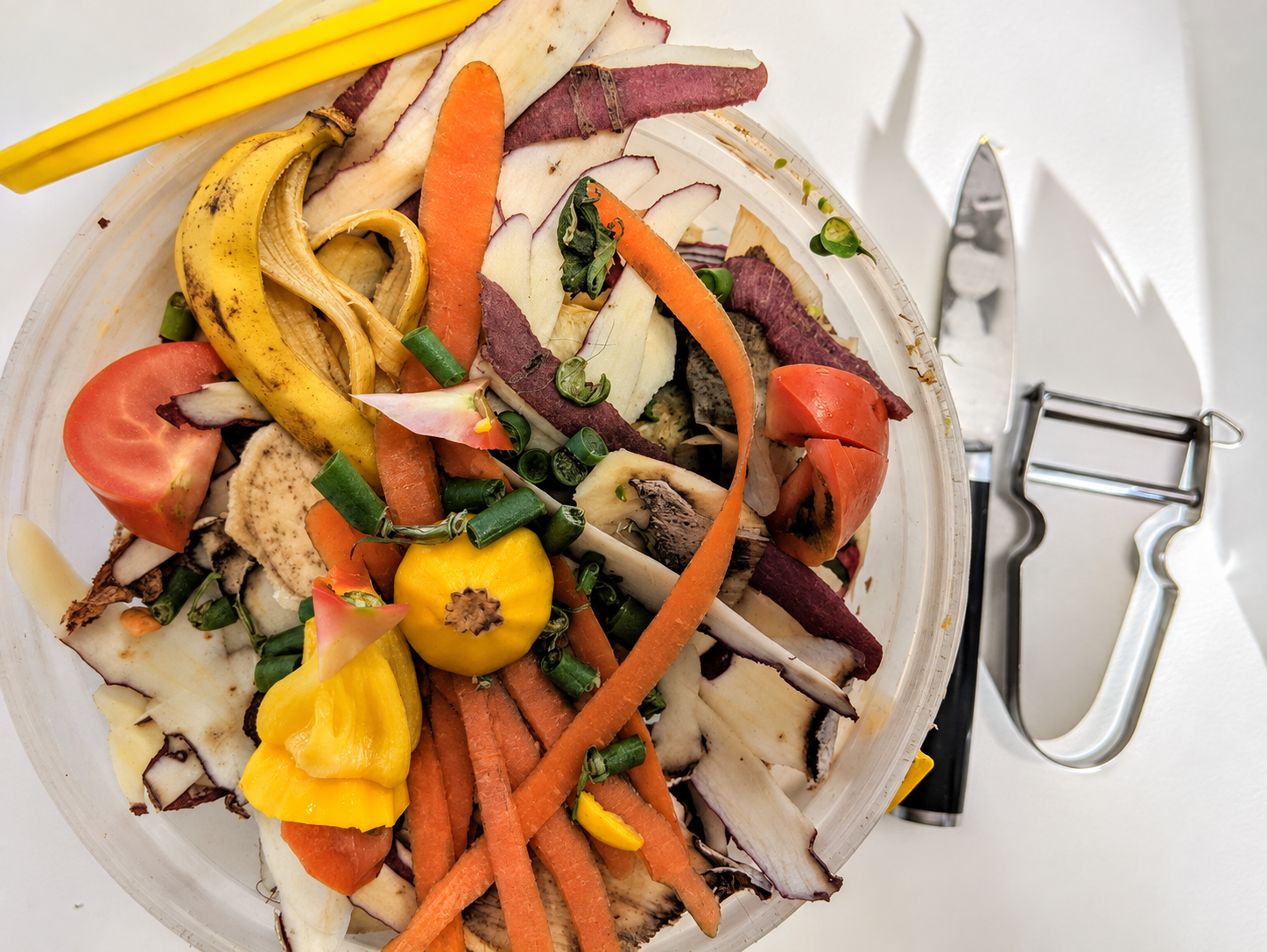
ASTM’s current active D6400 edition is D6400-26, updated June 15, 2026, and its scope is municipal and industrial aerobic composting. D6868-21 remains active and applies to complete end items that combine polymers with paper or other substrates. (ASTM D6400-26; ASTM D6868-21)
BPI maintains distinct commercial-only and commercial-plus-home certification programs because the operating environments differ. A commercial-compost certificate therefore should not be converted into a home-compost claim. (BPI: Compostability Certification)
For EU-bound packaging, EN 13432 should be treated as an industrial-composting reference, not a home-compost standard. In its 2026 PPWR implementation guidance, the European Commission said existing EN 13432 may be used as guidance until a new standard is adopted, while a separate EU-wide home-compostability standard is being developed. EU market claims therefore require current PPWR and member-state review, not a U.S. certification assumption. (European Commission notice on PPWR implementation)
Certification does not force a facility to accept the package
Operational acceptance is a separate gate. Composters may reject even certified items because of processing time, contamination risk, identification difficulty, local contract terms, or the inability to distinguish compostable and conventional look-alikes. California offers a concrete example: its organics rules allow compostable plastics in a green-container program only when the material meets the specified compostability requirement and the receiving facility provides written notice that it can process and recover the material. (CalRecycle: Organics collection questions and answers)
For each launch market, document:
the exact finished product and certification number;
whether every component—coating, ink, adhesive, label, lid, window, closure, and accessory—is within the certification scope;
the collection route available to the intended user;
written acceptance from the receiving facility or program;
the consumer preparation and disposal instructions; and
the fallback instruction where the compost route is unavailable.
Environmental Claims Need Market-Specific Substantiation
The FTC’s current Green Guides say marketers should qualify a recyclable claim when appropriate recycling facilities are unavailable to at least 60% of the consumers or communities where the product is sold. The FTC also says compostable claims need reliable evidence for the complete product or package and should be qualified when home composting is not appropriate or municipal/institutional access is limited. A third-party certification does not eliminate the marketer’s responsibility to substantiate the express and implied claim. (FTC: Environmental Claims—Summary of the Green Guides)
Keep these terms separate:
Claim | What it should communicate | Common overclaim |
|---|---|---|
Recyclable | The finished package can enter an established collection, sorting, reprocessing, and end-market system in the claimed market | Treating a resin code or technically recoverable material as proof of real access |
Contains recycled content | A stated percentage and type of material was recovered or diverted from a waste stream | Implying that recycled content makes the package recyclable |
Compostable | The complete item meets the applicable composting evidence and access qualification | Omitting “commercially” or implying home compostability |
Biobased | Some or all feedstock comes from biological sources | Implying the package is recyclable, compostable, biodegradable, or lower impact |
Biodegradable | The item biodegrades under defined conditions and time | Using a broad, unqualified claim that does not reflect customary disposal |
Food-contact suitable | The exact material or article has an appropriate basis for the intended food and use conditions | Treating a generic polymer or certification as approval for every food application |
State rules can be more specific and can change while a national package is still in market. As of October 28, 2026, CalRecycle states that California SB 343 labeling restrictions apply to products and packaging manufactured after October 4, 2026, while also noting that a federal preliminary injunction currently blocks enforcement. This live litigation makes current legal review essential before using a recycling symbol or unqualified claim in California. (CalRecycle: SB 343 Accurate Recycling Labels)
Consumer instructions should follow the actual route. How2Recycle, for example, distinguishes Widely Recyclable, Check Locally, Not Yet Recyclable, and Store Drop-off, including separate instructions for individual package components. (How2Recycle: Label Explorer)
A Seven-Gate Specification Process
A material should advance only when the complete package passes every required gate.
Gate | Owner | Approval question | Minimum record |
|---|---|---|---|
1. Product protection | Packaging engineering and quality | Does it maintain shelf life, seal integrity, barrier, strength, and distribution performance? | Approved performance specification and validation report |
2. Food contact or product safety | Regulatory, quality, and supplier assurance | Is every contact component suitable for the exact intended use? | Regulatory basis, supplier declarations, testing, and traceability |
3. Technical recycling compatibility | Packaging engineering and recycler/reclaimer partner | Does the complete structure fit the target sorting and reprocessing stream? | Design-guide review and applicable test results |
4. Collection and facility access | Sustainability and market operations | Is the route available where the SKU will be sold and used? | Market-weighted access study and program/facility confirmation |
5. Consumer preparation | Brand and insights | Can users correctly empty, rinse, separate, replace caps, or use drop-off? | Validated disposal instruction and component-level label |
6. Claims and labeling | Legal, regulatory, and brand | Are all words, symbols, qualifiers, and certifications supported for each market? | Claim substantiation file and dated legal approval |
7. Commercial control | Procurement and operations | Can suppliers maintain the approved structure, evidence, quality, cost, and change notification? | Controlled specification, quality agreement, and change-control terms |

Avoid scoring these gates into one average. A low-cost material with no food-contact basis, no collection route, or an unsupported claim is not rescued by a high score elsewhere.
What This Means for CPG Leaders
Choose the recovery route before choosing the claim. Define whether the package belongs in curbside recycling, a deposit system, store drop-off, commercial fiber recovery, or a separately collected organics program.
Specify the complete package, not just the substrate. Include every layer, coating, color, label, adhesive, closure, liner, valve, and accessory in the recyclability or compostability review.
Run food-contact approval independently. Recycled content and environmental certification do not replace FDA-related documentation for the intended food and conditions of use.
Certify the finished compostable item and verify the receiver. Check the exact SKU against D6400, D6868, or EN 13432 as applicable, then confirm facility acceptance. Commercial-compost evidence is not a home-compost claim.
Revalidate by market and after every material change. Collection data, state law, certification scope, resin sourcing, and facility acceptance can all change during a package’s commercial life.
The strongest recyclable packaging strategy is not the one with the most sustainable-sounding material name. It is the one whose product protection, safety evidence, recovery pathway, consumer instruction, and market claim all describe the same real-world system.
Frequently Asked Questions
What are the most commonly accepted recyclable packaging materials in the United States?
EPA’s 2024 state and territory assessment identified paper products, HDPE plastic, PET plastic, and aluminum as the most commonly accepted materials across the majority of programs. Acceptance of a particular finished package still depends on its format, components, condition, and local rules.
Does a plastic resin identification code prove that a package is recyclable?
No. A resin code identifies the base resin; it does not prove collection access, sortability, reprocessing compatibility, or an end market for the complete package.
Is compostable packaging also recyclable?
Usually not through conventional recycling. Compostable packaging belongs only in an organics program that accepts the exact item. Putting it in a plastic-recycling stream can create contamination unless a specific program says otherwise.
Does ASTM D6400 mean home compostable?
No. ASTM D6400-26 covers municipal and industrial aerobic composting under thermophilic conditions. Home compostability requires separate evidence or certification for the lower-temperature, less-controlled home environment.
Does ASTM D6868 apply to a coated paper package?
It may, when plastic films, coatings, binders, or polymer additives are combined with a compostable substrate—but D6868 evaluates the entire end item, not only the coating or base paper. Confirm the exact finished package and active standard edition with the certifier.
Does EN 13432 prove home compostability?
No. EN 13432 addresses packaging recoverable through industrial composting and biodegradation. It should not be used as a home-compost claim without separate, applicable evidence.
Is recycled plastic automatically suitable for food contact?
No. FDA focuses on feedstock source control, contamination, decontamination performance, additives, migration, and the proposed conditions of use. Approval must be tied to the exact recycled material, process, food type, temperature, duration, and package construction.