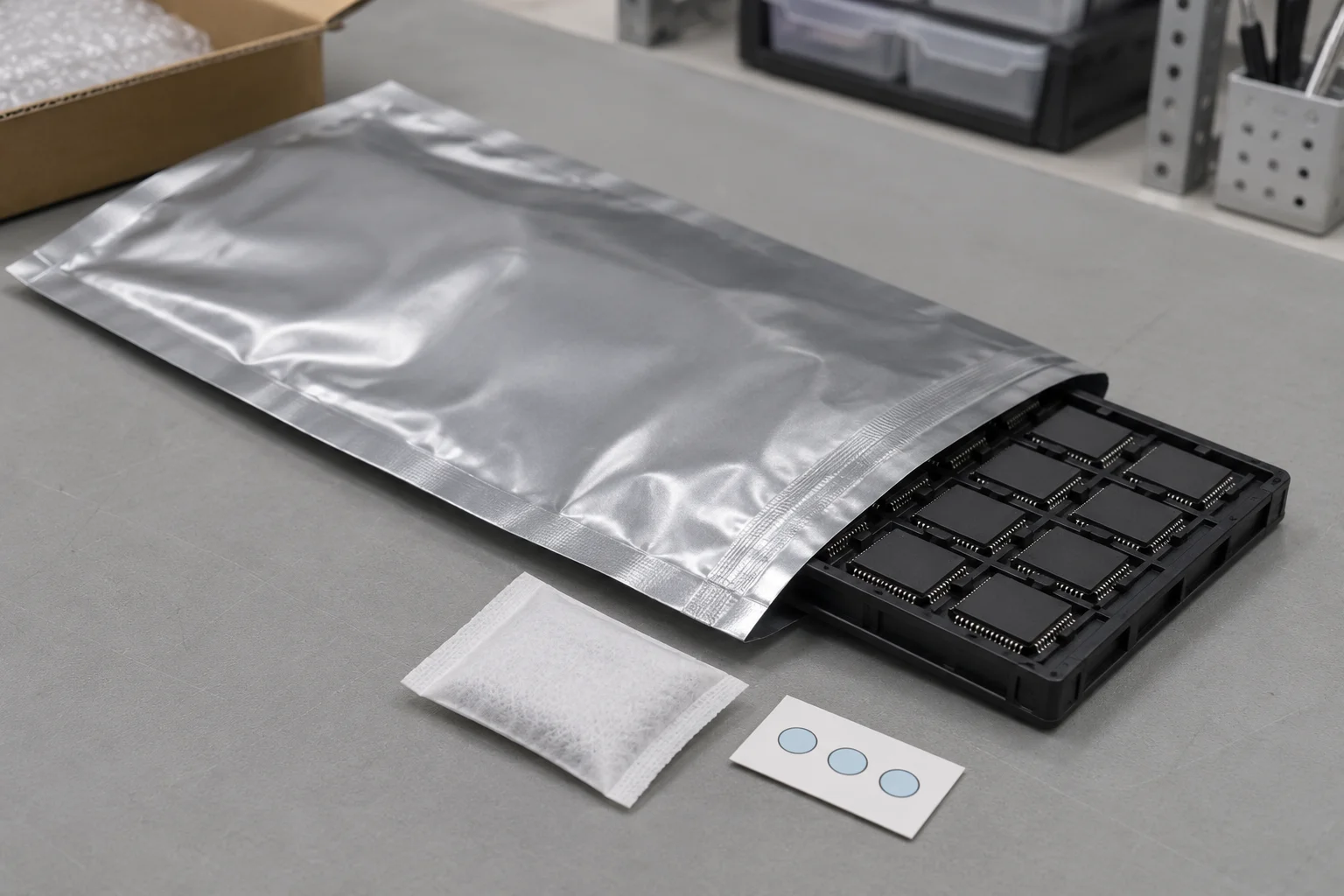
The complete package still includes barrier layers, tie resins, coatings, inks, laminating and cold-seal adhesives, labels, zippers, valves, spouts, and product residue. It also needs a collection route, compatible sorting and reprocessing, and a viable end market. How2Recycle evaluates recyclability across applicable law, collection, sortation, reprocessing, and end markets—not material composition alone. (How2Recycle)
For U.S. CPG brands, the defensible approach is to treat recyclable flexible packaging as a system claim. First design the full package for a named recycling stream. Then test unknown features, verify an available consumer collection route, obtain the appropriate package-specific label, and control the approved specification through production.
What Is Recyclable Flexible Packaging?
Flexible packaging includes formats such as bags, pouches, envelopes, sachets, removable lidding, liners, and wraps. These structures can use plastic film, paper, aluminum foil, or combinations of substrates. (Flexible Packaging Association; APR PE Flexible Guidance)
This article focuses on plastic flexible packaging intended for mechanical recycling in the United States, particularly PE- and PP-based designs. It does not assume that paper laminates, foil laminates, certified compostable films, or packages intended for a chemical-recycling pilot follow the same criteria.
A useful definition separates five different claims:
Term | What it establishes | What it does not establish |
|---|---|---|
Mono-material design | One polymer family makes up most of the structure under the selected guideline | The package is automatically compatible, collected, or legally marketable as recyclable |
Designed for recycling | The specification follows preferred design features for a named recycling stream | The commercial package has passed every required test |
Technically compatible | Testing or recognized guidance indicates the package can pass through a defined reprocessing system without unacceptable effects | Consumers have access to that system or the material will be captured |
Accepted for collection | A curbside, retail, depot, subscription, or other program says it accepts the item | The package will necessarily be sorted, sold, and reprocessed after collection |
Actually recycled | Collected material reaches reprocessing and becomes usable secondary material | Every similar package, location, or production batch achieves the same outcome |
APR’s current Critical Guidance Protocol makes the boundary explicit: participation or technical recognition does not guarantee legal compliance, that a complete package is recyclable, or that it will be recycled. (APR FPE-CG-01, revised August 18, 2026)
Mono-PE and Mono-PP Are Not Interchangeable Recycling Routes
“Mono-material” is useful only when the target recycling stream is named. PE and PP are both polyolefins, but a package designed around one should not be placed into the other stream without evidence that the program and processor accept it.
Design platform | Technical opportunity | Current U.S. collection reality | Brand implication |
|---|---|---|---|
Mono-PE flexible packaging | Can be designed for the PE-film stream using current APR guidance; unknown features may be tested | Residential postconsumer PE film is primarily collected at retail locations; qualifying packages may receive Store Drop-off instructions | Use the complete APR PE Flexible Guide and a package-specific labeling assessment |
Mono-PP flexible packaging | Can be engineered as a predominantly PP structure and evaluated under a PP-flexible method where one applies | APR says PP film collection is emerging in select North American markets; the current APR flexible guide is PE-specific | Do not place mono-PP film into the U.S. PE Store Drop-off stream or make a national claim without a verified PP collection and processing route |
Mixed PE/PP flexible packaging | A compatibilized or low-level secondary resin may perform acceptably in a specified test | Collection programs commonly target a defined primary stream, not a generic “polyolefin” mix | Test the exact blend and attachments; do not infer compatibility from the word polyolefin |
Multi-material laminate | May provide excellent oxygen, moisture, light, aroma, puncture, or heat resistance | Dissimilar layers can be difficult to separate and can impair recovered resin | Preserve product protection, but redesign or qualify the end-of-use claim based on the complete laminate |

The Association of Plastic Recyclers’ PE Flexible Guidance, updated September 30, 2026, says PE is the dominant film collected and recycled into postconsumer resin in North America, while PP film collection is emerging only in selected markets. How2Recycle separately says the U.S. Store Drop-off stream applies to qualifying PE film—not flexible plastic in general. (APR PE Flexible Guidance; How2Recycle FAQ)
Mono-PP may therefore be a valid technical design direction for a specific market, closed-loop system, pilot, or future infrastructure plan. It should not be presented to U.S. consumers as if it has the same established collection instruction as an approved PE film package.
“Mono” Still Allows Features That Can Change the Result
The primary polymer percentage is only the start of the assessment. APR currently lists PE flexible structures with more than 90% PE by package weight in its preferred mono-material category, subject to the rest of the guide. Structures containing non-PE layers or blend components require testing, and other thresholds apply to specific copolymers and features. (APR PE Flexible Guidance)
That percentage should not become a marketing shortcut. A package described as “90% PE” can still contain a feature that interferes with sortation, changes density, causes gels or specks during extrusion, lowers film quality, or falls outside the collection program
Selected APR PE flexible design screens
The table below is a planning summary, not a substitute for the live APR guide or a package assessment.
Feature | Current APR PE-flexible direction | Practical interpretation |
|---|---|---|
PE content | More than 90% PE by total package weight is the preferred mono-material starting category | Calculate against the complete package being assessed, not only the main web |
Non-PE layers or blends | Require testing at any percentage | A small layer is not automatically harmless |
Overall density | Density near the guide’s sink/float trigger requires evaluation; the current guide references 0.996 g/cm³ as the point to investigate | Include pigments, fillers, barriers, adhesives, labels, and attachments in the density review |
Paper in the PE structure | Listed as rendering the package non-recyclable under the current PE flexible guide | Paper fibers can remain with film; do not treat “mostly PE” as sufficient |
PET in the PE structure | Listed as rendering the package non-recyclable | PET and PE behave differently during PE-film reprocessing |
PVC or PVDC | Listed as rendering the package non-recyclable | Avoid using these materials in a package intended for the PE-film stream |
Degradable polymers or additives | Listed as rendering the package non-recyclable | A degradation claim is not compatible with a durable PE recyclate objective |
Aluminum foil | Listed as rendering the package non-recyclable | Foil can trigger metal removal or disrupt extrusion |
APR categories and test requirements change as data and infrastructure change. Record the guide version and assessment date rather than copying a threshold into a permanent corporate specification without change control.
Barrier Layers Must Protect the Product and the Recycling Stream
High-barrier flexible packaging often depends on a layer that is chemically different from the sealant and structural webs. The design question is not simply “Does this package contain a barrier?” It is “Is this barrier, at this loading and with these tie layers, compatible with the named recycling process?”
Barrier or structure | Function in the package | Recycling question |
|---|---|---|
EVOH | Oxygen and aroma barrier | Is the EVOH percentage within current guidance, and are the required compatible tie layers present at the correct loading? |
PA/nylon | Puncture resistance, toughness, and barrier performance | Does the applicable guide permit the exact amount and construction, or is technical testing required? |
AlOx or SiOx | Thin transparent barrier coating | Is it deposited directly on the permitted base film without an unassessed primer or wet coating? |
Metallization | Light, oxygen, and moisture barrier plus visual appearance | Will metal detection reject the package, and does the structure pass required sorting and reprocessing tests? |
Aluminum foil | Very high light, oxygen, and moisture barrier | Can it be removed or separated? In the current APR PE flexible guide, foil in the structure renders it non-recyclable |
PVDC | Moisture and oxygen barrier | The current APR PE flexible guide lists PVDC as incompatible with the PE-film route |
Coating or primer | Barrier, print anchorage, heat resistance, or surface performance | Is the chemistry thermoplastic-compatible, filterable, or validated at the commercial coat weight? |
The current APR PE guidance provides specific conditions for preferred EVOH use, including different limits for coextruded or extrusion-laminated film and APR-recognized adhesive-laminated structures. It also treats SiOx and AlOx deposited directly on PE film, without additional wet coatings or primers, as preferred. These conditions are formulation-specific; a converter’s general statement that it “uses EVOH” or “uses a recyclable coating” is not enough. (APR PE Flexible Guidance)
The business trade-off also matters. Removing a barrier can reduce recycling interference but create seal failures, shorter shelf life, oxidation, moisture gain, aroma loss, or product waste. The correct target is a fit-for-purpose package with the simplest validated recycling-compatible structure, not a nominally simple film that fails its primary job.
Adhesives, Inks, Labels, and Fitments Can Decide the Outcome
Attachments are not secondary details. In a film-recycling process, many of them remain with the package through size reduction and extrusion.
Component | Preferred design direction | Questions for the specification |
|---|---|---|
Laminating adhesive | Minimize loading and use a system tested for the target stream | Chemistry, coat weight, cure conditions, residual solvents, and test status |
Cold-seal adhesive | Treat as a technical feature requiring evidence when the guide calls for it | Coverage, dry coat weight, product contact, and effect during extrusion |
Direct-print ink | Minimize total ink and validate the full ink/primer/lacquer system | Binder chemistry, pigment, metallic content, coverage, and heat behavior |
Pressure-sensitive label | Prefer a compatible substrate and adhesive system | Facestock resin, adhesive, coverage, removability, density, and consumer instruction |
Paper label | Avoid on a PE film package intended to remain intact in recycling | Can it be completely removed in normal use, and does the approved label require removal? |
Zipper | Match the target polymer when possible and include it in the weight calculation | Resin, melt behavior, dimensions, and percentage of total package weight |
Spout, cap, or valve | Minimize mass and validate rigid attachments in the flexible stream | Resin grade, melt-flow difference, liner, seal, spring, metal, and separability |
Metal component | Eliminate where possible for a PE-film route | Metal detector response and whether the complete package will be rejected |

APR’s current guide says PE flexible closures are preferred for PE flexible packages, while rigid PE attachments and non-PE attachments require testing. It treats metal-containing attachments as rendering the PE flexible package non-recyclable. The guide also distinguishes PE labels from other polyolefin labels and calls for assessment of inks, adhesive loading, metallic decoration, and wet chemistry. (APR PE Flexible Guidance)
How2Recycle’s use guidance similarly asks members to disclose attachments, barrier and tie layers, foils or metallization, fillers, degradable additives, adhesives, coatings, and metallic inks or decoration; additional reprocessing or sortation testing may be requested. (How2Recycle Guidelines for Use, August 2025)
For procurement, “recycling-compatible adhesive” should never be accepted as an unqualified line on a supplier data sheet. The purchasing specification should identify the tested product, application conditions, coat weight, substrates, curing window, and the recognition or test evidence that applies to the exact construction.
Technical Recyclability Is Not Local Recycling
Technical testing asks whether a package can move through a defined recycling process without unacceptable impact. It does not prove that a household can place the item in a local bin. The U.S. Plastics Pact’s film-and-flex framework likewise treats design, collection, and end-market demand as interconnected levers rather than one interchangeable recyclability test. (U.S. Plastics Pact)
In the United States, EPA identifies retail or grocery collection bins as the common collection method for plastic film, bags, and wraps. EPA also advises consumers to check the local program because accepted materials differ. (U.S. EPA standardized terms; U.S. EPA recycling guidance)
For qualifying PE film, the How2Recycle Store Drop-off label provides a specific retail-collection instruction. It is not a curbside label, and not all flexible packages qualify. The current Plastic Film Recycling Directory likewise tells consumers to verify accepted items before drop-off.
Collection options can include:
retailer-sponsored Store Drop-off for approved PE film;
a municipal depot that separately accepts qualifying film;
a paid subscription or mail-in service with its own material list;
a controlled commercial or back-of-house film program;
a geographically limited curbside pilot;
a specialized recovery program for defined materials.
These routes are not interchangeable. A program that accepts clean commercial pallet wrap does not prove acceptance of printed food pouches. A subscription program in selected ZIP codes does not support a nationwide curbside claim. A technically compatible mono-PP pouch does not belong in a PE retail bin unless that program expressly accepts it.

A Design Guide Is a Decision Tool, Not a Certification by Itself
The APR Design Guide groups package features by their expected effect on recycling and connects unknown features to testing protocols. APR’s overview distinguishes preferred design recognition from critical-guidance recognition for features that require laboratory testing and review. (APR Design Guide Overview)
Brands should distinguish four forms of evidence:
Supplier statement: useful for identifying materials, but not independent package approval.
Design-guide screen: shows whether each known feature is preferred, requires testing, is detrimental, or renders the package non-recyclable under that guide.
Laboratory test report: applies to the tested formulation and method; it does not automatically carry across suppliers, loadings, or constructions.
Program recognition or label assignment: requires the relevant body’s review and applies within its stated scope.
Do not say “APR certified” merely because a package was screened against the guide or a lab ran an APR method. APR’s 2026 Critical Guidance Protocol says recognition requires APR review of the test data and that unreviewed results cannot be used to imply APR approval. (APR FPE-CG-01)
A Practical Development Workflow
Stage | Required work | Decision gate | Owner |
|---|---|---|---|
1. Define the product need | Establish oxygen, moisture, light, aroma, puncture, seal, temperature, shelf-life, filling, distribution, and regulatory requirements | Can a simpler structure still protect the product? | Product + packaging R&D |
2. Name the target stream | Choose PE film, PP film, or another specific system and geography | Does a real collection and reprocessing route exist for the intended market? | Sustainability + regulatory |
3. Build the complete BOM | Record every layer, resin, coating, ink, adhesive, label, closure, and fitment by weight | Is the “mono” calculation based on the complete assessed package? | Packaging engineering |
4. Screen the live guide | Classify each feature under the current applicable design guide | Are all features preferred, or are tests/redesigns required? | Packaging sustainability |
5. Test the commercial construction | Use the required protocol, sample preparation, laboratory, and review path | Does the exact structure meet the relevant criteria? | Engineering + laboratory |
6. Validate package performance | Run filling, sealing, distribution, storage, shelf-life, migration/food-contact, and consumer-use checks as applicable | Does the redesigned package still protect the product and meet regulatory requirements? | Quality + regulatory + R&D |
7. Obtain disposal guidance | Submit the exact package to the applicable labeling or claims process | Which consumer instruction is approved for each component and market? | Regulatory + sustainability |
8. Approve artwork | Use the assigned wording and symbols without broader unsupported claims | Does artwork clearly distinguish Store Drop-off, curbside, local, and discard instructions? | Artwork + legal |
9. Control production | Lock approved suppliers, formulations, coat weights, print systems, fitments, and tolerances | Does each production change trigger technical and claim review? | Quality + procurement |
10. Monitor infrastructure | Recheck collection access, guidance revisions, state law, and end markets | Does the claim remain supported after launch? | Sustainability + legal |
Recyclability Claims Must Match Access and Applicable Law
The FTC Green Guides say marketers should qualify recyclable claims when appropriate recycling facilities are not available to at least 60% of consumers or communities where the product is sold. The lower the access, the more clearly the limitation should be communicated. (Federal Trade Commission)
That makes terms such as recyclable, recycle ready, designed for recycling, and mono-material materially different:
Proposed wording | Implied message | Evidence needed |
|---|---|---|
“Recyclable” | Consumers can send the package through a real recycling route | Complete-package technical evidence, collection access, legal review, and clear qualification where required |
“Store Drop-off” | The named component belongs in a participating PE-film retail program | Package-specific approved instruction and current local participation |
“Designed for recycling” | The structure follows defined design criteria | Name or document the guide, version, geography, and assessment scope; avoid implying collection if it is absent |
“Recycle ready” | Often understood as future or conditional compatibility | Define exactly what is ready and what infrastructure is missing; legal review is essential |
“Mono-PE” or “Mono-PP” | The package is predominantly one polymer family | Verified complete-package composition; do not let the material description imply recyclability without support |
State law can be stricter or use different criteria. California’s SB 343 links recyclability indicators to evidence about collection and processing in the state. CalRecycle reports that a federal court issued a preliminary injunction on July 14, 2026 that blocks enforcement while litigation continues; the agency’s study obligations remain. (CalRecycle)
This is a current legal-status note, not a conclusion that claims are unrestricted. National packages still require current federal, state, program, and counsel review.
Flexible Packaging Recyclability Checklist
Check | Evidence to retain | Pass question |
|---|---|---|
Target stream and geography | Written recycling-route definition | Is the package designed for a real, named stream in the intended sales market? |
Complete mass balance | Layer-by-layer BOM including all components | Do polymer percentages total 100% of the assessed package? |
Barrier compatibility | Resin, loading, tie-layer, and coating data | Does the exact barrier construction meet current guidance or required testing? |
Adhesive compatibility | Product code, chemistry, coat weight, cure window, and test evidence | Does the commercial adhesive system match the evaluated system? |
Ink and coating compatibility | Binder, pigment, metallic content, coverage, and overprint chemistry | Have all printed and coated surfaces been assessed? |
Attachment compatibility | Material, mass, density, melt behavior, and separability | Are zipper, spout, valve, label, and seal included in the result? |
Package performance | Seal, leak, distribution, storage, shelf-life, and use data | Does the redesign still protect the product through its intended life? |
Technical assessment | Dated guide screen, test report, and recognition status | Is the wording no stronger than the evidence? |
Collection access | Current program and geographic evidence | Can intended consumers actually use the stated route? |
Label and claim approval | Program approval, legal review, and final artwork | Does the consumer instruction match the package and market? |
Change control | Approved supplier list, tolerances, and notification process | Will a resin, coating, adhesive, ink, or fitment change trigger reassessment? |
Frequently Asked Questions
Is mono-material flexible packaging always recyclable?
No. A predominant polymer can improve compatibility, but barriers, adhesives, inks, labels, fitments, density, product residue, collection access, and end markets still matter.
Is mono-PP flexible packaging recyclable in the United States?
It may be technically compatible with a defined PP-flexible system, but U.S. consumer collection is not equivalent to the established PE-film Store Drop-off route. APR currently describes PP film collection as emerging in select North American markets. Verify the actual program before making a claim.
Does a package become recyclable when it exceeds 90% PE?
Not automatically. The current APR PE flexible guide uses more than 90% PE as a preferred mono-material starting category, but every other feature of the complete package must still be assessed.
Can EVOH be used in recyclable PE flexible packaging?
Potentially. Compatibility depends on percentage, construction, tie layers, adhesives, and whether the package follows the current preferred conditions or passes the required testing.
Are AlOx and SiOx coatings compatible with PE-film recycling?
The current APR guide treats them as preferred when deposited directly on PE film without additional wet coatings or primers. A finished commercial structure must still be assessed in full.
Do consumers need to remove labels, zippers, or spouts?
Follow the package-specific instruction. APR’s design approach does not assume consumers will perform extensive disassembly beyond normal use, so designers should not rely on an unrealistic removal step to rescue an incompatible package.
Does passing an APR test mean the package is APR approved?
No. APR’s protocol says recognition requires its technical review. A test report, recognition, collection label, and legal claim are separate evidence steps.
Does technical recyclability mean the package is recycled locally?
No. Local collection rules, sortation, reprocessor acceptance, bale quality, and end-market demand determine what happens in practice.
What This Means for CPG Leaders
Recyclable flexible packaging is not one material switch. It is a controlled chain of decisions linking product protection, package composition, recycling-system compatibility, consumer access, claims, and supplier change control.
For packaging R&D, the priority is a fit-for-purpose structure built around a named recycling stream. For procurement and quality, it is preserving the evaluated formulation through commercial production. For sustainability and regulatory teams, it is separating technical compatibility from collection access. For marketing and artwork teams, it is using language no broader than the package-specific evidence.
The most credible flexible-packaging strategy is not “make it mono and call it recyclable.” It is design, test, collect, communicate, and verify—at the level of the complete package and the actual market.