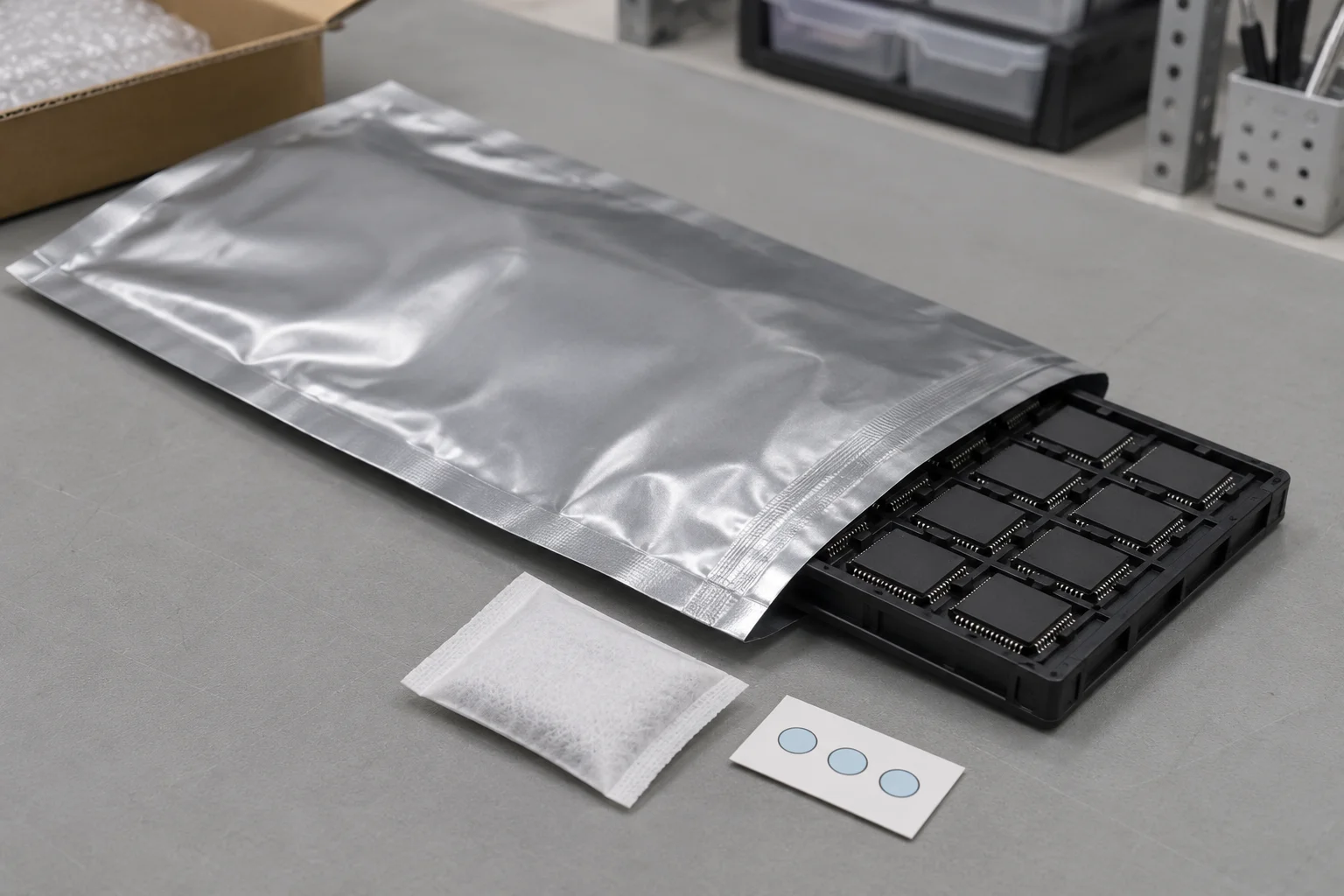
For CPG brands, the label is also not a self-declared claim based on appearance, a resin code, or a supplier saying that a pouch is “mono-material.” How2Recycle assigns a label after reviewing the specifications of the individual package. The complete structure—including barriers, coatings, inks, adhesives, labels, zippers, and product residue—can change the result. (How2Recycle FAQ)
The practical rule is simple: use Store Drop-off only for the exact package that received the approved instruction, then tell consumers to follow the approved label and confirm that their chosen location accepts the material. Never present Store Drop-off as universal curbside recycling.
What the How2Recycle Store Drop-off Label Means
How2Recycle defines Store Drop-off as a U.S.-only designation for eligible PE film packages that consumers can bring to participating retail stores for plastic-film collection. The label explorer describes the instruction as recycling the package at a local retail store that accepts PE film. (How2Recycle Store Drop-off; How2Recycle Label Explorer)
The wording contains several limits that brands should preserve.
Label element | Operational meaning | What it does not mean |
|---|---|---|
Store Drop-off | Use a participating retail or other listed film-collection location | Put the package in a household curbside cart |
PE film | The reviewed package is compatible with the applicable polyethylene-film stream | Every soft, flexible, or stretchable plastic qualifies |
Package-specific label | How2Recycle reviewed the specifications submitted for that package | One approval automatically covers every SKU, supplier, gauge, decoration, or closure |
Clean & dry instruction | Remove product residue and moisture to the level required by the approved label | Wash every film by a brand-created procedure or deposit contaminated packaging |
Participating location | The site operates an applicable collection program | Every branch of a retail chain accepts the item indefinitely |
The label is therefore a qualified collection instruction, not a promise that an item is accepted in every community, collected by every store, or recycled after every individual drop-off.
Store Drop-off and Curbside Recycling Are Different Systems
Most film packages are poor candidates for mixed curbside carts because thin, flexible material follows a different collection and handling route from bottles, cans, paper, and corrugated boxes. EPA consumer guidance specifically says plastic bags, wraps, and films should not go into household recycling bins and notes that retail and grocery stores often provide separate collection. Local rules still control. (U.S. EPA)
Decision point | Store Drop-off for eligible PE film | Typical curbside recycling |
|---|---|---|
Collection point | Participating retailer or designated film drop-off site | Household or multifamily recycling cart |
Material stream | Qualifying PE bags, wraps, and flexible film | Locally accepted bottles, cans, paper, cartons, and other program materials |
Consumer instruction | Find a participating site; follow the package label and site rules | Follow the city, county, or hauler acceptance list |
Preparation | Follow the approved instruction; eligible film commonly needs to be clean and dry | Empty, rinse, flatten, or separate as the local program directs |
Availability | Depends on an active local collection site | Depends on the local recycling contract and processing system |
Brand claim | “Store Drop-off” for the specifically approved package | Never imply “curbside recyclable” unless the applicable package and claim are substantiated |
This is why replacing “Store Drop-off” with a generic recycling symbol or a sentence such as “recycle with your household plastics” can materially change the claim.
A PE-Based Film Can Be a Candidate—Not an Automatic Qualifier
How2Recycle identifies flexible PE-based plastics, including HDPE and LDPE film, as the relevant material family. Examples may include grocery or produce bags, bread bags, stretch wrap, newspaper bags, compatible plastic mailers, overwrap around paper products, and some cereal bags. The program explicitly warns that the examples do not make every package in those categories eligible. (How2Recycle Store Drop-off)
That warning is essential for modern flexible packaging. A film may feel like polyethylene while the total package contains functional layers and attachments that affect recycling compatibility.
Package feature | Why it must be disclosed | Brand action |
|---|---|---|
Base film resins and percentages | Establishes whether the structure is PE-based and which resins are present | Obtain the full layer-by-layer bill of materials, not only a “mono-PE” sales description |
Barrier or tie layers | EVOH, nylon, PP, PVOH, and other layers may affect reprocessing | Report material, thickness, weight percentage, and any compatibilizer |
Metallization or metallic ink | Metal-containing features can change sortation or reprocessing behavior | Identify the metallized layer, coverage, and ink system |
Coatings and adhesives | Cold seal, barrier coatings, and laminating systems can remain with the film | Record chemistry and coat or adhesive weight |
Zippers, fitments, valves, and labels | An attachment may be a different polymer, paper, or higher-density component | Specify resin, weight, dimensions, separability, and label construction |
Fillers and pigments | Added material can change density and the quality of recovered resin | Report loading and total structure density where requested |
Degradable or compostable additives | Compostability and PE-film recycling are different end-of-use pathways | Do not combine the pathways or assume an additive remains compatible |
Product application and residue | Oils, powders, gels, food, or household-product residue can contaminate the stream | Validate whether consumers can realistically meet the approved preparation instruction |
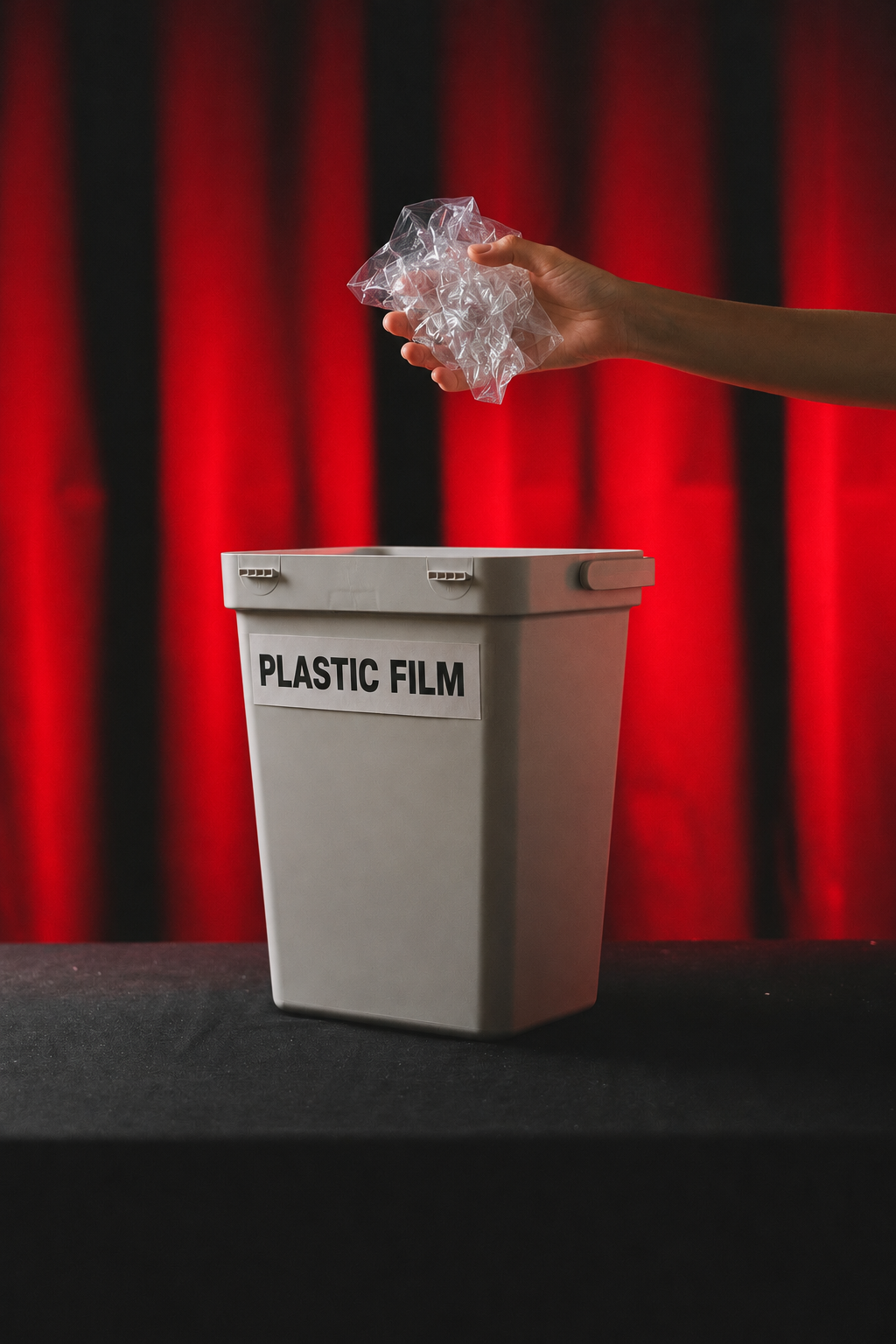
How2Recycle’s August 2025 abbreviated guidelines say technical testing may be required for features such as metallized layers, certain barrier layers or coatings, cold-seal adhesive, non-PE attachments, multiple functional layers, or density concerns. The document points to the Association of Plastic Recyclers’ Critical Guidance Protocol for Polyethylene Films when testing is needed. It also notes that structures below 90% PE may trigger testing; 90% is not a consumer sorting rule or a do-it-yourself eligibility threshold. (How2Recycle Guidelines for Use, August 2025)
The Resin Code Alone Is Not Enough
A #2 or #4 resin identification code can describe a plastic resin family, but it does not evaluate the whole package. How2Recycle notes that resin codes do not account for additives, coatings, attachments, labels, or product applications. Its assessment considers each component before assigning a disposal instruction. (How2Recycle FAQ)
For the same reason, these shortcuts are unreliable:
“It stretches, so it can go to Store Drop-off.”
“The supplier calls it mono-material, so it qualifies.”
“The main web is LDPE, so the zipper and label do not matter.”
“Another brand uses the label on a similar pouch, so we can use it too.”
“The package passed a laboratory test, so no label review is needed.”
Material screening and testing can support an application. They do not replace the package-specific label assignment and artwork approval process.
How the Store Drop-off Route Works
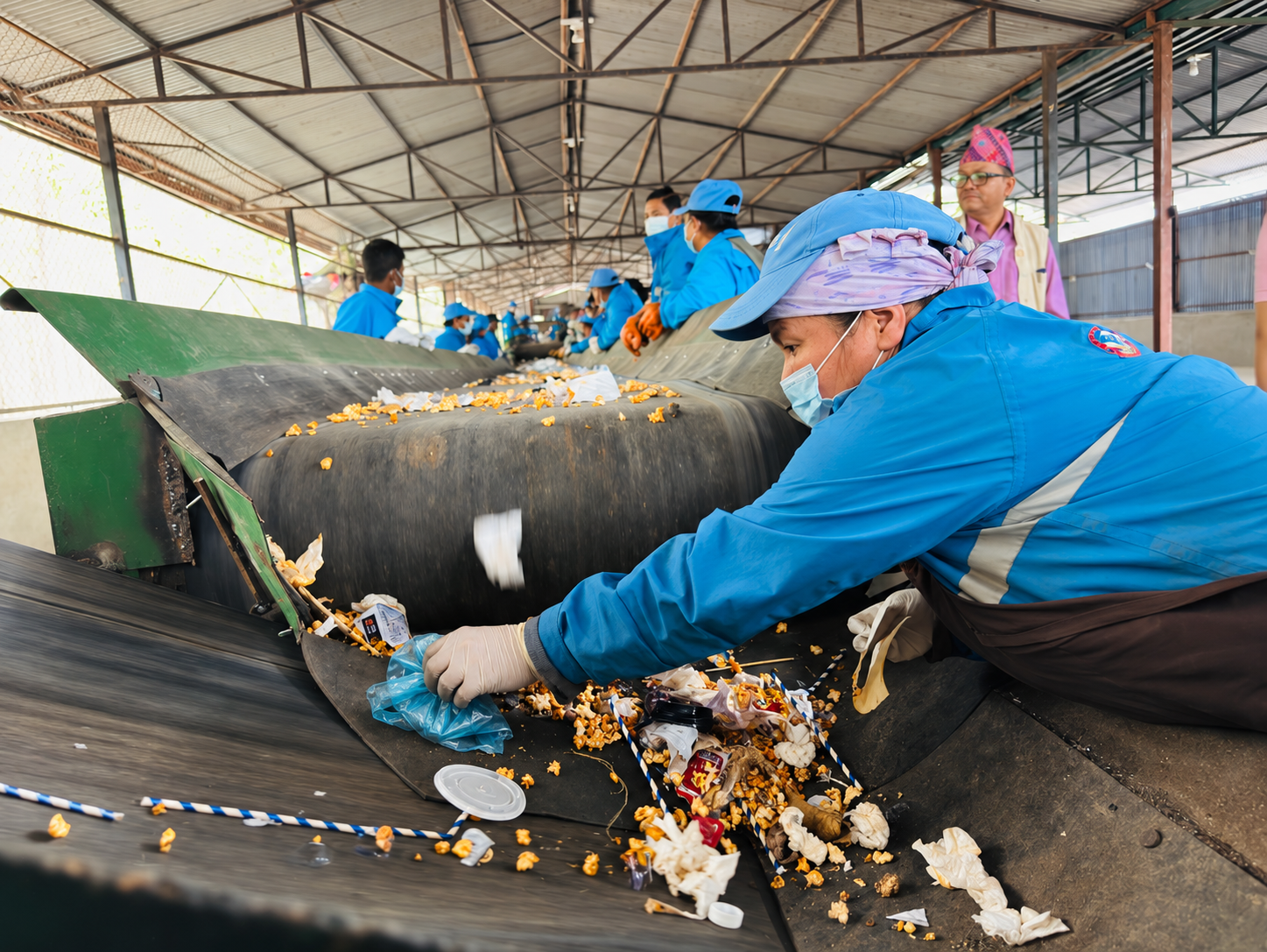
The physical route is different from the consumer’s curbside system:
The consumer empties the eligible package and follows its approved preparation instruction, such as Recycle If Clean & Dry.
The consumer confirms that a nearby retailer or designated site accepts the material.
The film goes into the site’s dedicated collection bin—not the store’s general trash or a household recycling cart.
Collected film is consolidated and baled.
Independent companies may reprocess compatible PE film into pellets.
Recovered material can enter applications such as composite lumber or new film, pouches, and bags, depending on quality and end-market requirements. (How2Recycle Store Drop-off)
The current Plastic Film Recycling Directory says it lists more than 20,000 locations from over 60 retail partners, plus municipal depots, across the United States. That number describes the directory at a point in time—not guaranteed acceptance at every listed branch. The directory itself says its data come from multiple sources and that verification work is ongoing. Consumers should check the current listing and confirm at the store when practical.
Clean and Dry Is a Performance Requirement, Not Decorative Copy
How2Recycle’s label explorer defines Recycle If Clean & Dry as recycling the package only when it is clean and dry. Its current guidance says technical work on residue limits has not removed the clean-and-dry requirement for Store Drop-off eligibility. (How2Recycle Label Explorer; How2Recycle Guidelines for Use, August 2025)
Brands should evaluate that instruction during package development, not after graphics are complete. A dry bread bag and a film pouch holding an oily sauce do not create the same consumer task. If the package cannot be emptied and cleaned reasonably in normal use, the intended recovery claim may not be credible even if the base film is PE.
Do not invent a universal washing procedure. Use the exact special instruction assigned to the package, and ensure that product design, opening geometry, and residue behavior make the instruction understandable and achievable.
How a CPG Brand Should Obtain and Control the Label
How2Recycle explains that a brand submits packaging specifications, the information is evaluated, and a label is assigned to the package. The current Pro-label implementation process also requires the assigned label to be placed in artwork and the proof to be reviewed before printing. (About the How2Recycle Label; Members’ Guide to the How2Recycle Pro Label Rollout)
Stage | Required evidence or control | Primary owner |
|---|---|---|
1. Define the package | SKU, component list, dimensions, material and layer specifications, weights, product application, and U.S. market | Packaging engineering |
2. Verify supplier data | Resin families, layer percentages, additives, barriers, coatings, inks, adhesives, labels, closures, and density data | Procurement + supplier quality |
3. Screen the structure | Compare every component with current How2Recycle and APR guidance; identify testing questions | Packaging sustainability + engineering |
4. Complete required testing | Use the method and laboratory route requested for the relevant unknown feature | Engineering + approved test partner |
5. Submit the exact package | Supply complete, accurate specifications through the How2Recycle process | Program account owner |
6. Apply the assigned label | Use the issued designation, material, component name, geographic qualifier, and special instruction | Graphic design + regulatory |
7. Obtain proof approval | Submit final-size artwork and resolve requested changes before printing | Artwork production |
8. Release with change control | Tie the approved label to the specification, printer file, SKU, market, and effective date | Quality + regulatory operations |
9. Reassess changes | Review new suppliers, gauges, barriers, inks, adhesives, labels, fitments, product formulas, and package formats before use | Change-control board |

The operational mistake to avoid is “approval by resemblance.” If the material, supplier, decoration, closure, or product changes, the brand should determine whether the existing assessment still applies rather than copying the old label forward.
Multi-Component Packages Need Component-Level Instructions
A paperboard carton, PE bag, tray, seal, and fitment may follow different disposal routes. How2Recycle’s multi-component format gives an instruction for each referenced component; its label explorer uses the example of paper components going to curbside or a drop-off program while a clean, dry plastic bag goes to Store Drop-off in the United States. (How2Recycle Label Explorer)
Brand teams should answer four questions before approving copy:
Which physical component does each instruction name?
Must any component be removed, discarded, emptied, or replaced?
Can the consumer identify the components without packaging expertise?
Does the artwork preserve the assigned U.S. geographic qualifier and special instructions?
Do not let a recyclable paper carton visually imply that a nonqualifying inner pouch belongs in the same collection system.
Recyclability Claims Need Federal and State Review
The Federal Trade Commission’s Green Guides say marketers should qualify recyclable claims when appropriate recycling facilities are not available to at least 60% of consumers or communities where the item is sold. The lower the access, the more clearly the limitation should be communicated. (FTC Green Guides summary)
Store Drop-off expresses a specific collection route, but it does not give brands permission to add broader claims such as “100% recyclable,” “recycle anywhere,” “curbside recyclable,” or “widely recycled.” How2Recycle’s use guidance says the assigned label should generally be the only package-recyclability messaging unless additional wording is legally required or approved by How2Recycle. (How2Recycle Guidelines for Use, August 2025)
State rules also require live review. In California, SB 343 established restrictions on recyclability indicators for products and packaging manufactured after October 4, 2026. On July 14, 2026, a federal court issued a preliminary injunction blocking enforcement while litigation continues; CalRecycle says the injunction blocks enforcement, not the agency’s ongoing study obligations. (CalRecycle, Accurate Recycling Labels)
How2Recycle’s newer Store Drop-off Pro label replaces the chasing-arrows symbol with a retail collection-bin icon. Brands may still see legacy and Pro labels during the transition, but should use the version assigned and approved for their package rather than rebuilding the mark. (How2Recycle Store Drop-off)
Because federal guidance, state law, program rules, and litigation can change, environmental claims require current legal and program review in every intended sales market.
Claim Language: Safer and Riskier Patterns
Context | Better direction | Avoid |
|---|---|---|
On-pack disposal instruction | Use the exact assigned and approved How2Recycle label | Redrawing the mark or replacing “Store Drop-off” with a generic recycle symbol |
Website explanation | “This package carries a Store Drop-off label. Follow the on-pack instruction and confirm a participating location.” | “This flexible package is curbside recyclable.” |
Material description | Name the specific package component and its PE-based construction accurately | “All polyethylene packaging is recyclable.” |
Location language | Link to a current locator and tell users to confirm site acceptance | “Return at any grocery store.” |
Outcome statement | Explain the intended collection and reprocessing route with appropriate limits | “Every returned package becomes a new package.” |
Portfolio statement | Identify which SKUs and components carry which instructions | “Our packaging is recyclable” when only one component or format qualifies |
These are editorial risk controls, not legal safe harbors. Final language must match the package assessment, approved label, current infrastructure evidence, and applicable law.
Packaging Quality-Control Checklist
Use this checklist before release and whenever the package changes.
Check | Evidence to retain | Pass criterion |
|---|---|---|
Exact component identified | Annotated package diagram and component list | Label clearly refers to the intended film component |
Full structure documented | Signed supplier specification and layer-by-layer BOM | All resins, layers, coatings, inks, adhesives, and attachments disclosed |
Product application reviewed | Filled-package use and residue assessment | Approved preparation instruction remains realistic |
Testing complete where required | Current laboratory report and package/test mapping | Test applies to the commercial construction submitted |
Label assignment current | How2Recycle request ID and issued artwork | Correct package, market, and designation |
Artwork proof approved | Approval record and production PDF | Printed label matches approved size, wording, and layout |
No conflicting claims | Regulatory and legal copy review | No curbside, universal, or unsupported recyclability implication |
Location resource verified | Current locator URL and consumer-service script | Consumer can find and confirm an applicable site |
Supplier changes controlled | Approved-material list and change notices | No unreviewed substitution affects the assessment |
Market rules reviewed | Dated federal and state review | Claim is supported in every intended U.S. sales market |
Frequently Asked Questions
Is the How2Recycle Store Drop-off label the same as curbside recycling?
No. Store Drop-off directs an eligible PE film package to a participating retail or designated collection site. It should not be placed in a household recycling cart unless authoritative local instructions explicitly say otherwise.
Do all PE films qualify for Store Drop-off?
No. PE-based film is the relevant material family, but the exact package must be assessed. Barriers, coatings, adhesives, inks, labels, zippers, fitments, fillers, density, and residue can affect the outcome.
Can a brand use the label because its supplier calls the pouch mono-PE?
No. “Mono-PE” is not an approved label. The brand needs complete package specifications and the package-specific How2Recycle process.
Does #2 HDPE or #4 LDPE automatically make a film recyclable through Store Drop-off?
No. A resin identification code does not evaluate the complete structure or confirm local collection. Follow the assigned package label.
Must Store Drop-off film be clean and dry?
Follow the exact instruction on the package. When the label says Recycle If Clean & Dry, only deposit it when those conditions are met.
Does every grocery or retail store accept the material?
No. Participation can vary by retailer and branch, and programs can change. Use a current locator and confirm acceptance at the chosen site.
Does the label guarantee that every deposited package becomes a new product?
No. It communicates the approved disposal route for the package. Actual collection, bale quality, reprocessing, and end markets depend on how the local program operates and the material received.
Can compostable film go into a PE Store Drop-off bin?
Do not assume so. EPA says compostable plastics are not intended for plastic recycling and can disrupt that stream. Follow the package’s approved end-of-use instruction. (U.S. EPA)
What This Means for U.S. CPG Brands
The How2Recycle Store Drop-off label is most useful when it connects three things accurately: the engineered package, the real collection route, and the consumer instruction. A brand that focuses only on the word “recyclable” can miss all three.
Packaging teams should design for PE-film recycling compatibility. Procurement should preserve the approved construction through supplier controls. Regulatory and legal teams should prevent Store Drop-off from becoming an implied curbside or universal claim. Artwork teams should use only the assigned, proof-approved label. Consumer-care teams should be ready to help shoppers find and verify a participating location.
The strongest message is not the broadest one. It is the one the exact package, current program, and local collection system can support.