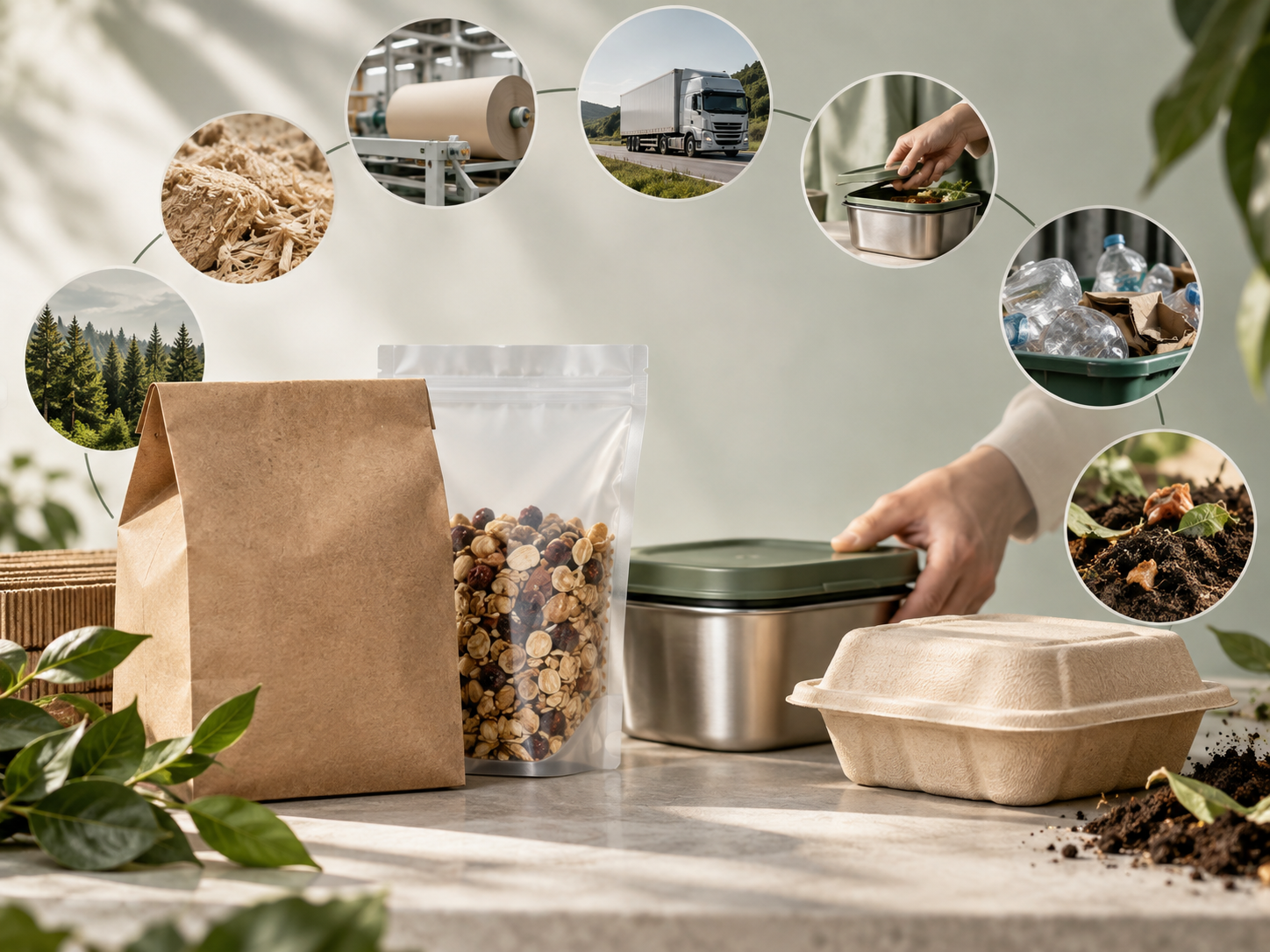
Traditionally made from kraft pulp produced through a chemical process that separates wood fibers, a process explained in the EPA’s pulping overview, kraft paper is used for bags, wrapping, sacks, and other packaging applications.
Kraft paper is made by cooking wood chips with an alkaline solution that strips out lignin and leaves the cellulose fibers long and intact. Those long fibers are the whole point, and they are why kraft is stronger than paper made by mechanical pulping. Brown is the version everyone knows, but bleached white and recycled-content grades are just as standard.
Three decisions sit inside the word: the grade, the surface treatment, and the finished package. Kraft only tells you about the first one, and not much.
How Is Kraft Paper Made?
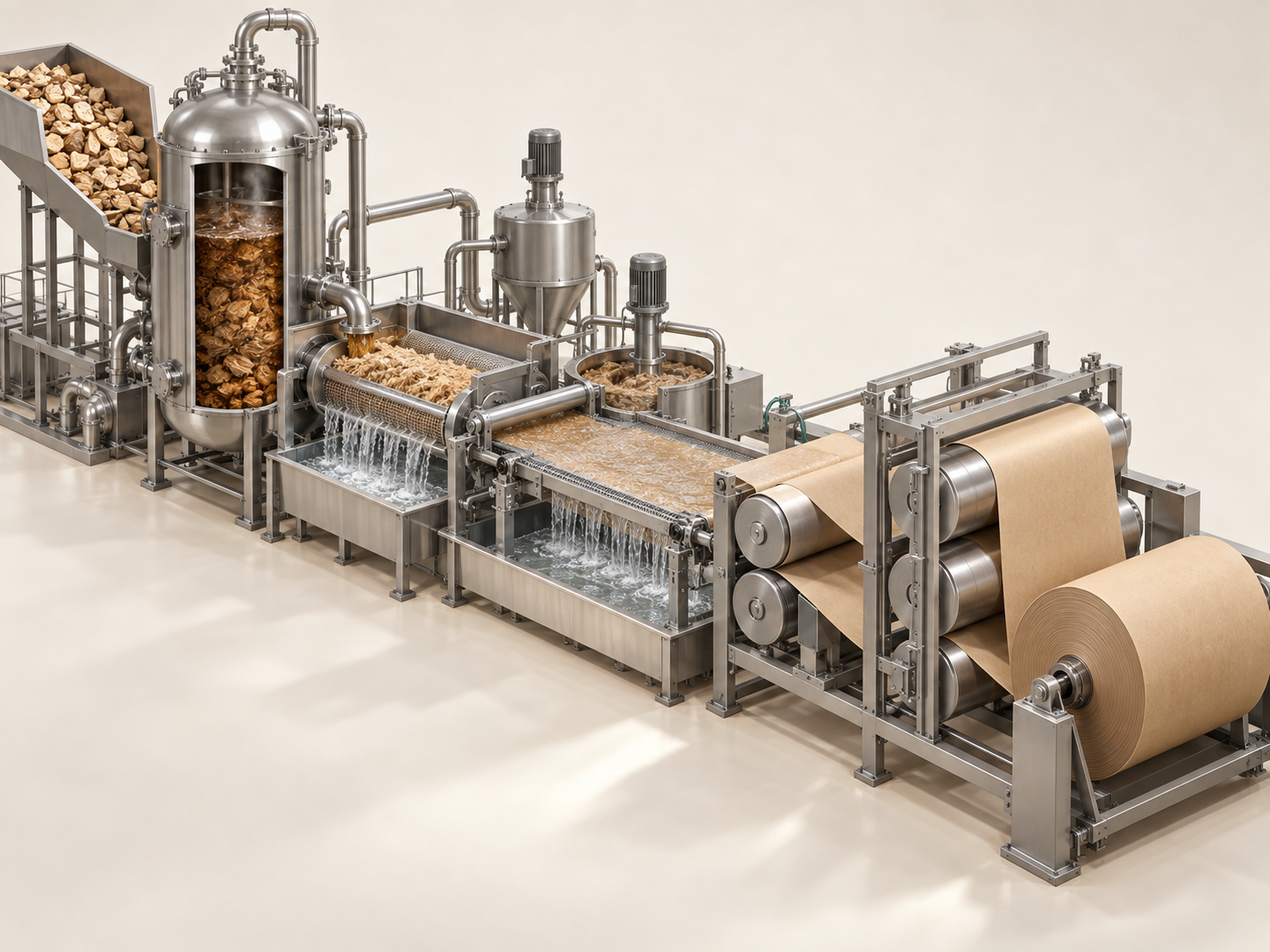
Wood chips are cooked under heat and pressure with sodium hydroxide and sodium sulfide. The alkali dissolves most of the lignin binding the wood together while leaving the cellulose fibers largely undamaged, which is the difference that matters: mechanical pulping tears fibers short, chemical pulping keeps them long. Long fibers interlock, and interlocked fibers resist tearing. [EPA link]
During papermaking the fiber suspension forms a sheet as water drains away, then pressing and drying remove the rest. The finishing stage is where the surface gets decided, and that decision matters more than most buyers expect.
Unbleached does not mean untreated. A natural brown sheet still goes through washing, refining and additive treatment, and plenty of commercial kraft grades contain recycled fiber. Brown tells you about bleaching. It tells you nothing about fiber source.
What Types of Kraft Paper Are Available?
Supplier descriptions stack these together, so a quote might read "unbleached MG sack paper" and that is four decisions in three words:
Specification dimension | Common descriptions | What it tells the buyer |
|---|---|---|
Fiber source | Virgin, recycled-content, or blended | The source of the fibers, not a complete performance rating |
Color and bleaching | Natural brown, unbleached, or bleached white | Pulp treatment and appearance; confirm the actual grade |
Surface finish | Machine-finished (MF), machine-glazed (MG), or smooth-finished (SF) | How the surface is finished for converting and appearance |
Application | Sack paper, bag paper, wrapping paper, or coating base | The job for which the supplier developed the grade |
The four dimensions are independent. A paper can be unbleached and machine-glazed, or bleached and machine-finished, or any combination in between.
The finish is the one most buyers skip and then regret. Machine-glazed paper is pressed against a polished drying cylinder on one side, so it comes off the machine glossy on the face and rough on the back. That glossy face is what holds fine print and sharp color. Machine-finished paper gets neither side polished, which is fine for a sack and disappointing for a shopping bag with a logo on it.
Sack papers that carry real weight are usually virgin-fiber, because recycled fiber has been through the process before and comes out shorter, which costs tear strength. That does not make recycled grades worse, it makes them different: for a wrap, a void fill, or a bag that never sees load, the strength difference does not matter and the recycled content does.
What Is Kraft Paper Used For in Packaging?
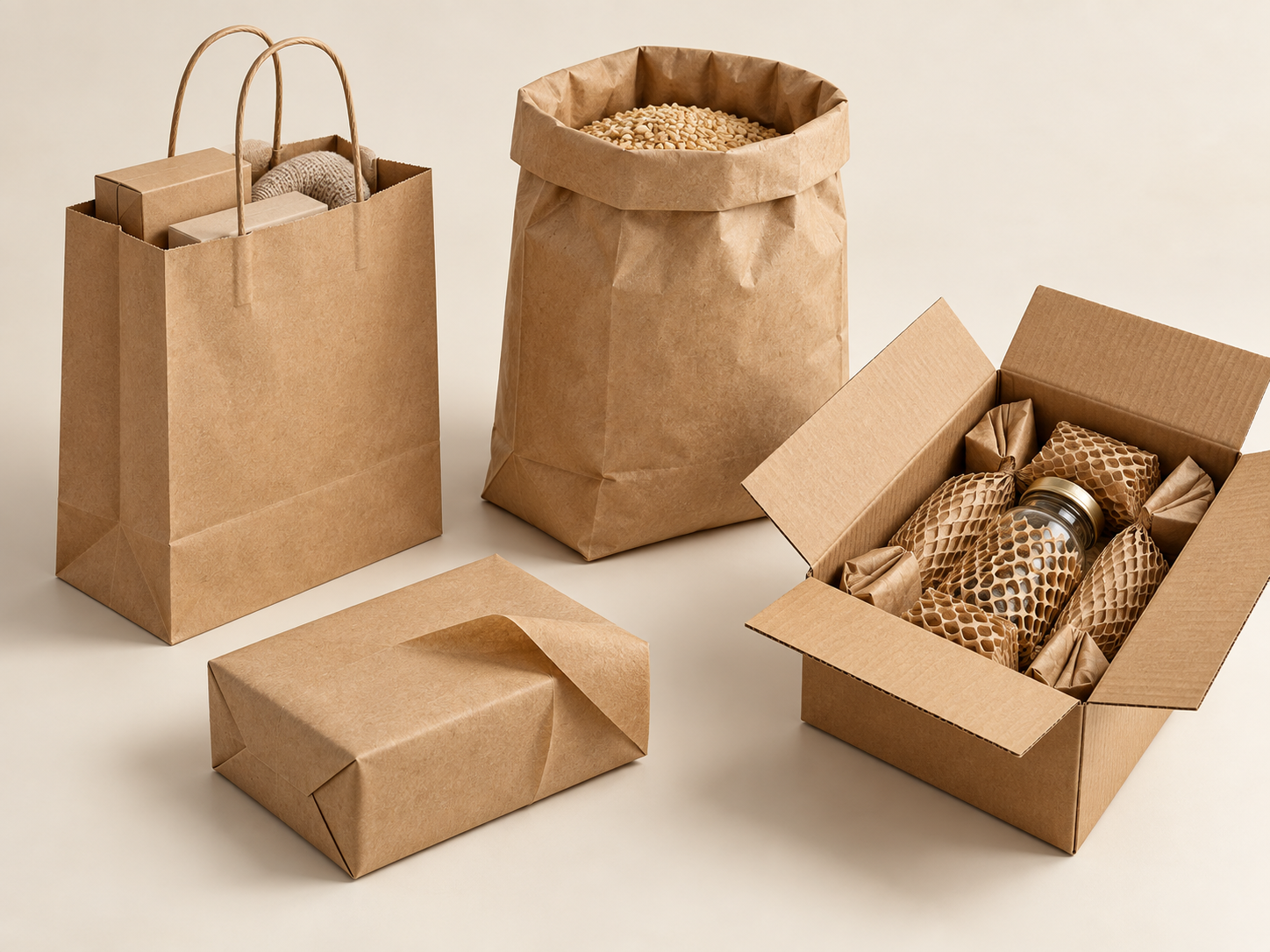
Kraft can be the package or one layer inside it. Grouped by what the paper is actually doing:
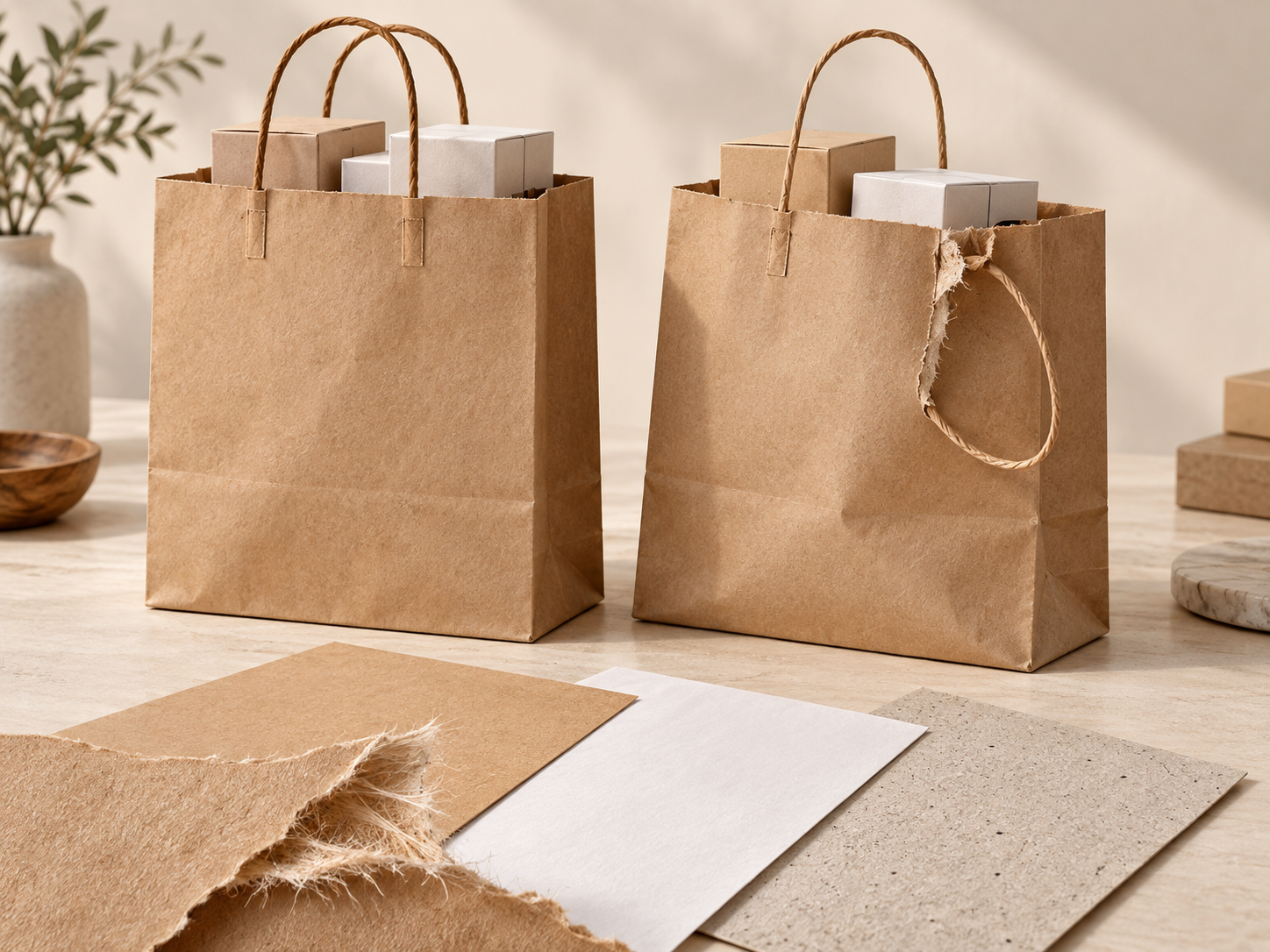
Carrying. A shopping bag fails at the handle attachment or the base fold, almost never in the middle of a panel. The paper, the handle and the base are one design problem.
Wrapping. A wrap has to fold without cracking along the crease, which is a function of fiber direction as much as weight.
Containing. A sack has to stretch during filling rather than tear, so the property that matters is elongation, not just tensile strength.
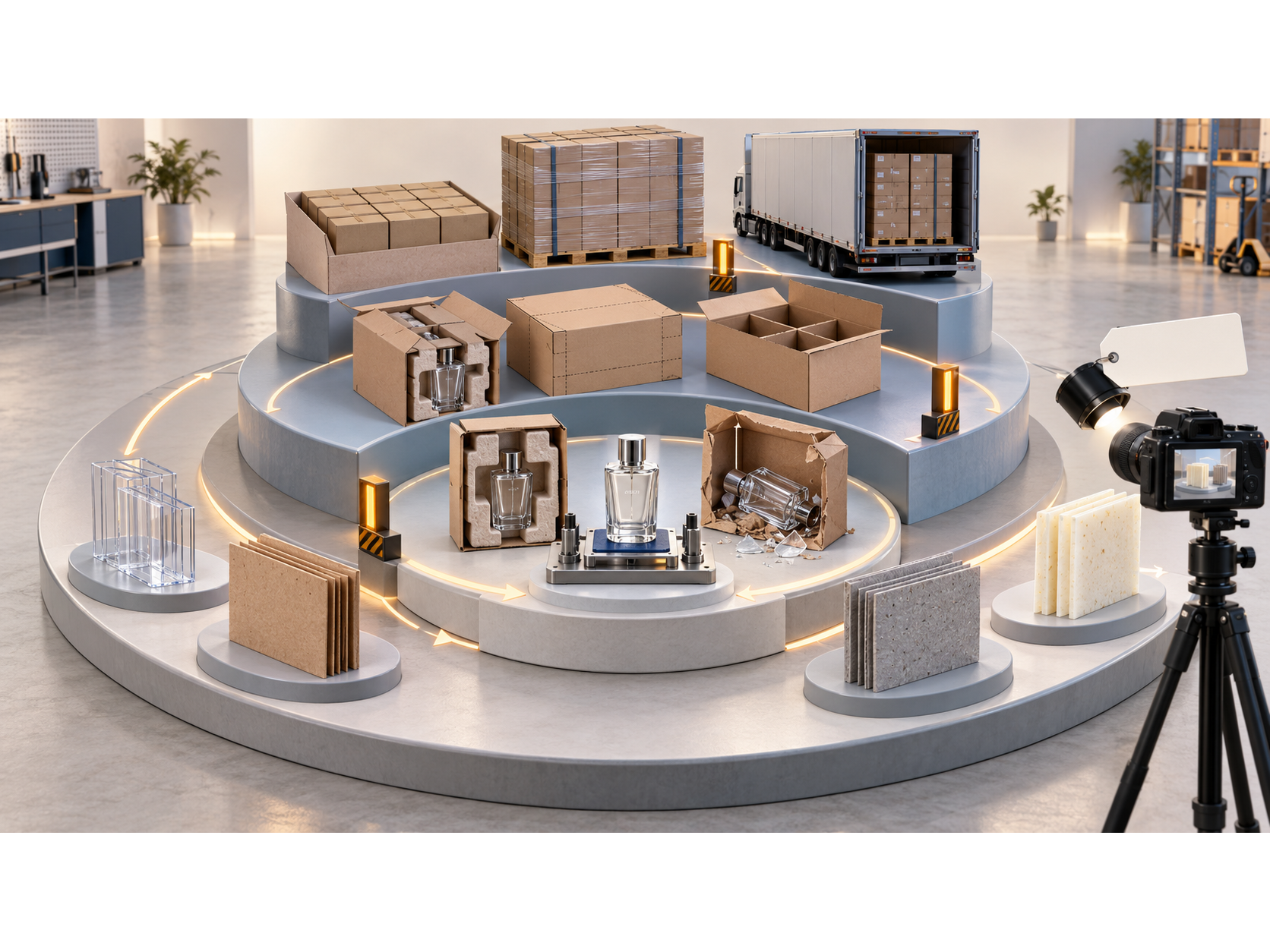
Protecting in transit. Converted paper cushioning works by structure. Loose paper in a box works by luck.
Kraft Paper Is Not the Same as Corrugated Board
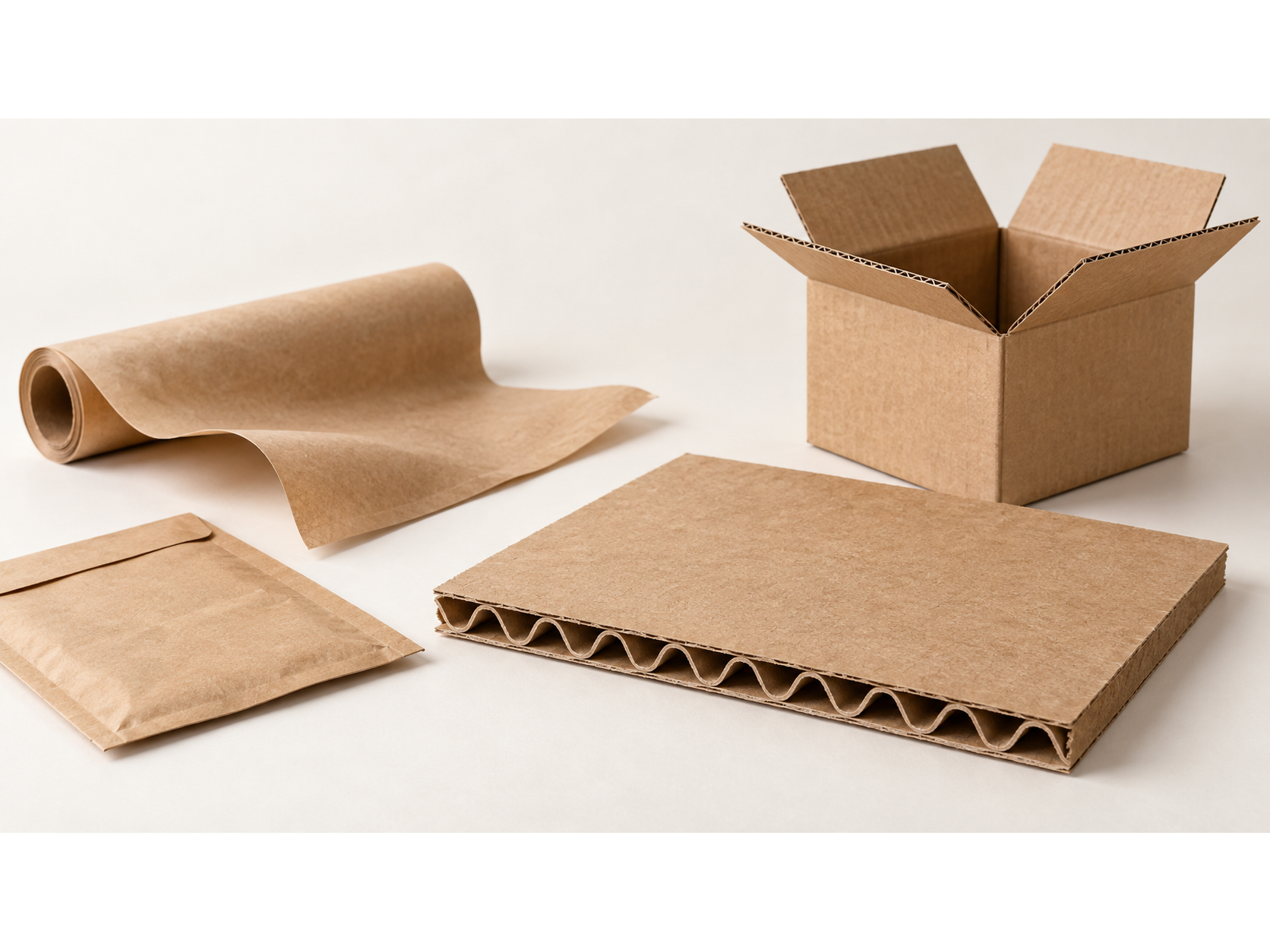
Kraft is paper. Corrugated is a construction, and kraft is usually one of the ingredients in it: the flat linerboard on both faces of a corrugated sheet is typically a kraft grade, with a fluted medium glued between them.
A kraft-paper wrap, a linerboard grade, and a completed corrugated shipping case are different specifications. Calling all three “kraft packaging” obscures what is actually being purchased.
Swapping a corrugated box for a paper mailer trades stiffness and stacking strength for weight and volume. That trade is usually right for something flat and durable, and usually wrong for anything that can be crushed or punctured.
How to Choose Kraft Paper Weight and Strength
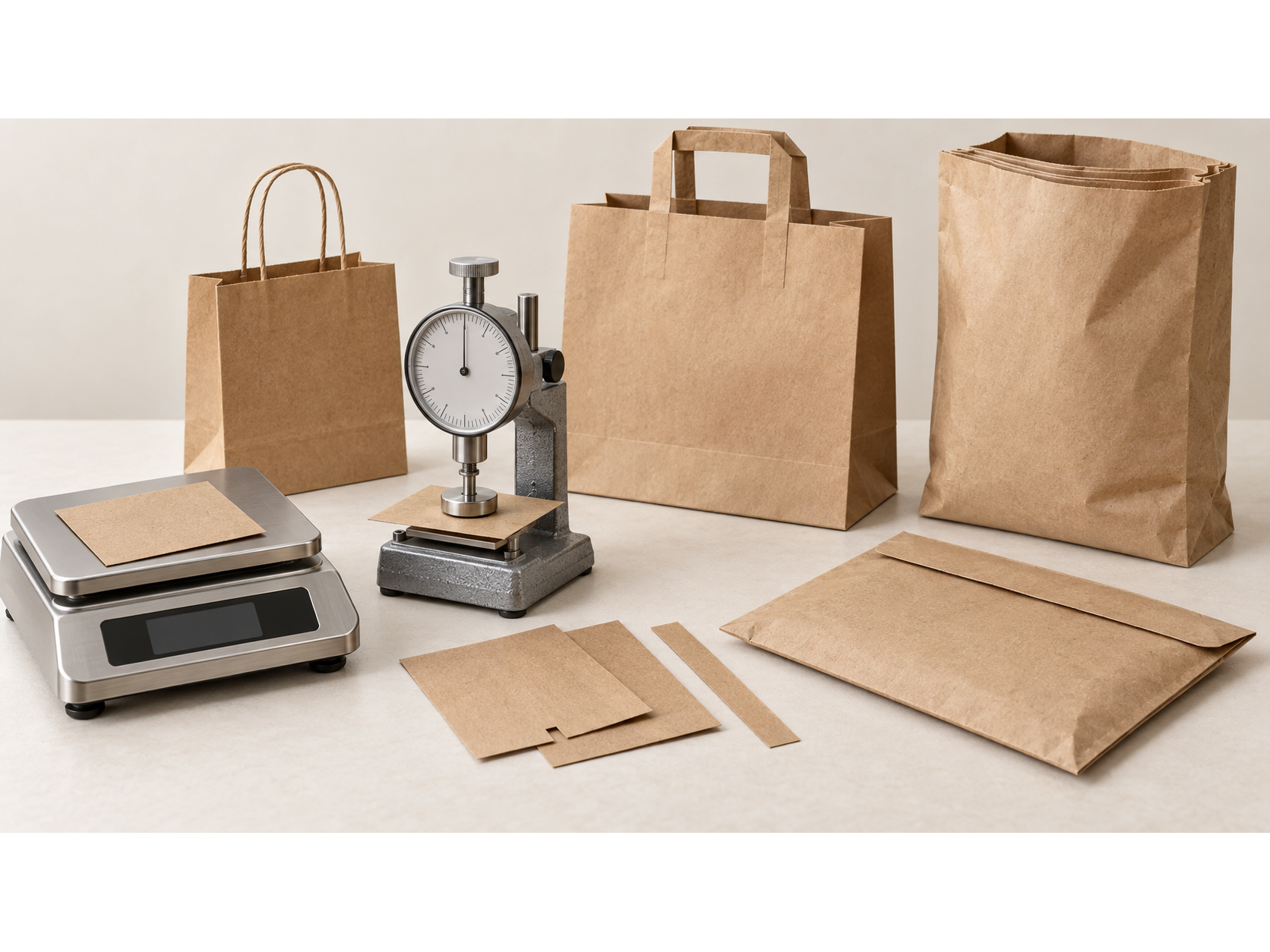
Grammage (GSM, g/m²) is mass per unit area. Caliper is thickness. They are separate properties, and neither one is a load rating. An 80 GSM sheet weighs 80 grams per square meter, and that is the entire content of the number.
Start from the failure you are trying to prevent, because paper fails differently in each format. A bag fails at the handle or the base fold. A sack fails during filling, when the paper needs to stretch rather than tear. A mailer fails at a puncture or a closure.
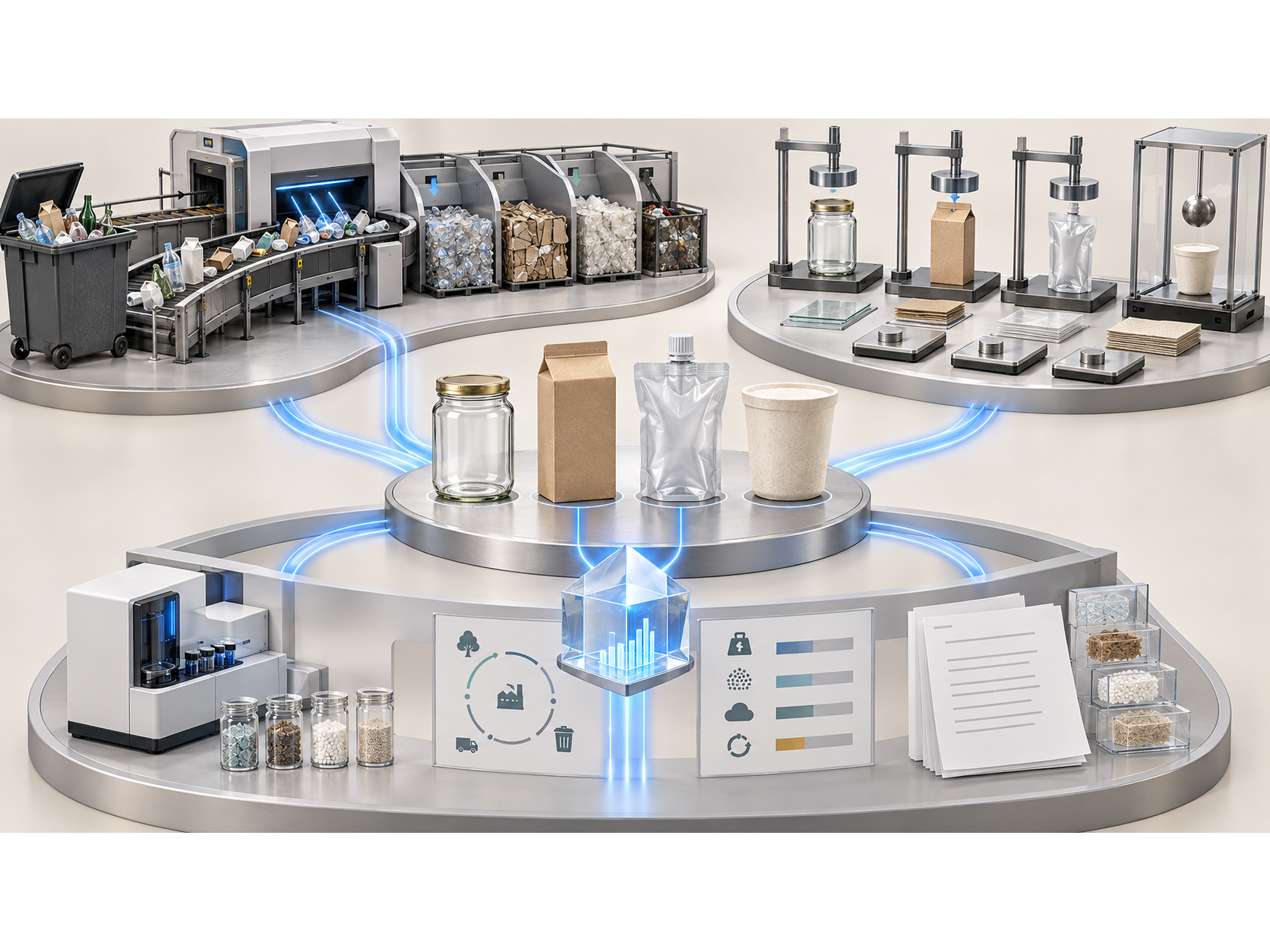
This is also why "strong" is not comparable between two quotes. Tensile, tear and burst are three different tests, and paper conditioned at different humidity gives different numbers on all three. Two suppliers can both say strong and be measuring different things, so the number is only useful with its test method attached.
Common working ranges. A small handled bag usually sits around 100 to 120 gsm. A heavy retail bag runs 150 to 200 gsm. A multiwall sack uses several plies of 70 to 90 gsm rather than one thick sheet, because layers of thin paper survive a drop better than one thick one. These are starting points, not load ratings.
One more thing that does not show up on a datasheet: bleaching costs strength. At the same grammage, a natural brown sheet is usually tougher than a bleached white one, which is why heavy-duty bags are brown more often than not.
Printing on Kraft Paper Starts with the Actual Surface
Brown paper is not a neutral background. Every ink laid on it sits over a warm mid-tone, so light colors go muddy, white disappears unless you print an opaque white underneath first, and a brand color matched on white stock comes back wrong. Fine text loses edge definition on a rough surface.
None of that shows up in a screen proof. Get a physical proof on the actual substrate, and check rub resistance while you are at it, since uncoated kraft holds ink less firmly than a coated sheet does.
If the fix is an opaque white underprint, a coated face, or a printed label applied over the kraft, that is a different construction with a different cost, and it belongs in the comparison rather than in a footnote.
Does Kraft Paper Need a Barrier for Food or Moisture?
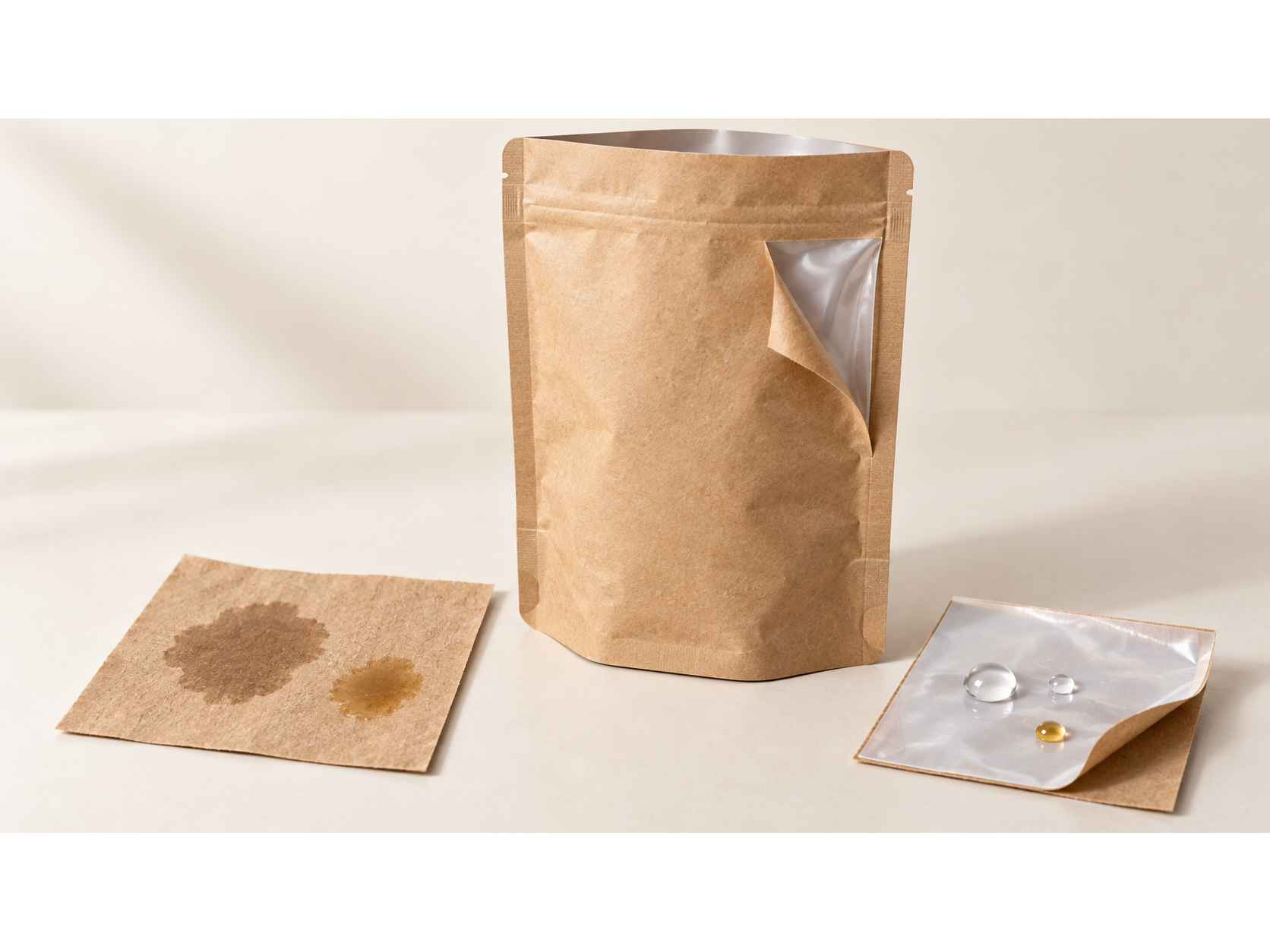
Paper on its own resists nothing. It absorbs grease, wicks water, and cannot be heat-sealed. Every one of those functions comes from something added to it: a PE coating for moisture and sealability, a grease barrier for oil, a laminated film for oxygen.
So on a food pouch the brown exterior is doing appearance and structure. The barrier is somewhere else in the laminate, and the seams and seals are where it either holds or does not.
Food contact is a separate question with a separate answer. The FDA ties regulatory status to the substances in the material and the conditions they are authorized for, which means a letter of guaranty is written against a specific use, not against a material in general. [FDA link] The same paper can be cleared for dry wrapping and not for hot, greasy contact.
When you ask for documentation, the useful version includes the food type, contact time, temperature, and the complete construction. A datasheet that says "food-grade" and nothing else is not answering the question.
Is Kraft Paper Recyclable or Compostable?
Neither claim follows automatically from a brown surface or a kraft-paper specification. Three separate questions:
Recycled content is about where the fiber came from.
Recyclability is about where the finished package can go afterwards, which depends on local collection as much as on the material.
Compostability is about the whole package under specific conditions, and industrial composting and home composting are not the same claim.
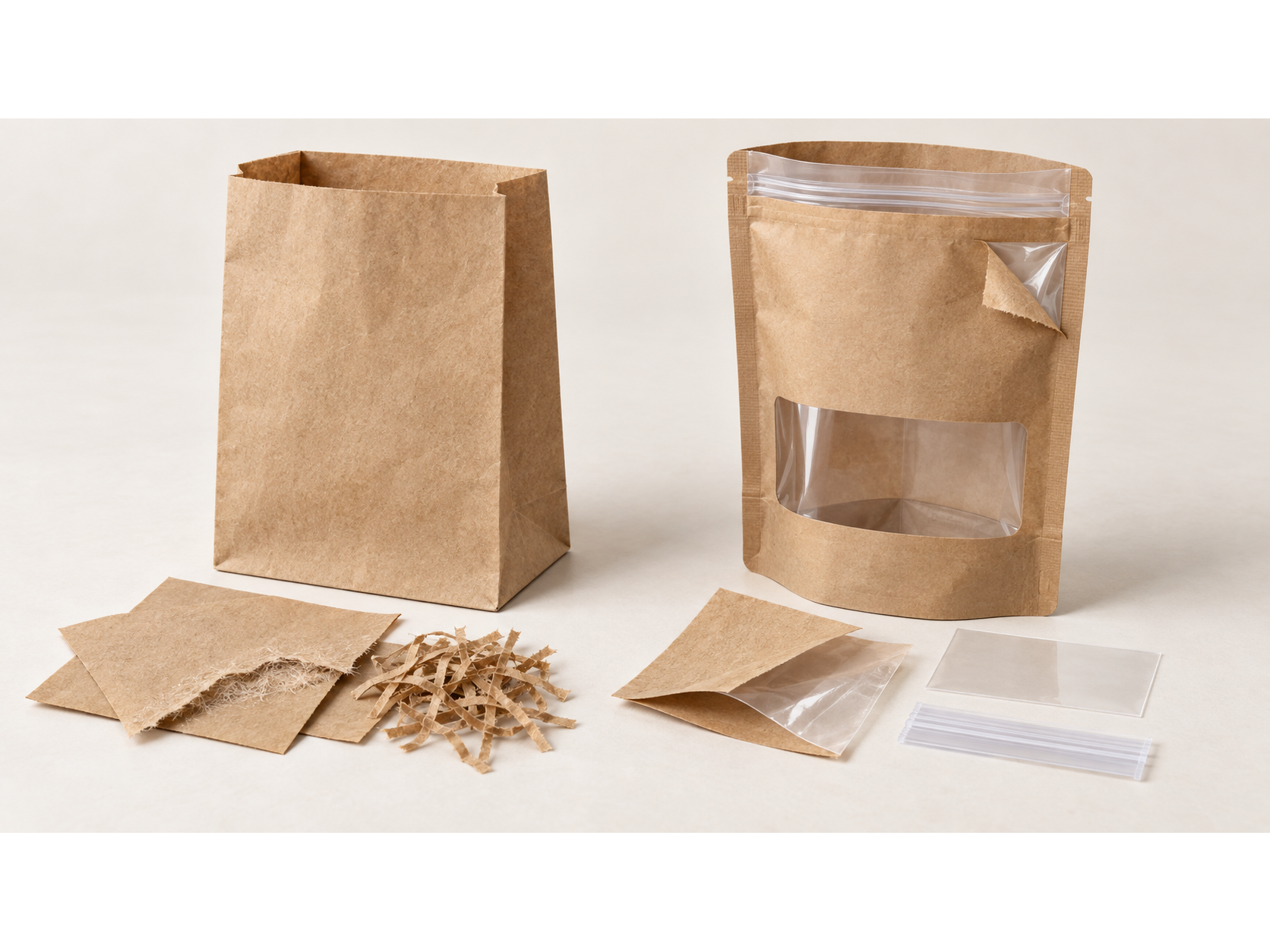
A PE coating, a laminated film, a plastic window or a synthetic closure can each take a paper package out of the paper stream, so the claim belongs to the finished package rather than to the sheet. The FTC Green Guides treat these claims separately and caution against broad, unqualified environmental language.
State rules add another layer. California in particular restricts what can carry a recycling label, and paper content alone does not make a package eligible.
Frequently Asked Questions
Is all brown paper kraft paper?
No. Brown is an appearance, not proof of fiber source, pulping method, or performance. Obtain the manufacturer’s grade designation rather than specifying color alone.
Is kraft paper stronger than regular paper?
Usually yes, and for a specific reason: chemical pulping keeps the cellulose fibers long, while the mechanical pulping used for newsprint and copy paper tears them short. Long fibers interlock and resist tearing. That said, sheet strength is not package strength, and a strong paper in a badly designed bag still fails at the handle.
Is kraft paper the same as butcher paper?
Butcher paper is an application-specific paper product; kraft paper describes a broader family. Some kraft grades are intended for butcher-paper applications, but an ordinary kraft wrap is not automatically a substitute.
Is kraft paper waterproof?
No. Untreated kraft absorbs water and loses most of its strength when it does. Water resistance comes from a coating or a laminate, and the coating is what determines whether the package is still recyclable afterwards.
Why is kraft paper brown?
Because the lignin left in the pulp is brown and it has not been bleached out. Bleaching costs a measurable amount of fiber strength, which is why heavy-duty sacks and bags are usually left natural.