"Chipboard box" is not enough information to make a box. A rigid box needs a dense structural core. A divider needs a thin flat sheet. A retail carton needs to fold and print. A shipper needs to survive a parcel network. All four are paper, and none of them wants the same board.
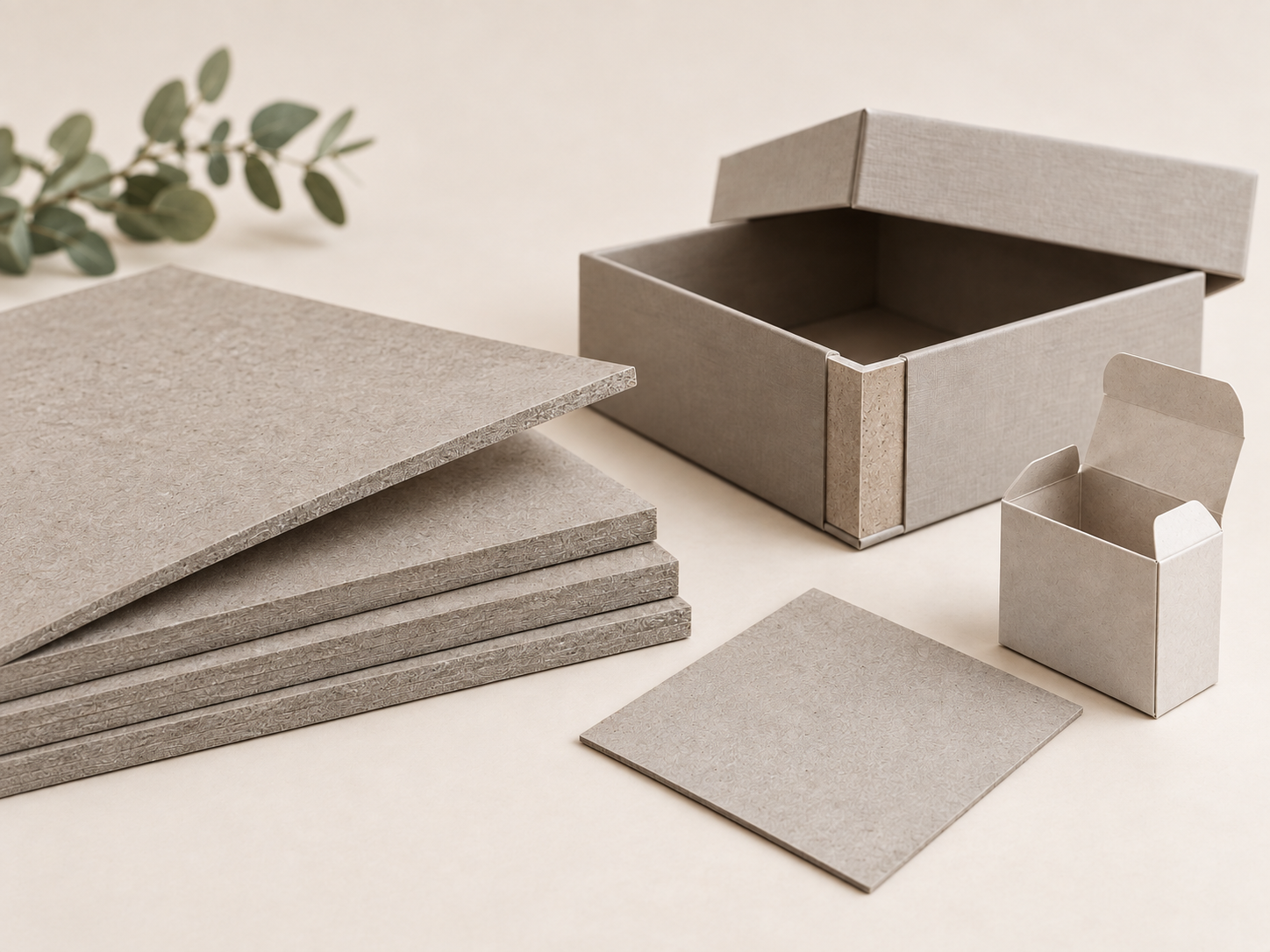
In packaging, chipboard is a dense, solid paperboard commonly made from recovered paper fibers. Unlike corrugated board, it has no fluted middle layer. Depending on the grade and thickness, chipboards can be used for rigid-box cores, inserts, dividers, pads, backing sheets, and certain folding applications.
The question worth asking is what job the board has to do inside the finished package.
Quick Take: What Is Chipboard?
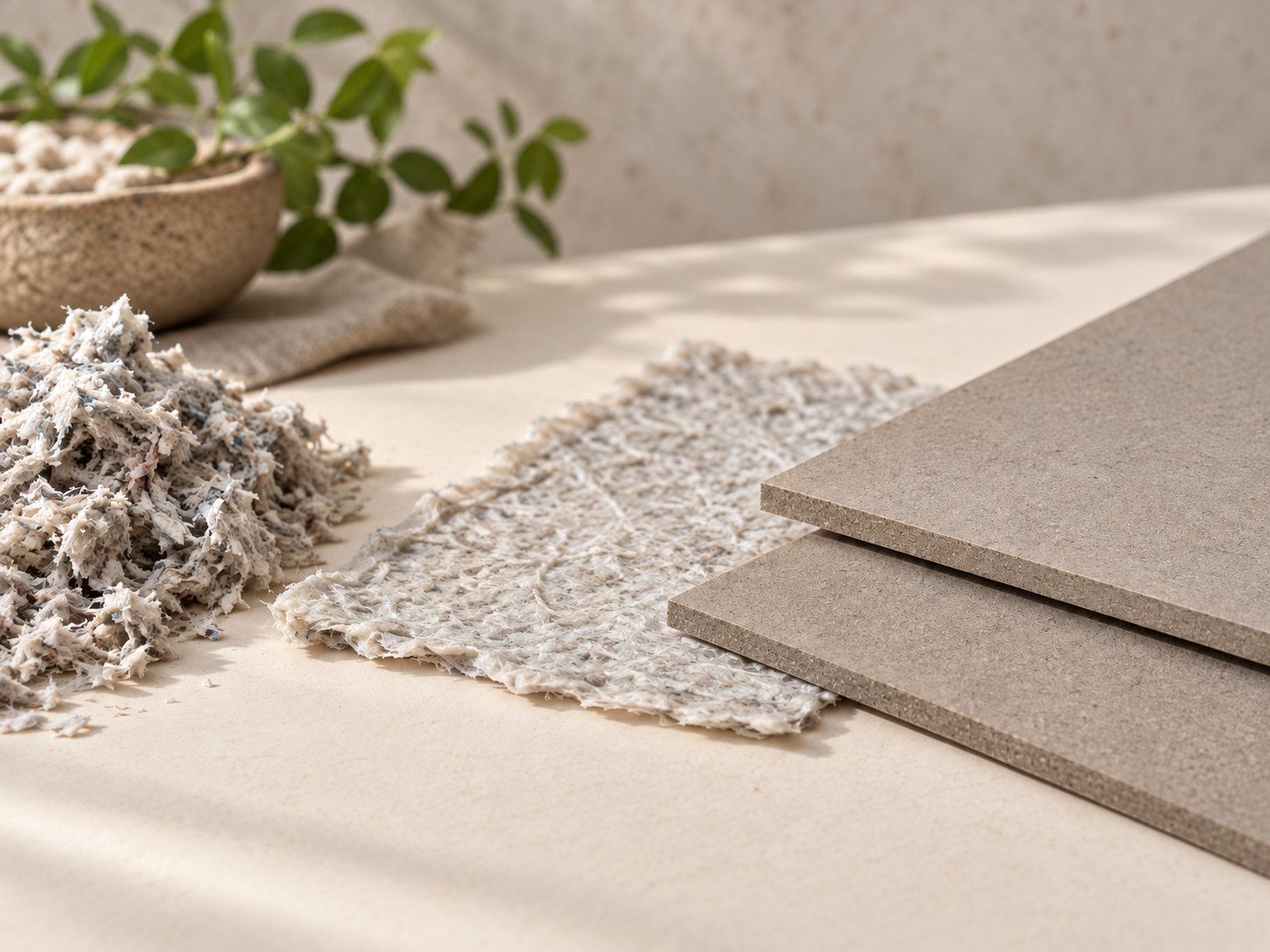
Chipboard is a solid paperboard made by compressing paper fibers into a dense sheet.
In packaging:
it is typically solid rather than fluted;
recycled fiber is common;
natural gray or brown surfaces are common;
it can range from relatively thin bending grades to thick structural board;
and it is frequently used as the hidden structural core inside premium rigid boxes.
One important clarification: packaging chipboard is not the wood particleboard also called “chipboard” in furniture and construction, especially outside the United States. The two materials share a name but are completely different products.
This guide refers only to paper-based packaging chipboards.
What Is Chipboard Made of?
Packaging chipboard is generally manufactured from recovered paper fibers that are pulped, formed, pressed, and dried into a solid sheet.
Because recycled fiber is common, untreated chipboard often has a gray or brown appearance. But color alone does not tell you the exact grade, recycled content, stiffness, or suitability for a particular package.
"Chipboard" is a material family, not a specification.
Two boards with the same nominal thickness can behave differently because fiber composition, density, manufacturing method, moisture content, grain direction, and surface treatment can all affect performance.
The original specification should therefore identify the actual grade and performance requirements rather than relying on the generic word chipboard.
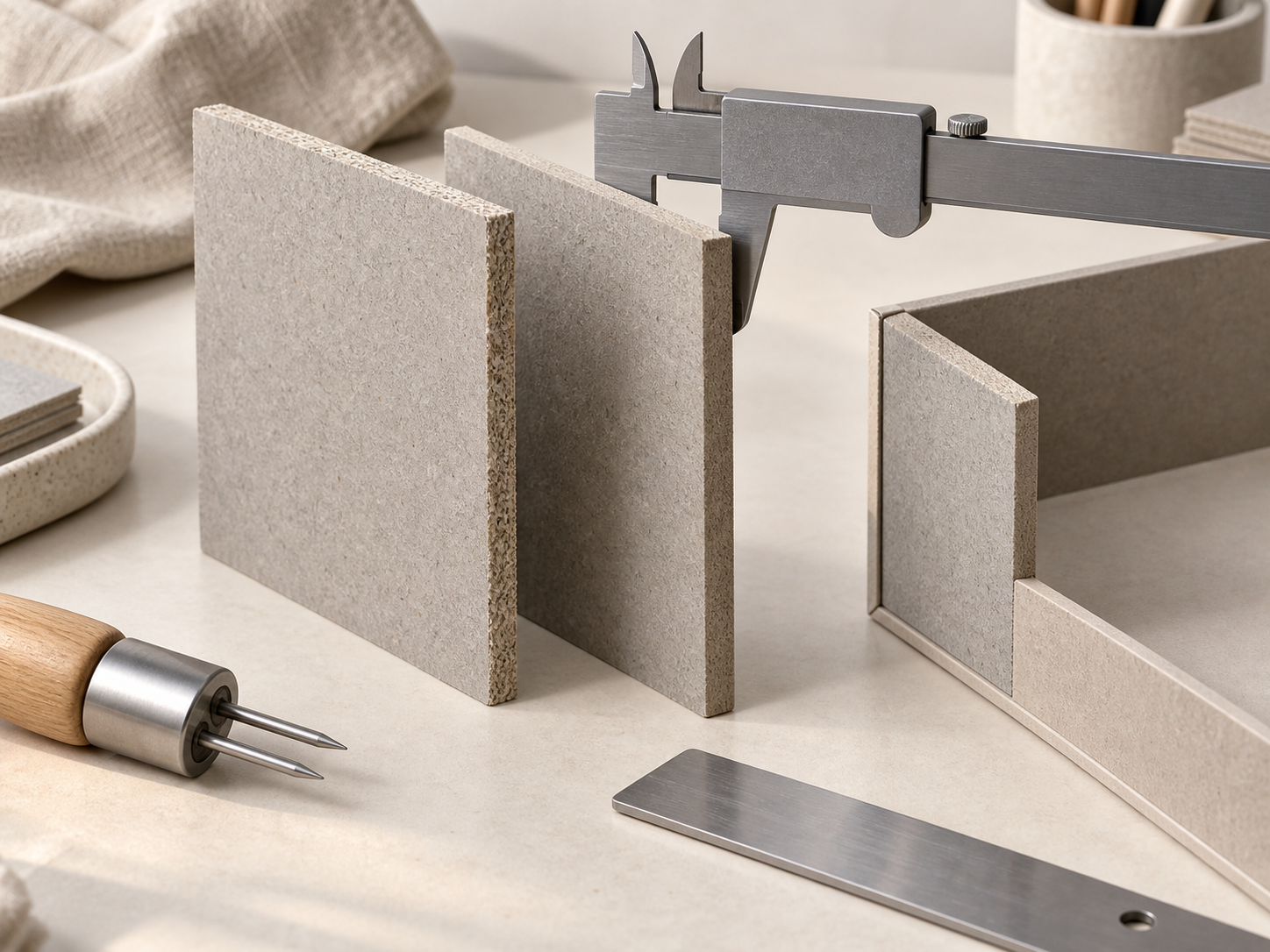
Is Chipboard the Same as Greyboard?
The terms are often used together in rigid-box manufacturing. Greyboard commonly describes dense recycled board with the natural gray appearance often used as the structural core of a rigid box. Depending on the supplier and market, it may be described as greyboard, chipboard, recycled board, or rigid-box board.
The safest approach is not to assume that two supplier terms mean identical material.
Confirm:
board construction;
thickness or caliper;
density or grammage where relevant;
recycled content if required;
dimensional tolerance;
stiffness;
moisture requirements;
and the intended converting process.
In rigid-box construction the greyboard is the structural backbone, and 1.5 to 3.0 mm is the range most packages fall into.
What Is Chipboard Used For in Packaging?
Chipboard works well when a package needs stiffness, separation, shape, or a structural base without the bulk of corrugated fluting.
Common applications include:
Application | What chipboard does | Important design considerations |
|---|---|---|
Rigid boxes | Creates the structural core beneath a decorative wrap | Thickness, rigidity, corners, wrapping and adhesive |
Inserts and dividers | Separates or positions products | Fit, retention, product contact and assembly |
Backing boards | Keeps flat products supported | Flatness, stiffness and edge condition |
Pads and layer sheets | Separates or reinforces layers | Compression, dimensions and moisture exposure |
Selected folding packages | Forms a carton when a suitable bending grade is used | Creasing, folding, printability and line performance |
Not every chipboard grade is designed to fold. A dense mounting board meant to stay flat and a bending grade engineered to crease are both called chipboard, and they do completely different jobs.
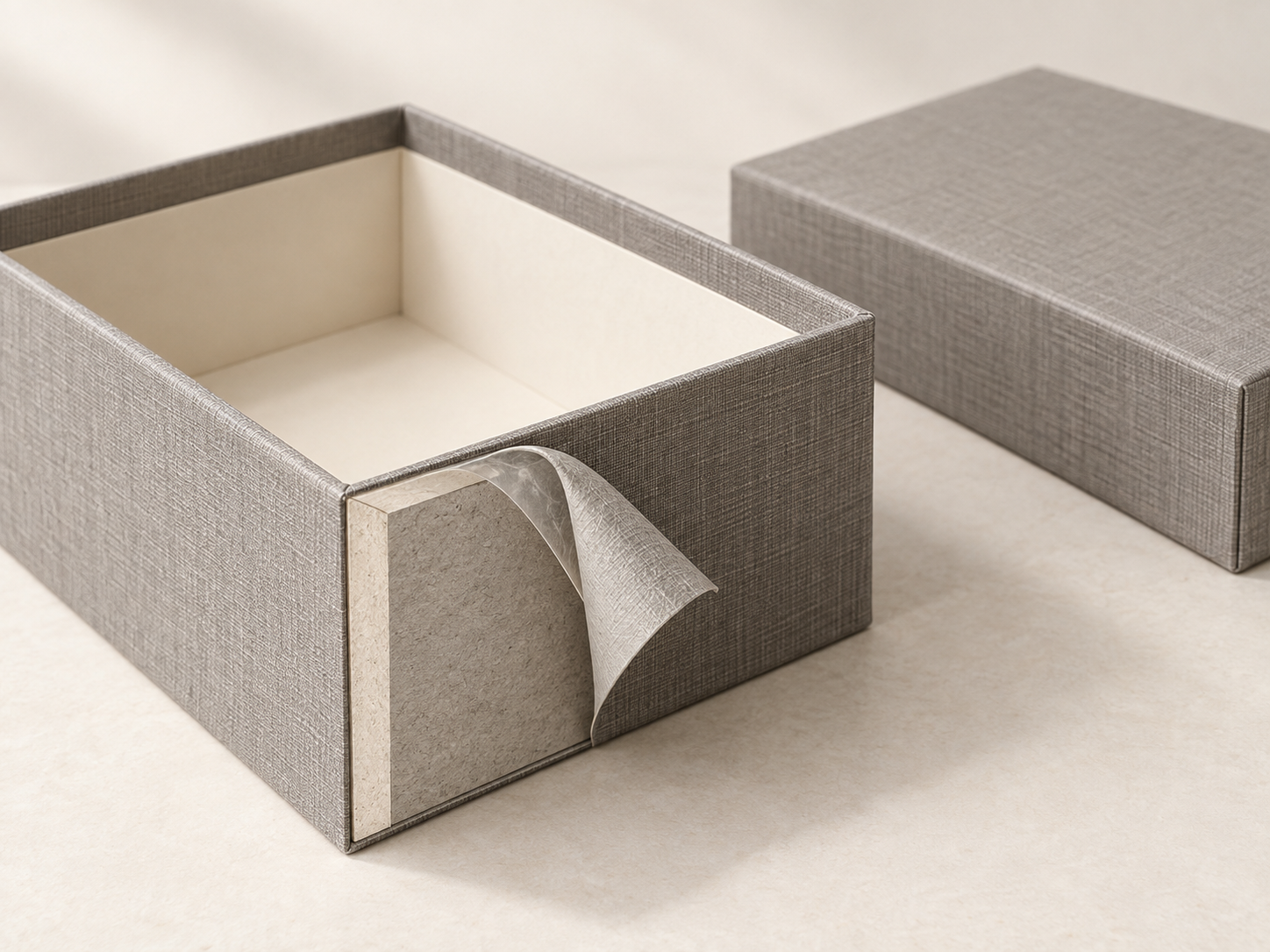
Why Chipboard Is Common in Rigid Boxes
For consumer brands, one of the easiest places to understand chipboard is inside a rigid box.
A typical premium rigid box has multiple layers:
printed or specialty wrap → adhesive → chipboard/greyboard structural core → optional inner lining or insert
The chipboard is usually not what gives the outside of the box its final visual appearance.
Its main job is structural.
It creates the weight, stiffness, straight walls, crisp edges, and substantial hand-feel consumers associate with premium packaging.
The visible surface is usually a separate printed or textured paper wrapped around that core.
The wrap can be art paper, specialty paper, kraft, or fabric. The board underneath does not change much; the wrap is where the box gets its personality.
For a rigid box, the first question is not whether the board prints well. It is whether you are printing on the board at all, or printing a wrap that goes over it. Those are two different constructions.
What chipboard costs you
A rigid box is heavier than a folding carton of the same footprint, it ships assembled rather than flat, and it takes considerably more warehouse space per unit. On a DTC product with free shipping, that weight and volume shows up in every order, not once.
The structure is worth paying for when the unboxing is part of the product. It is expensive when it is just a nicer box.
Chipboard vs. Cardboard vs. Corrugated vs. SBS
This is where packaging terminology becomes confusing.
Cardboard is an informal umbrella term, not a precise material specification. If a supplier quotation simply says “cardboard,” ask what board construction is actually being proposed.
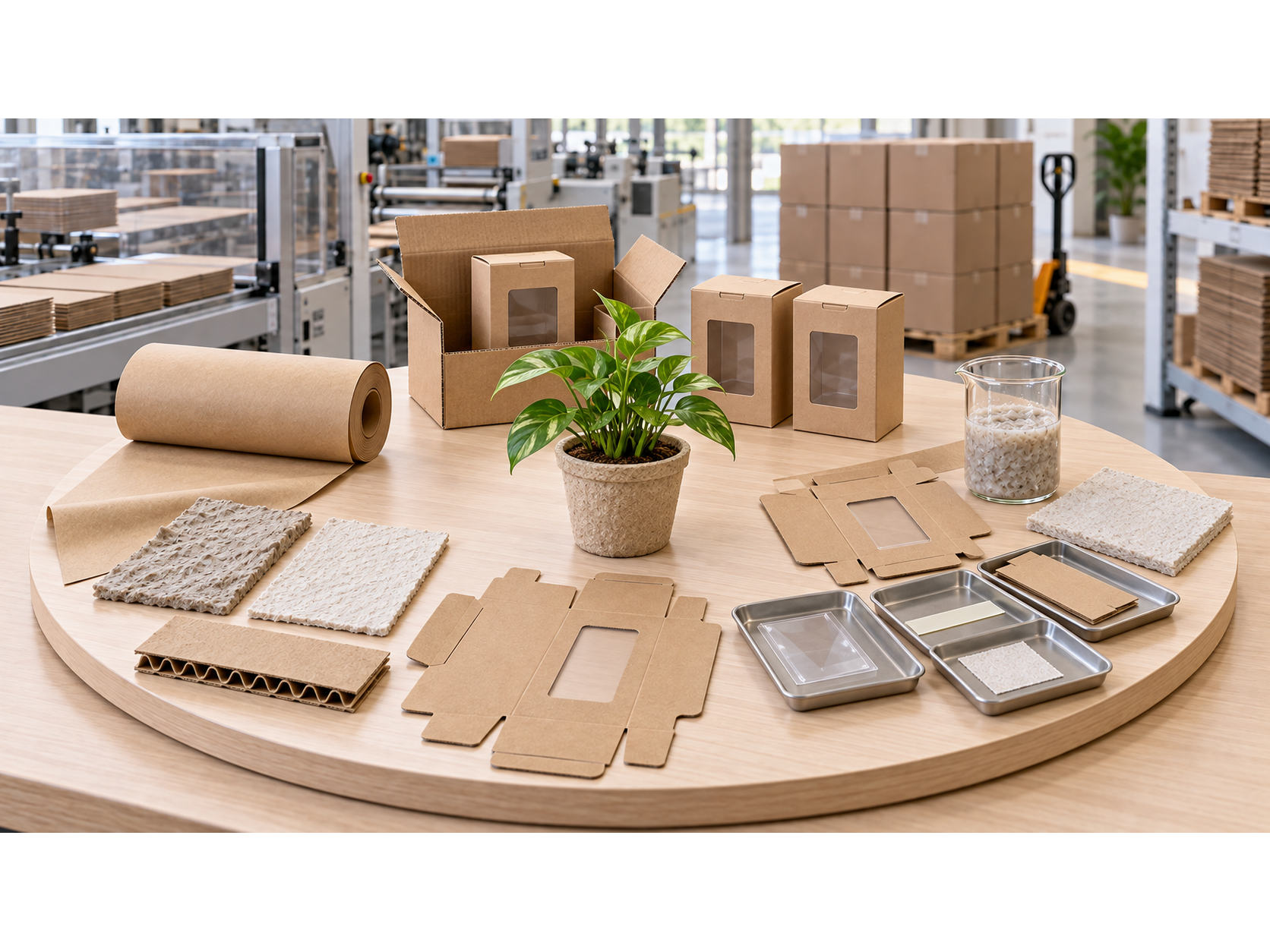
Chipboard, SBS, and corrugated board all belong to the broader world of fiber-based packaging, but they solve different problems.
Material | Construction | Typical packaging role | Main advantage |
|---|---|---|---|
Chipboard / greyboard | Dense, solid board; recycled fiber is common | Rigid-box cores, dividers, pads and structural components | High stiffness in a relatively compact profile |
SBS | Solid bleached sulfate paperboard | Premium printed folding cartons | Bright, smooth print surface |
CRB | Coated recycled paperboard | Printed folding cartons | Recycled-fiber option with engineered print surface |
Corrugated board | Liner + fluted medium + liner | Mailers, shipping cases and protective packaging | Cushioning and distribution strength |

Chipboard vs. Corrugated: Which Is Stronger?
There is no useful answer without defining stronger for what?
Chipboard is solid and dense. It is useful when you need:
rigidity
a thin profile
flatness
separation
or a structural core.
Corrugated board contains a fluted layer that creates more thickness and air space. That makes it much better suited to:
shock absorption
compression during distribution
parcel shipping
stacking
and protective outer packaging
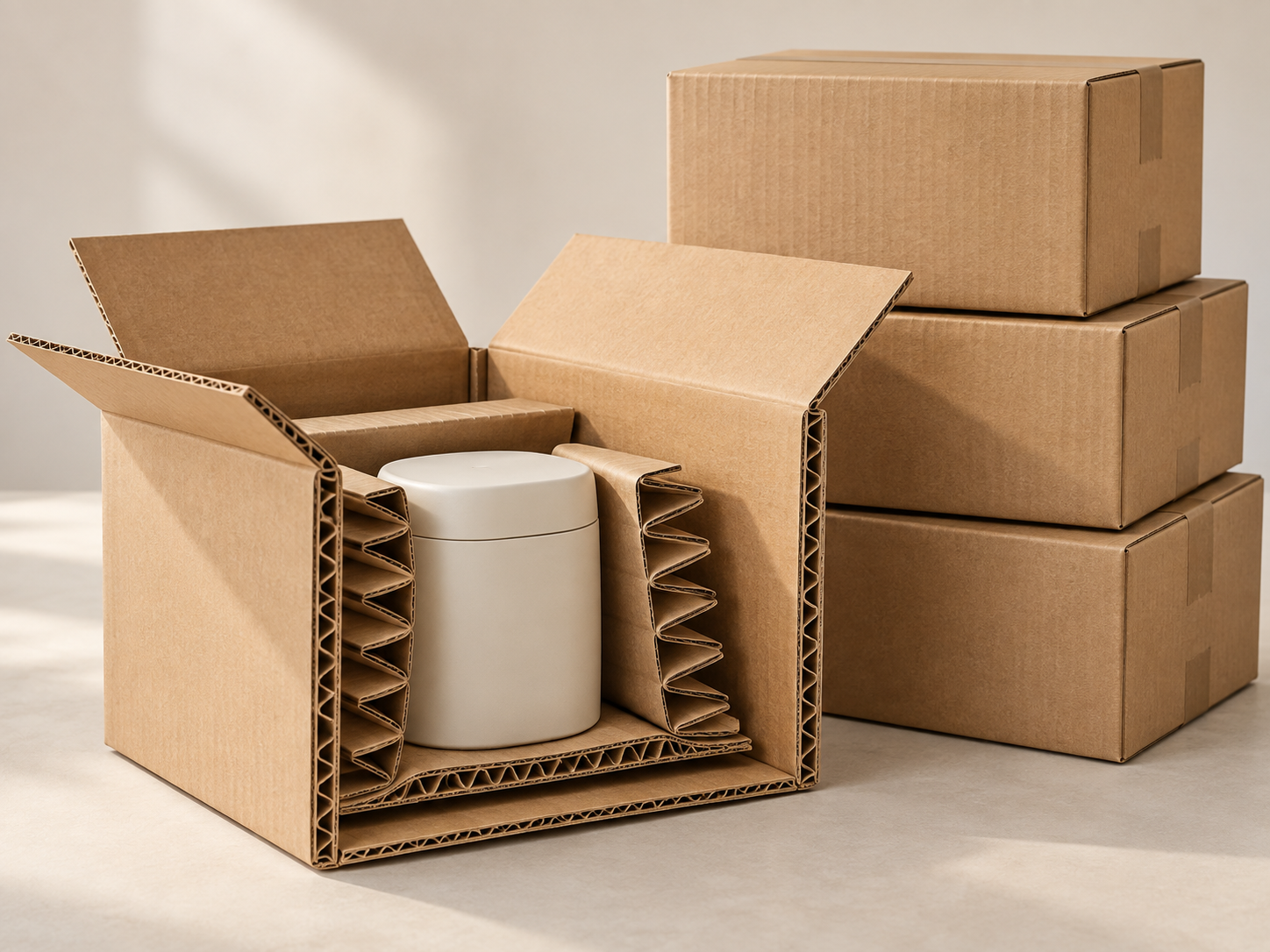
This is why the two materials are often complementary rather than competitive.
A premium skincare product, for example, might sit inside a chipboard-based rigid presentation box, while the rigid box itself travels inside a corrugated shipping case.
One handles presentation, the other handles distribution.
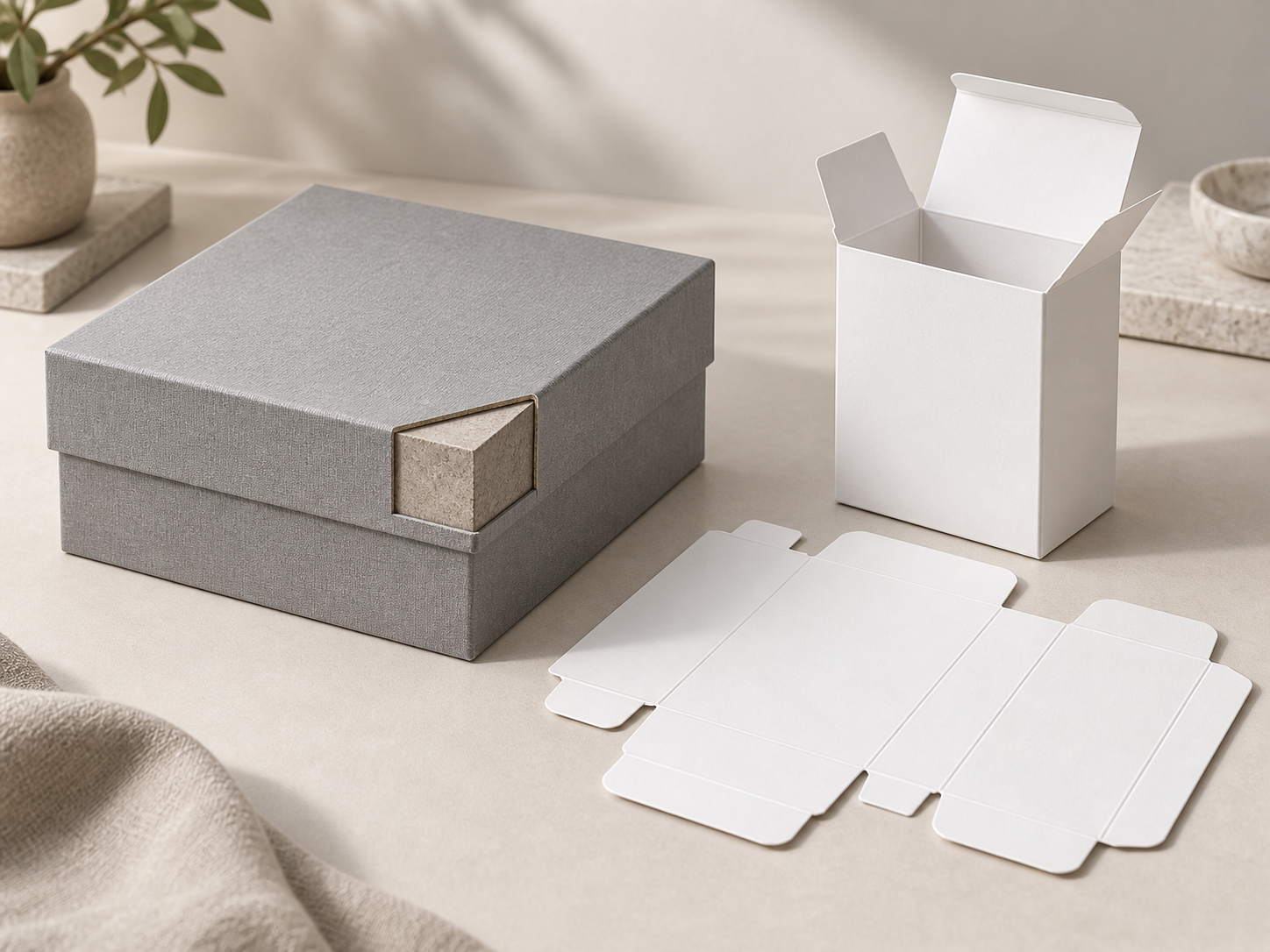
Chipboard vs. SBS: Which Should You Use for a Product Box?
This distinction matters especially for retail packaging.
A thick chipboard core is appropriate when the objective is a rigid, premium box that maintains its shape.
A folding carton has a different job.
It needs to be printed, cut, scored, shipped flat, folded efficiently, and often packed at relatively high speed. SBS is commonly chosen for appearance-sensitive folding cartons because of its smooth white printing surface and folding characteristics.
Dylign's current folding cartons, for example, use approximately 20pt SBS C1S, rather than the thick chipboard/greyboard used in its rigid-box construction.
So if a brand tells a packaging supplier:
“I want a paper box.”
the next question should be about the packaging format—not merely which sheet costs less.
How Thick Is Chipboard?
Paperboard thickness is often called caliper.
In U.S. packaging specifications, caliper may be expressed in points:
1 point = 0.001 inch
So:
Caliper | Inches | Millimeters |
|---|---|---|
20 pt | 0.020 in | 0.508 mm |
40 pt | 0.040 in | 1.016 mm |
60 pt | 0.060 in | 1.524 mm |
80 pt | 0.080 in | 2.032 mm |
100 pt | 0.100 in | 2.540 mm |
These are unit conversions—not recommendations for a particular product.
GSM Is Not the Same as Thickness
GSM and caliper get treated as interchangeable and they are not. GSM (g/m²) is weight per unit area. Caliper is thickness.
Two boards can have the same GSM but different thicknesses because their density and fiber structure differ.
Likewise, two boards with the same thickness can have different stiffness.
So there is no reliable universal equation such as:
“1 mm chipboard = X GSM.”
without information about the specific board.
For purchasing and quality control, request the named material grade, thickness tolerance, and the performance attributes that matter for the package.
A Chipboard Packaging Specification Checklist
If chipboard is appropriate for the design, do not purchase it on thickness alone.
A useful specification should cover:
Application: rigid-box core, insert, divider, backing sheet, pad, or bending application;
Grade: manufacturer and grade designation;
Fiber requirement: recycled content or sourcing documentation where needed;
Caliper: nominal thickness and tolerance;
Dimensions: finished size and dieline;
Performance: stiffness, flatness, grain direction, fit, crease behavior, or retention as applicable;
Appearance: exposed surface, wrap, printing, coating, and approved reference;
Environment: storage temperature, humidity, product exposure, and distribution conditions;
Converting: cutting, wrapping, folding, gluing, assembly, and packing method;
Acceptance: sample approval, inspection requirements, and change-control criteria.
The lowest sheet price is not necessarily the lowest package cost.
A cheaper board that warps during wrapping, cracks during conversion, fits poorly around the product, or increases rejects can cost more after manufacturing than a better-qualified material.
What Chipboard Thickness Should You Use for a Rigid Box?
There is no universal “best” chipboard thickness.
Box size, product weight, construction, desired hand-feel, insert design, and distribution conditions all affect the decision.
Common working ranges:
Chipboard thickness | Typical design direction |
|---|---|
1.0–1.2 mm | Lightweight or some collapsible structures |
1.5–2.0 mm | Many cosmetics, candles, electronics and consumer-product rigid boxes |
2.5–3.0 mm | Larger, heavier or deliberately substantial premium boxes |
These are starting points, not engineering standards.
Making the board thicker simply because “premium packaging should feel heavy” can increase:
material consumption;
box weight;
freight cost;
storage requirements;
and sometimes manufacturing difficulty.
The right thickness is the one that achieves the required experience and performance without unnecessary material.
Can You Print on Chipboard?
Yes—but the answer depends on the grade, surface, and package construction.
Certain chipboard grades can support direct printing with processes including offset, flexographic, or digital printing. But a raw gray or brown recycled surface will not reproduce color in the same way as a bright coated white paperboard.
Color contrast, fine detail, ink holdout, and surface consistency all need to be evaluated on the actual substrate.
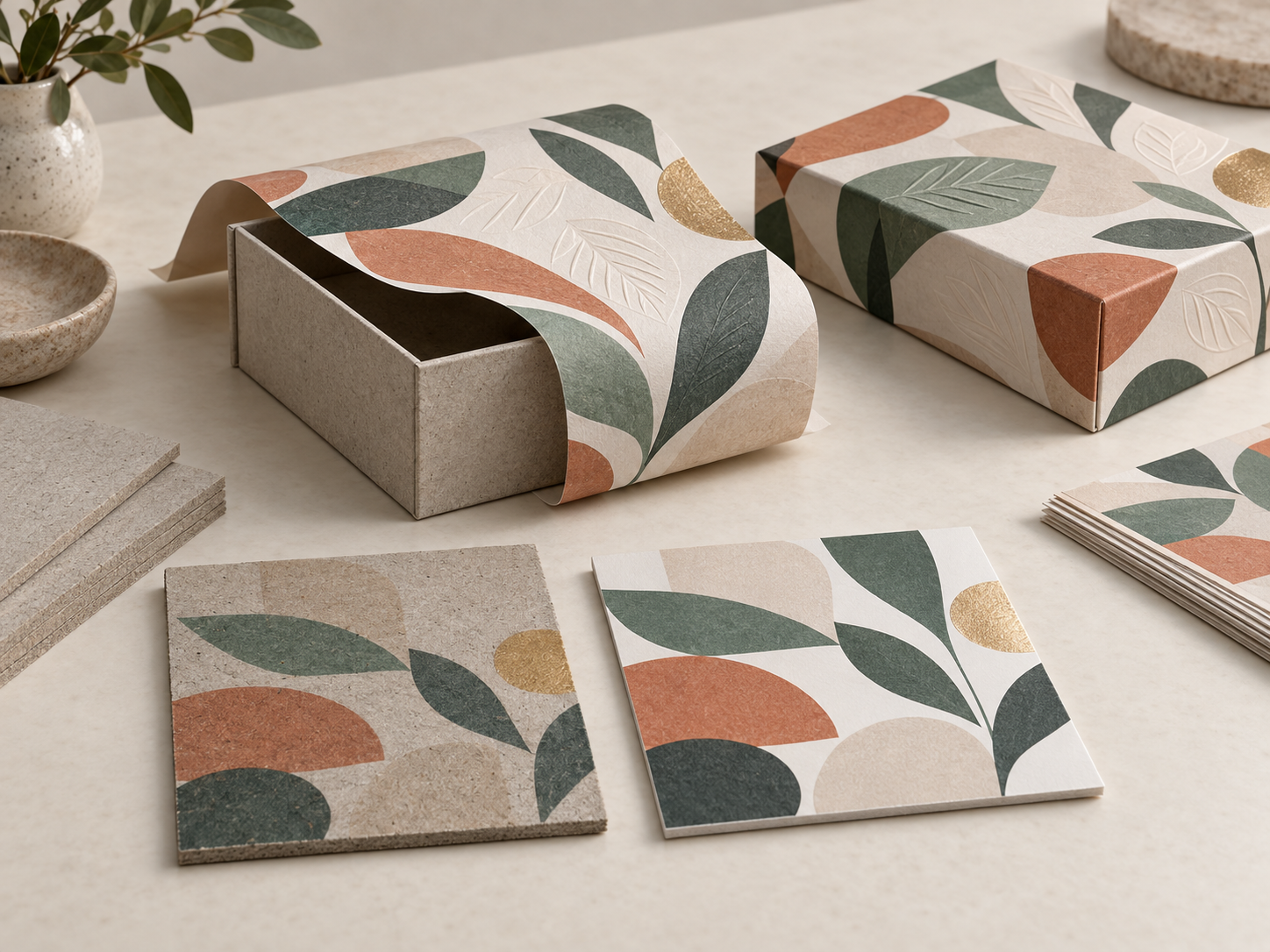
For a wrapped rigid box, however, the chipboard core may never be printed directly.
Instead:
the decorative paper is printed
finishes such as foil, embossing, lamination, or spot effects are applied
the printed material is wrapped around the structural chipboard
That separation gives brands much more freedom over the appearance while allowing the chipboard underneath to focus on structure.
Does Chipboard Resist Moisture?
Untreated paper-based chipboard should not be assumed to be waterproof.
Changes in humidity or moisture exposure can affect:
flatness;
dimensional stability;
stiffness;
adhesive performance;
wrapping;
and converting.
If packaging will encounter refrigeration, condensation, liquid exposure, or a humid distribution environment, evaluate the complete construction rather than relying on the nominal board thickness alone.
A coating, liner, barrier, alternative material, or different secondary package may be needed depending on the application.
Which Packaging Material Does Your Product Actually Need?
For brands, this is the more useful decision.
Dylign's packaging formats illustrate why material should follow package function:
Dylign's rigid-box guidance uses thick chipboard/greyboard cores, its current folding cartons use SBS, and its mailer boxes use E-flute corrugated construction.
This is why asking “Should I use chipboard?” too early can lead to the wrong decision.
Start with:
Where will the package be used?
Does it need to ship directly?
How heavy or fragile is the product?
Does the box need to fold flat?
How important is premium presentation?
Will the structural material be visible or wrapped?
Once those questions are answered, the material choice becomes much clearer.
How Dylign Approaches Chipboard Packaging
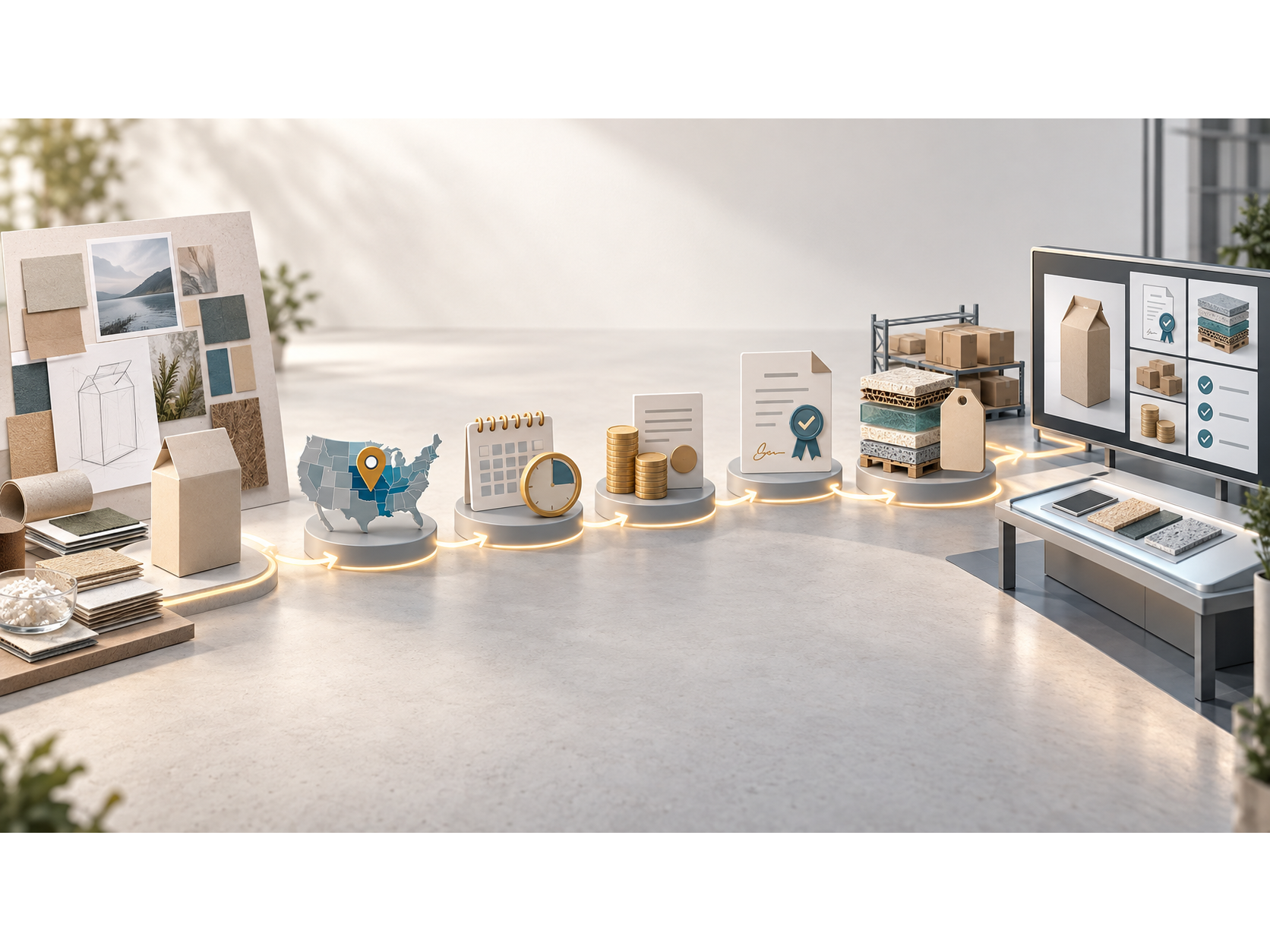
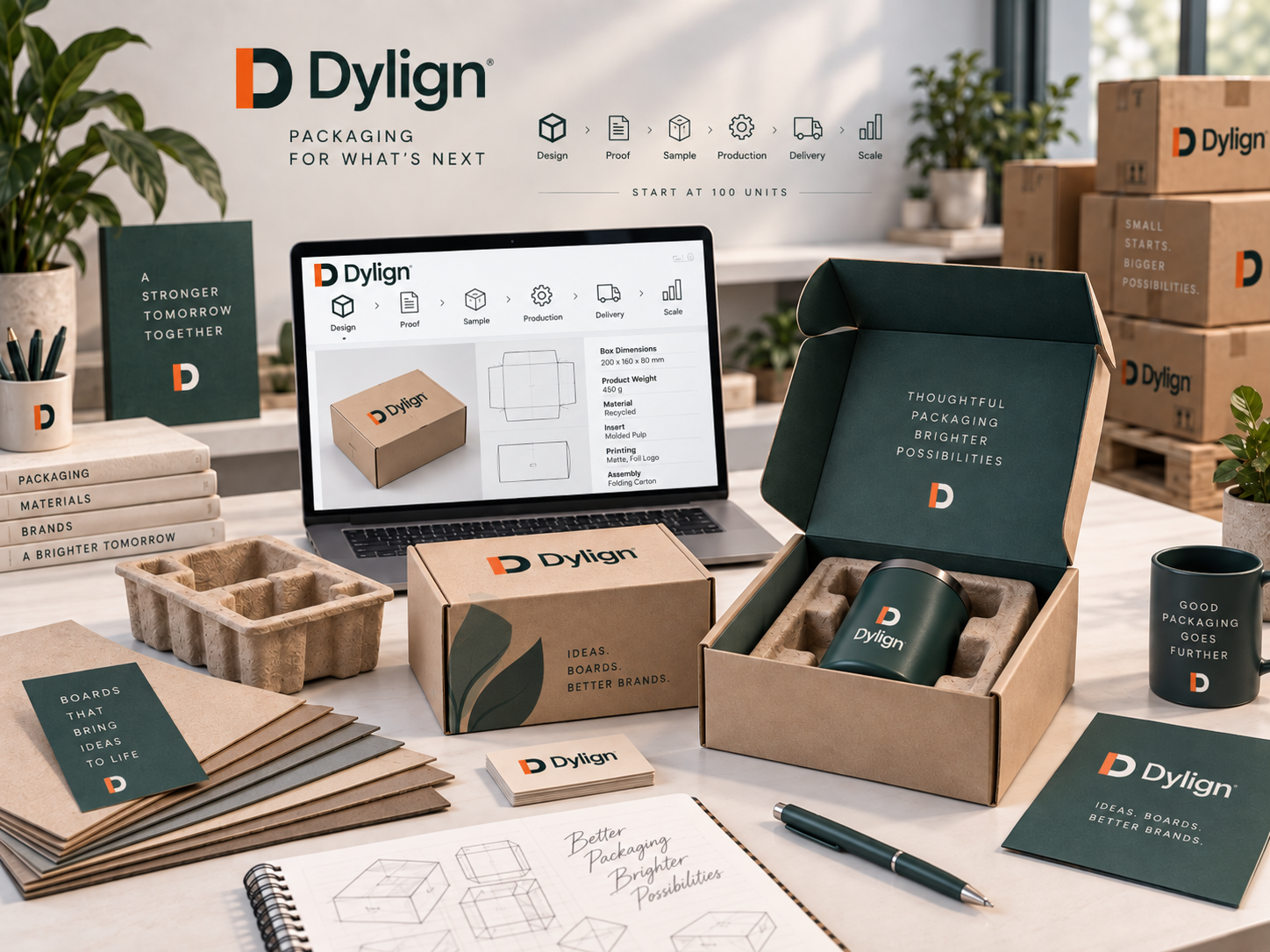
At Dylign, the board gets specified with everything around it: box dimensions, product weight, wrap material, finishing, insert, assembly. Then it goes through proofing, sampling, production and delivery as one order rather than being approved on its own.
The sequence is: choose the box, select the board, confirm the structure, see the design in 3D, sample the finished package, then scale. Every product starts at 100 units, so the board can be tested in a real box before it becomes an inventory commitment.
Choose the Package First, Then the Board
Chipboard is easy to define and harder to specify. It is a dense, solid paperboard that gives you rigidity, separation and structural support, and it is the backbone of most rigid boxes. It is not automatically right for every paper box.
Start with what the finished package has to survive and how it has to look. The board follows from that, not the other way around.
Frequently Asked Questions
Is chipboard the same as cardboard?
Not exactly.
Cardboard is a broad, informal term that can refer to several fiber-based materials. Chipboard is a specific type of solid paperboard. Corrugated cardboard has a fluted middle layer; chipboard does not.
Is chipboard the same as paperboard?
Chipboard belongs to the broader paperboard category.
Other paperboard grades include SBS, coated recycled board, folding boxboard, and other constructions with different fiber composition, surfaces, and performance.
Is chipboard good for rigid boxes?
Yes. Thick chipboard or greyboard is commonly used as the structural core of premium rigid boxes. It is normally wrapped with a separate printed or specialty paper that creates the final exterior appearance. Dylign's rigid boxes use this type of construction.
What thickness of chipboard should I use?
There is no universal thickness.
The correct choice depends on box dimensions, product weight, package structure, desired feel, assembly, and handling conditions. For rigid boxes, approximately 1.5–3.0 mm is a common working range, but the specific package should be qualified rather than selected from thickness alone.
Can you print directly on chipboard?
Some grades can be printed directly.
For premium rigid boxes, however, it is common to print a separate paper wrap and apply it over the chipboard structural core.
Can chipboard be used for shipping?
Chipboard can play a role in a shipping system, but it should not automatically be substituted for corrugated packaging.
Corrugated board's fluted construction generally makes it better suited to parcel shipping, compression, and impact protection. Validate the complete loaded package for the intended distribution route.
Is chipboard recyclable?
Many paper-based chipboard materials can enter paper recovery streams, but recyclability should be evaluated for the complete finished package, including wraps, laminations, adhesives, magnets, inserts, and other components.
Is chipboard made from recycled material?
Recycled fiber is very common in packaging chipboard, but the exact recycled percentage varies by manufacturer and grade.
Request the actual supplier specification rather than inferring recycled content from the gray or brown appearance.