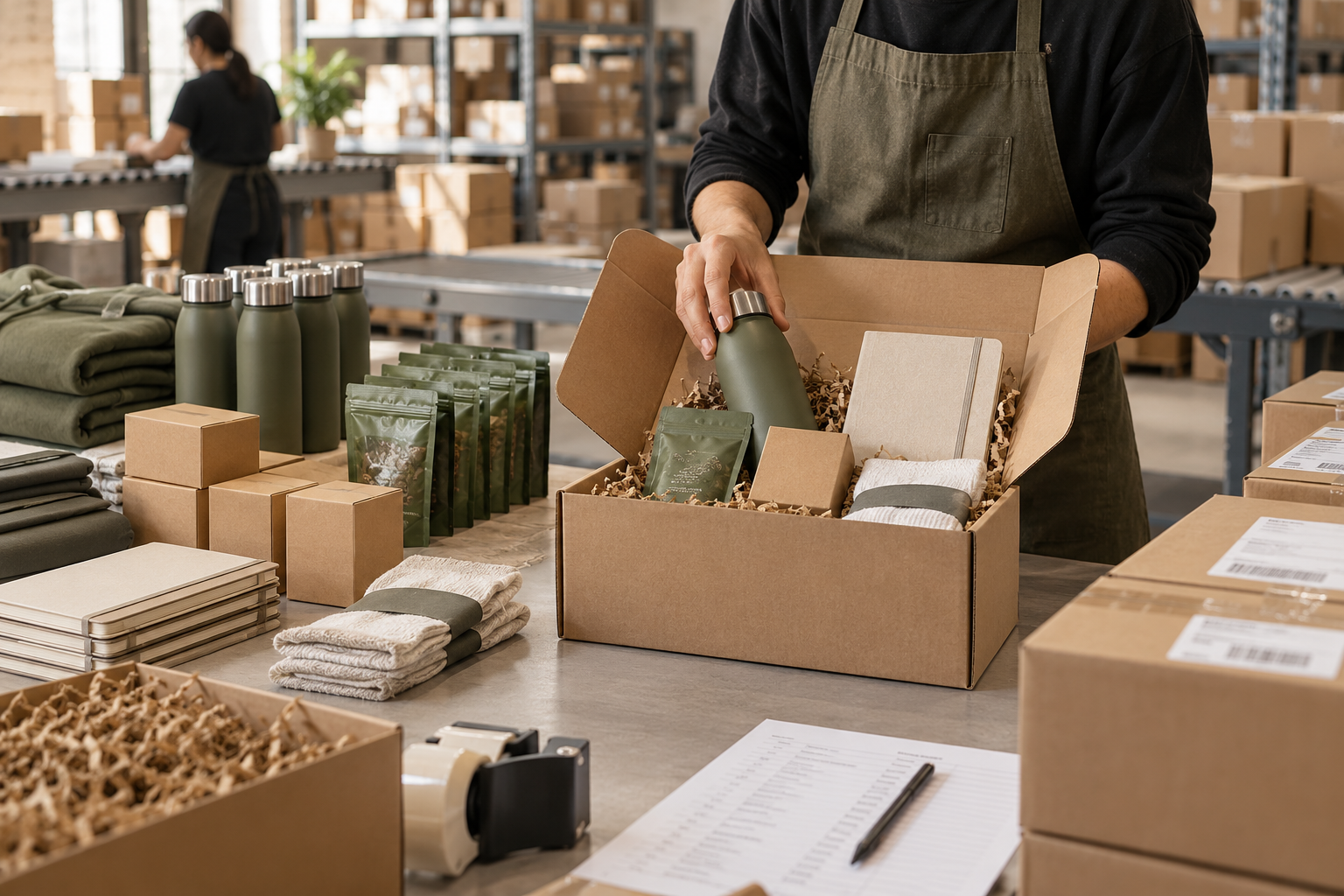
A swag box looks like a shopping problem and runs like a fulfillment problem. Six items from four suppliers, arriving on four different dates, assembled by hand into one package, personalized against a recipient list, and shipped as individual parcels to addresses that may or may not be current.
The box is the easy part. Everything around it is where these programs go over budget and past deadline.
What Is a Swag Box?
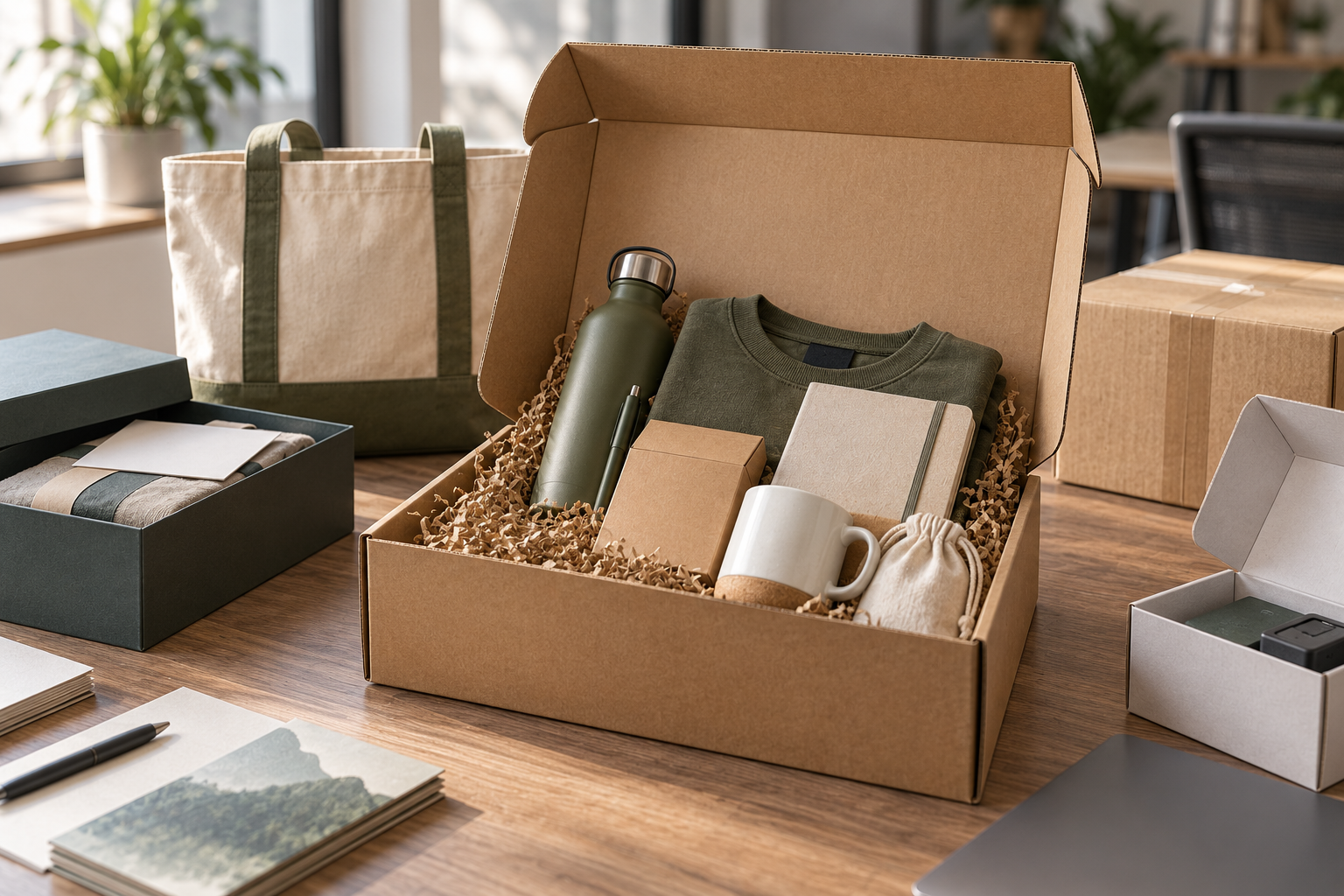
A swag box is a curated package of branded merchandise, product samples, printed materials, or useful gifts delivered to a selected audience for marketing, relationship, event, sales, or employee purposes.
Promotional products are customized items given to clients, employees and partners: apparel, drinkware, bags, tech. A swag box is those items assembled into one package instead of handed out separately, which sounds like a small difference and is not, because assembling them is where the cost and the schedule live.
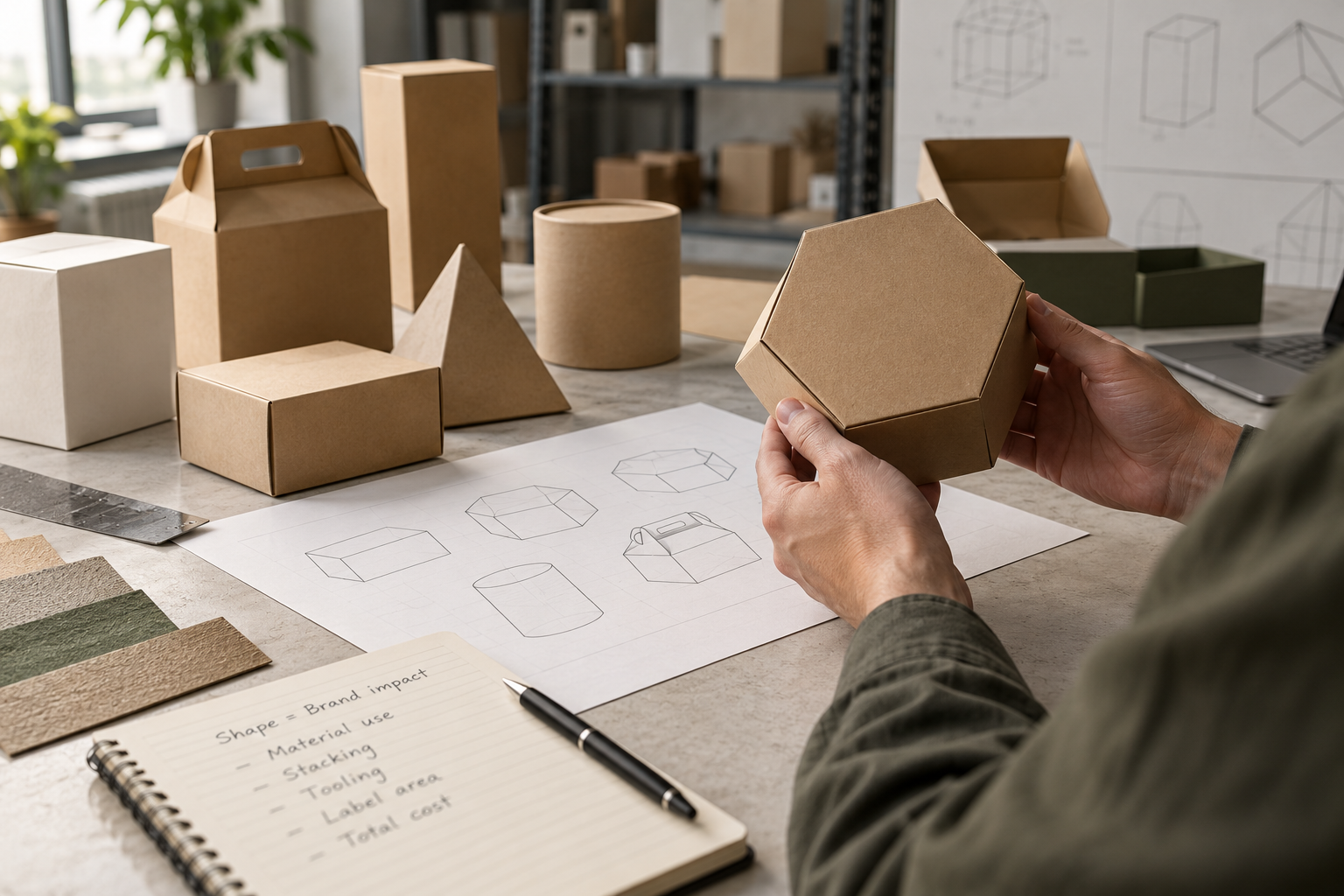
"Swag box" describes a program, not a structure. The physical package might be a printed corrugated mailer, a rigid presentation box inside a shipping case, a folding carton, or a tote inside transit packaging.
How a Swag Box Differs From a Gift Box or Sample Kit
The categories can overlap, but the intended job is different.
Format | Primary purpose | Typical contents | Commercial model |
|---|---|---|---|
Swag box | Brand engagement, recognition, activation, or relationship building | Branded merchandise, samples, inserts, and selected gifts | Usually funded by the sender |
Corporate gift box | Appreciation or relationship maintenance | Recipient-oriented gifts that may carry little or no branding | Usually funded by the sender |
Product sample kit | Trial, education, or product evaluation | Samples, instructions, claims support, and feedback prompts | Usually funded by the brand |
Subscription box | Recurring product discovery or replenishment | A changing or repeat assortment | Paid for by the recipient, which changes everything about what has to be in it |
Common Swag Box Use Cases
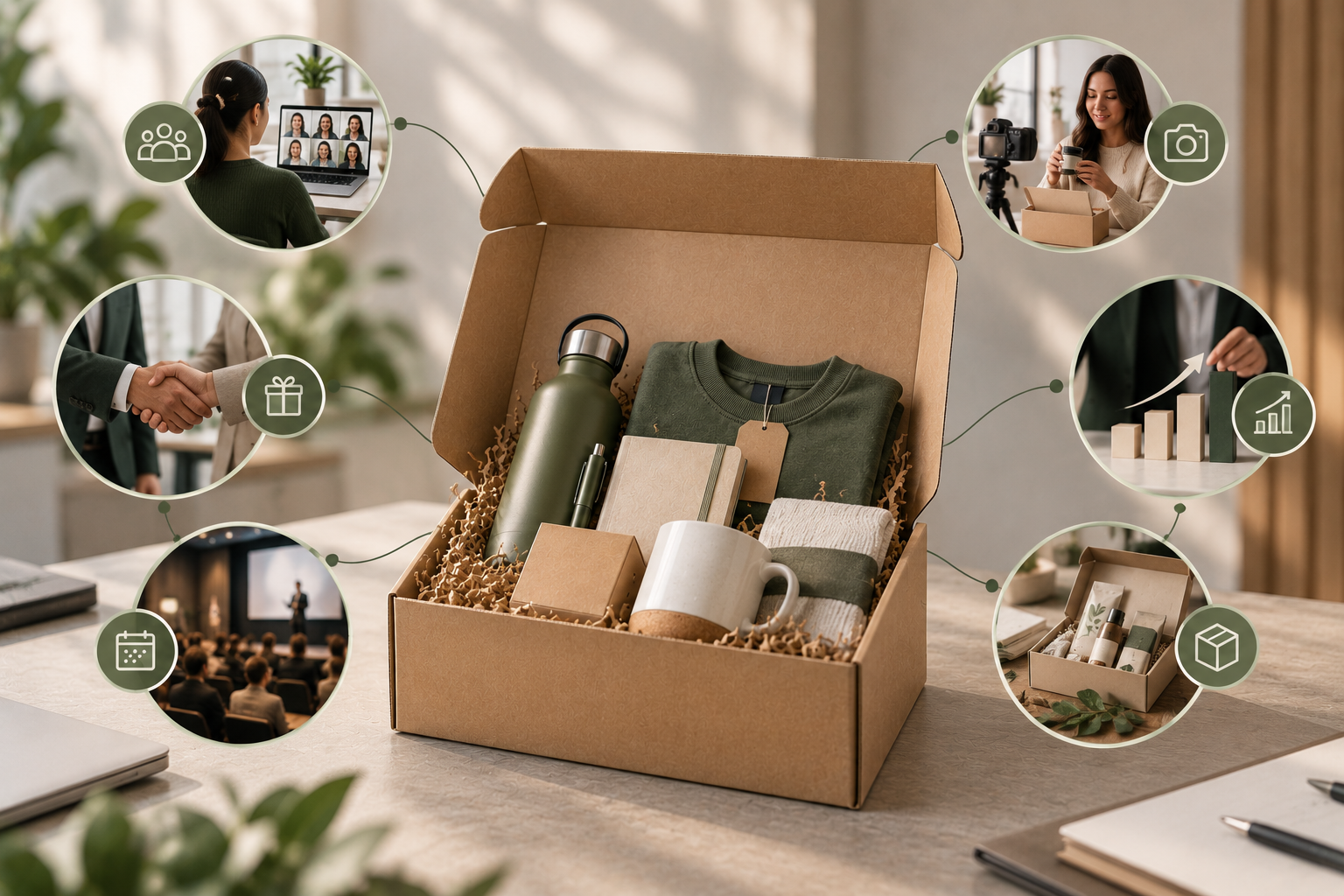
Swag boxes are useful when a distributed audience needs a shared physical touchpoint. Common applications include:
Employee onboarding and milestones: Welcome a hire, recognize service, or connect a remote team.
Customer appreciation: Thank a customer or reinforce a relationship.
Events: Deliver materials before a conference, training session, launch, or virtual experience.
Creator and PR seeding: Combine product trial, brand context, and content guidance.
Account-based sales: Give a priority prospect or retail partner a relevant reason to engage.
CPG launches: Place a new product in a broader usage occasion.
Each of these wants a different box. An onboarding kit and a creator seeding kit share a shipping method and almost nothing else.
What Should Go in a Swag Box?
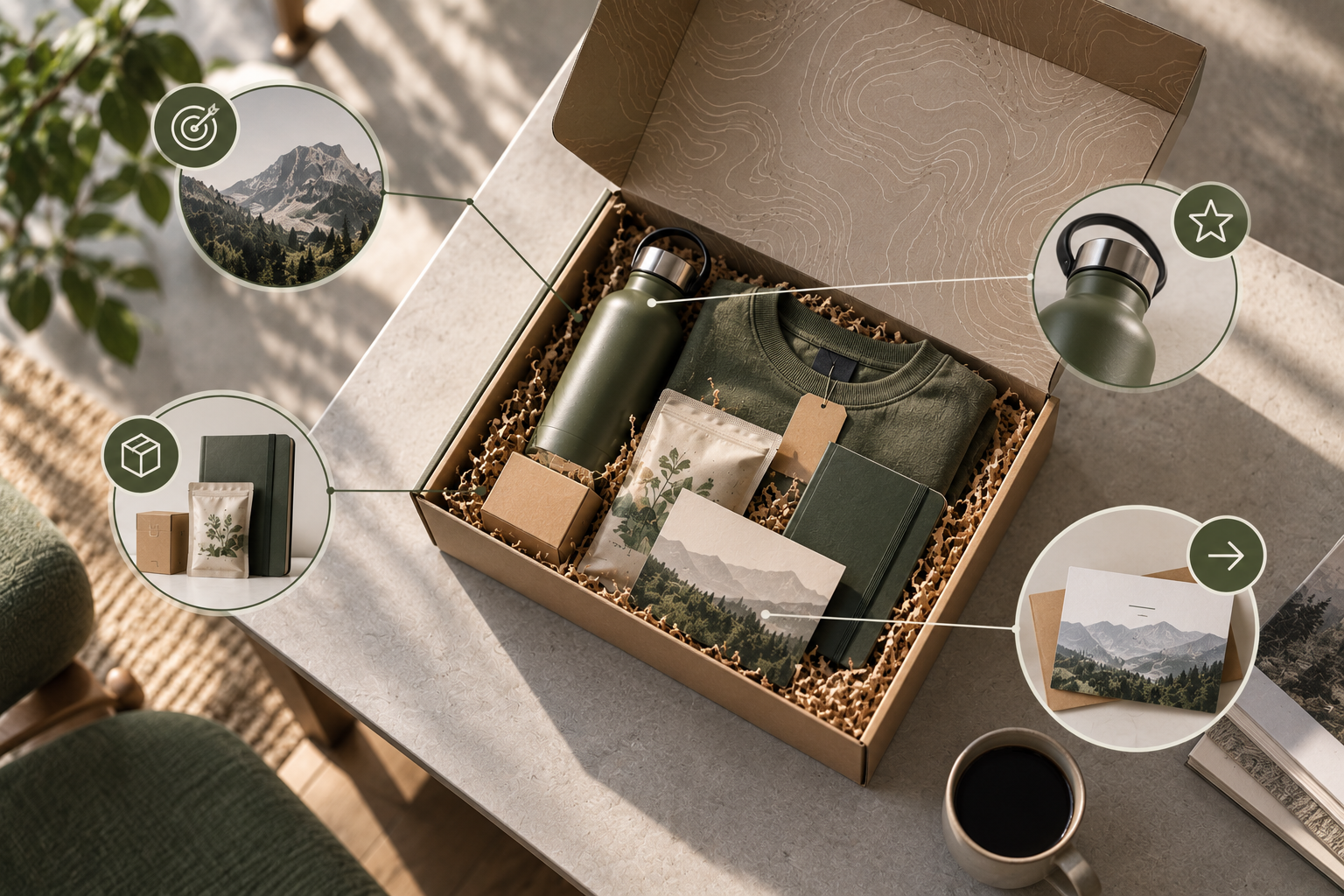
Four parts, and the discipline is in keeping it to four:
One job. Welcome, educate, prompt trial, reward, or support an event. Not several of those at once.
One hero item. The object that carries the idea. It is not automatically the most expensive thing in the box.
A short supporting set. Items that build the same story. Check variants, season, climate and dietary restrictions before this list grows.
One next step. An insert, a URL, a QR code, an event instruction. Something that does not require the recipient to post about it.
Variants are where this gets expensive. Five apparel sizes and three award tiers is fifteen different pack-outs, and every one of them needs its own bill of materials, its own inventory line and its own chance to go out wrong.
Filler costs twice. It adds weight and volume to every parcel, and it adds an item that has to be sourced, received, counted and picked for every box. The tighter the kit, the cheaper it is to ship and the fewer ways it can be assembled wrong.
Packaging Must Protect the Experience as Well as Present It
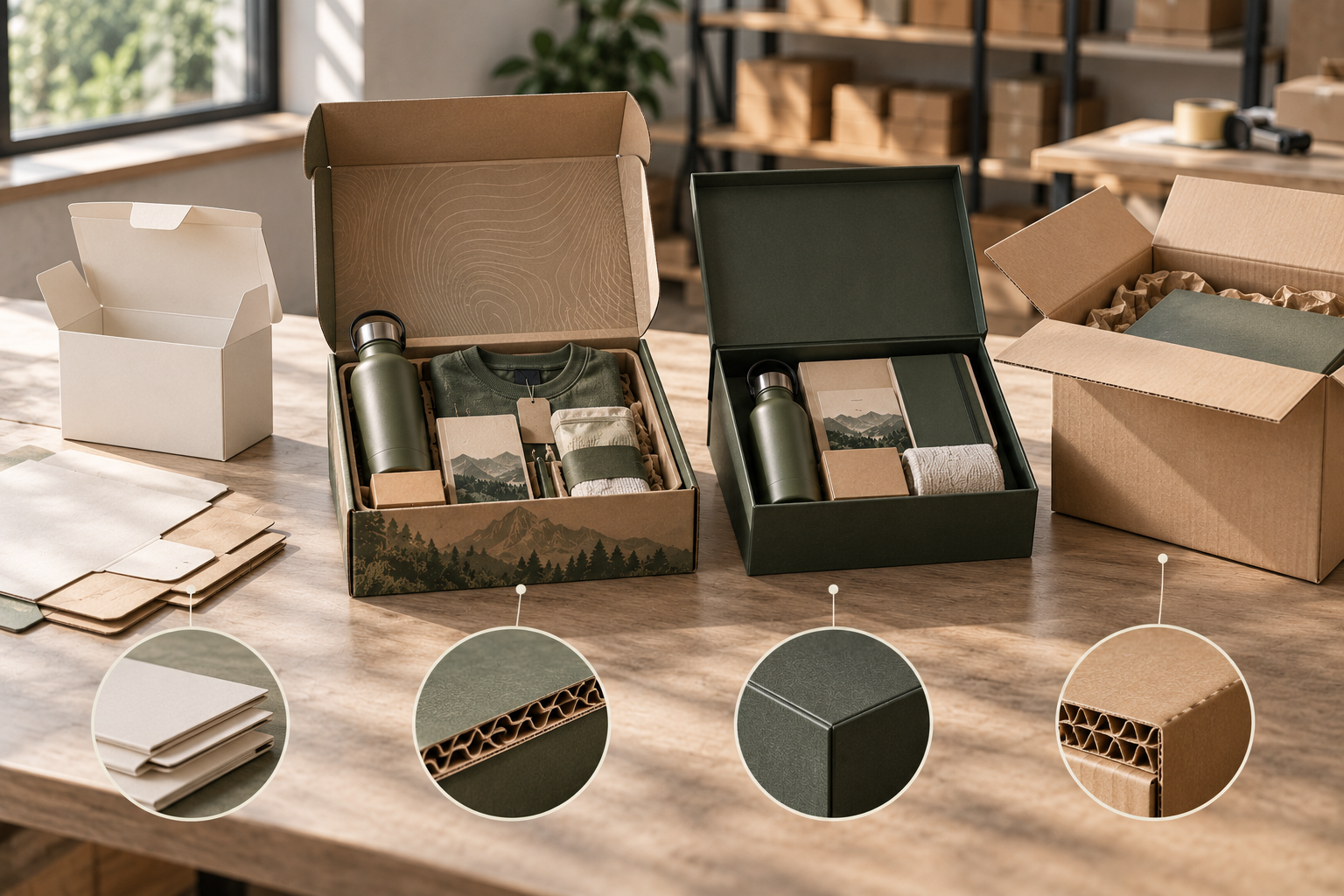
Presentation packaging and transit packaging do different jobs, and sometimes one package has to do both. A printed corrugated mailer that ships on its own takes the label, the abrasion, the compression and the handling, and it still has to look like a gift when it arrives. A delicate presentation box does not survive that, which is why it usually travels inside a plain shipping case.
The three formats behave differently in a swag program. Corrugated ships flat, protects well and can carry a die-cut insert that holds each item in place. Folding cartons also ship flat, print better, and protect less. Rigid boxes present best and cannot fold, so they arrive assembled, take more warehouse space per unit, and usually need a shipping case around them.
Design the unboxing sequence around the loaded package:
Restrain movement. Items that slide will scratch each other and arrive facing the wrong way.
Isolate liquids and anything fragile, because one leak ruins the whole box, not one item.
Decide what gets seen first. The order of the reveal is a design decision, and without one it defaults to whatever the packer happened to do.
Remove void space that is not doing protection or presentation work, because it is being paid for in dimensional weight.
Right-sizing is where this turns into money. U.S. parcel carriers, such as Fedex, bill on actual weight or dimensional weight, whichever is greater, and dimensional weight is calculated from the box, not from what is in it. A swag box is usually light and bulky, which is exactly the profile that gets billed on volume, so the packed dimensions matter more here than in most packaging decisions.
Kitting and Fulfillment Turn the Concept into a Repeatable Product
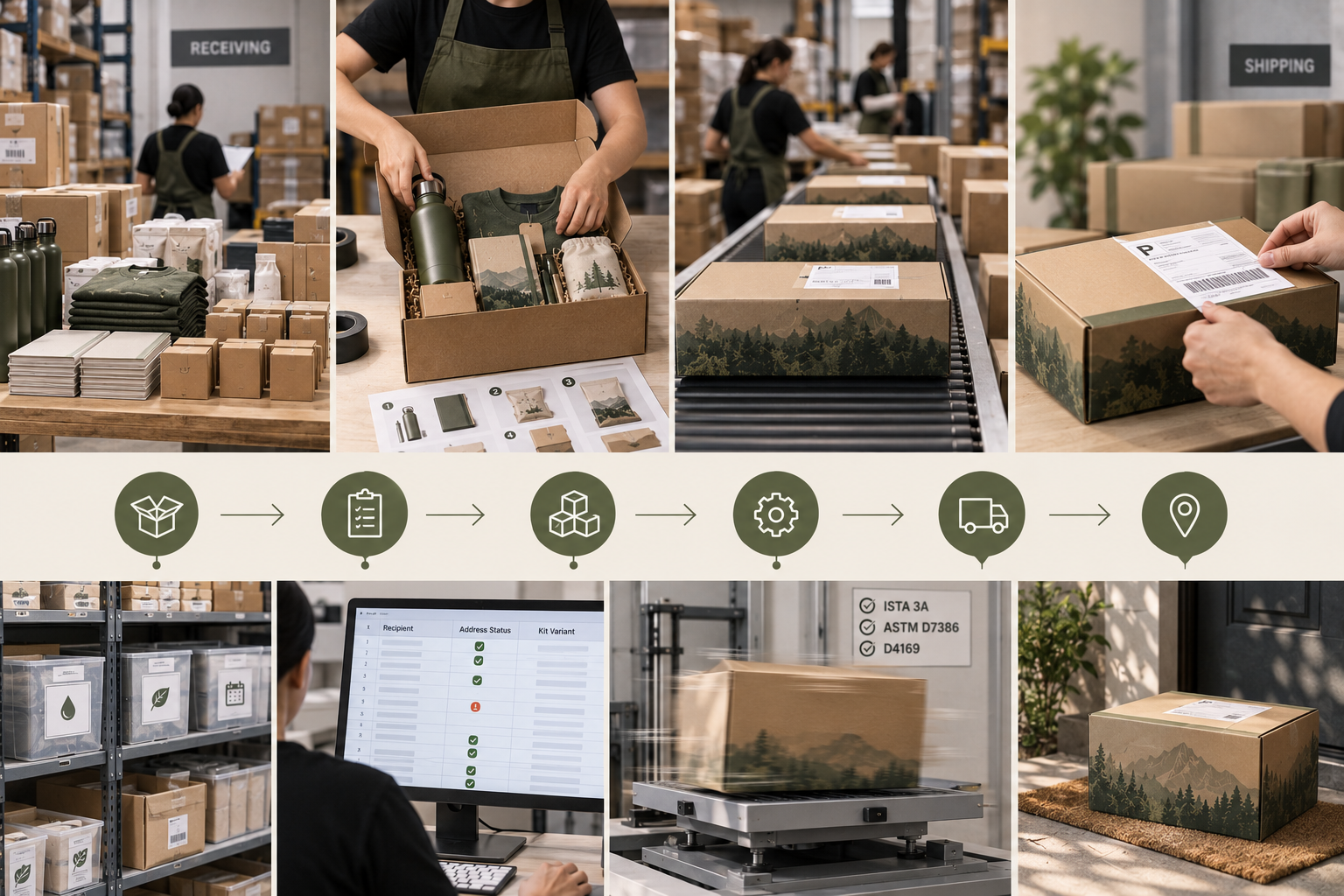
Kitting is assembling specified components into one package, by hand, hundreds or thousands of times, by people who did not design it. That is why the pack-out instruction matters more than it sounds: quantities, orientation, which variant goes to whom, where personalization goes, how it closes, what gets inspected.
A practical fulfillment plan also covers:
inbound delivery dates and quantity reconciliation;
inventory buffers and rules for shortages or substitutions;
lot and shelf-life control for any food or beauty sample, because a box assembled in March and shipped in July has aged in a warehouse;
address validation and data-access responsibilities;
parcel service, tracking, undeliverable packages, and replacements;
a pilot pack-out with the real items and a real slice of the recipient data, before the full run.
An empty box passes tests a loaded one does not. ISTA 3A covers individual packaged products up to 150 pounds moving through parcel systems, which is where nearly every swag box sits. ASTM D7386 covers single-parcel delivery and D4169 covers broader shipping-system testing. Which one applies depends on the route and the failure you are trying to prevent.
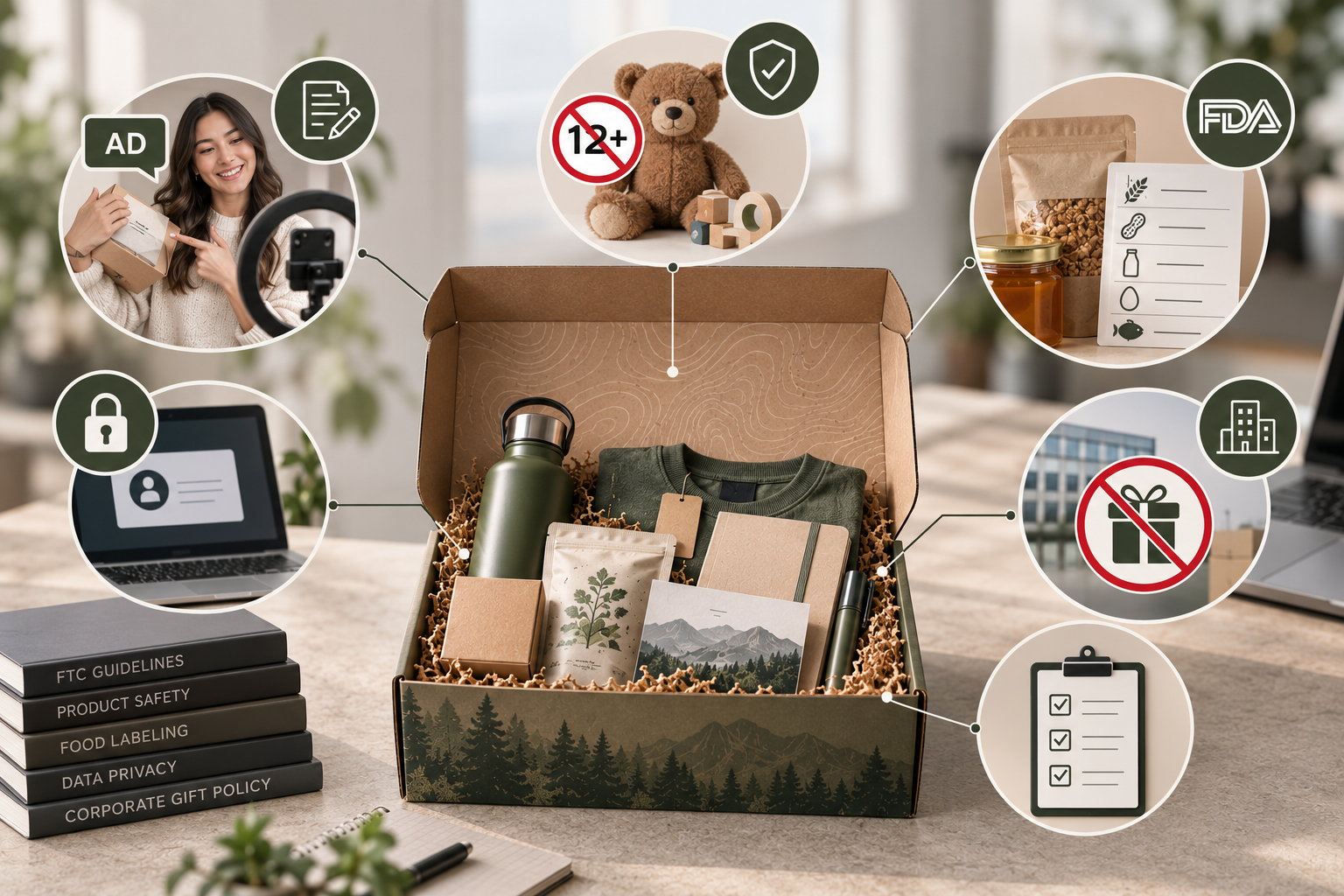
Compliance Depends on the Contents, Audience, and Campaign
A swag box does not create a regulatory exemption.
Sending a creator a free box creates what the FTC calls a material connection, which means any endorsement that follows has to be disclosed. That obligation does not disappear because nothing was asked for in return, and the brand can carry responsibility for training and monitoring, not just the creator. Conditioning a gift on a positive review is the line nobody should get near.
Promotional merchandise is still a product under U.S. safety rules. Suppliers and distributors carry federal responsibilities, and anything intended primarily for children 12 or under triggers additional requirements. Giving something away does not change its regulatory status. (U.S. Consumer Product Safety Commission)
Food kits keep their labeling obligations. Most FDA-regulated packaged foods have to identify major allergen sources, and repacking a compliant product into a swag box does not remove that label from the requirement. Allergens, shelf life, leakage and temperature all follow the product into the box.
Two things that are not packaging and still stop programs: recipient data handling, and the gift policies of the company you are sending to. Some employers cannot accept anything over a set value.
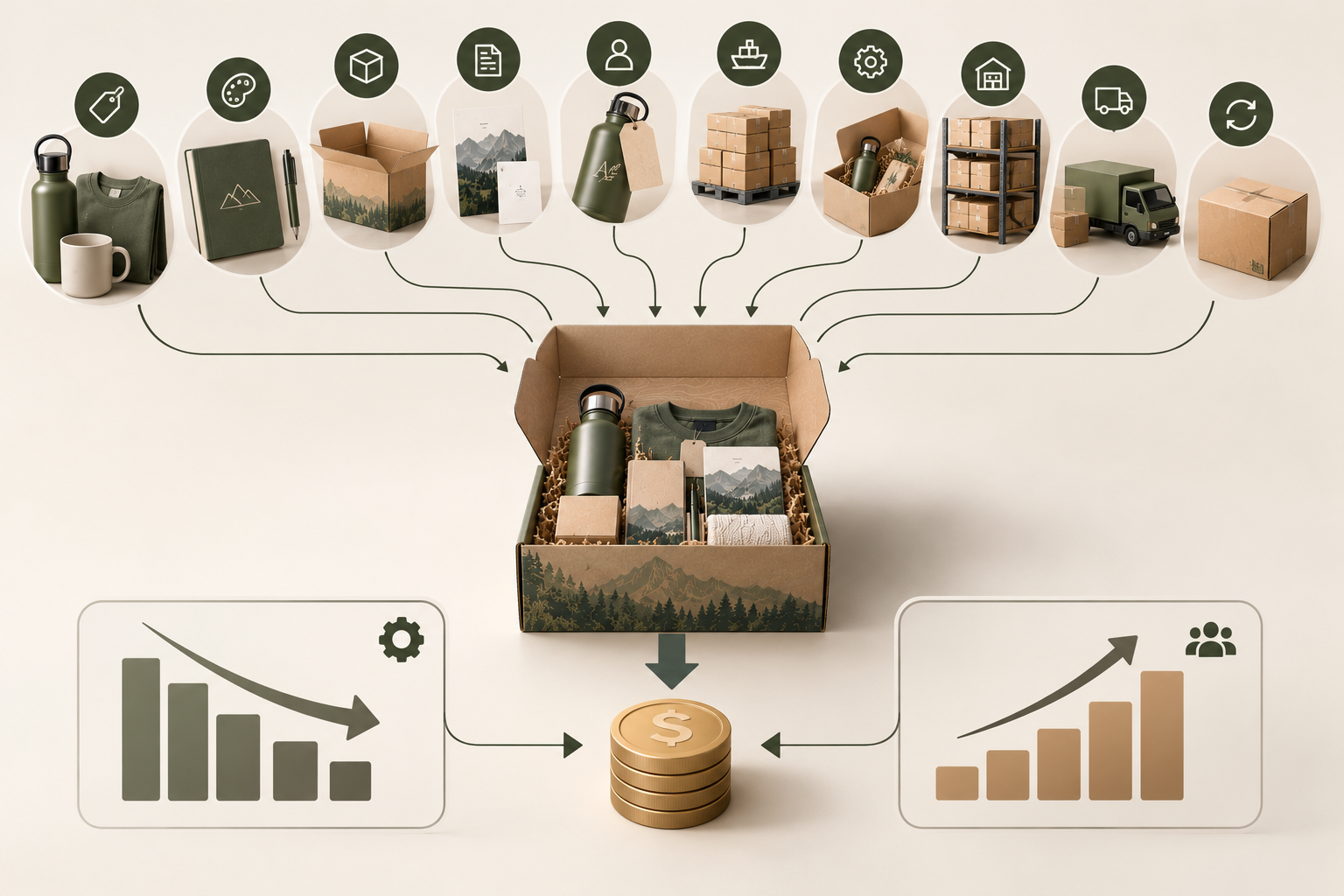
Calculate Program Cost, Not Just Box Cost
The printed box is usually the smallest line in the budget. The full picture:
items + decoration + setup and tooling + packaging + inserts + personalization + inbound freight + kitting labor + storage + parcel shipping + replacements + undeliverables
Fixed costs and per-recipient costs behave completely differently as the list grows, so they should never sit in the same number. Tooling and setup get cheaper per box at volume. Kitting labor and parcel shipping do not. And every variant multiplies the second category, which is why a program that looked affordable at 200 recipients can stop working at 2,000.
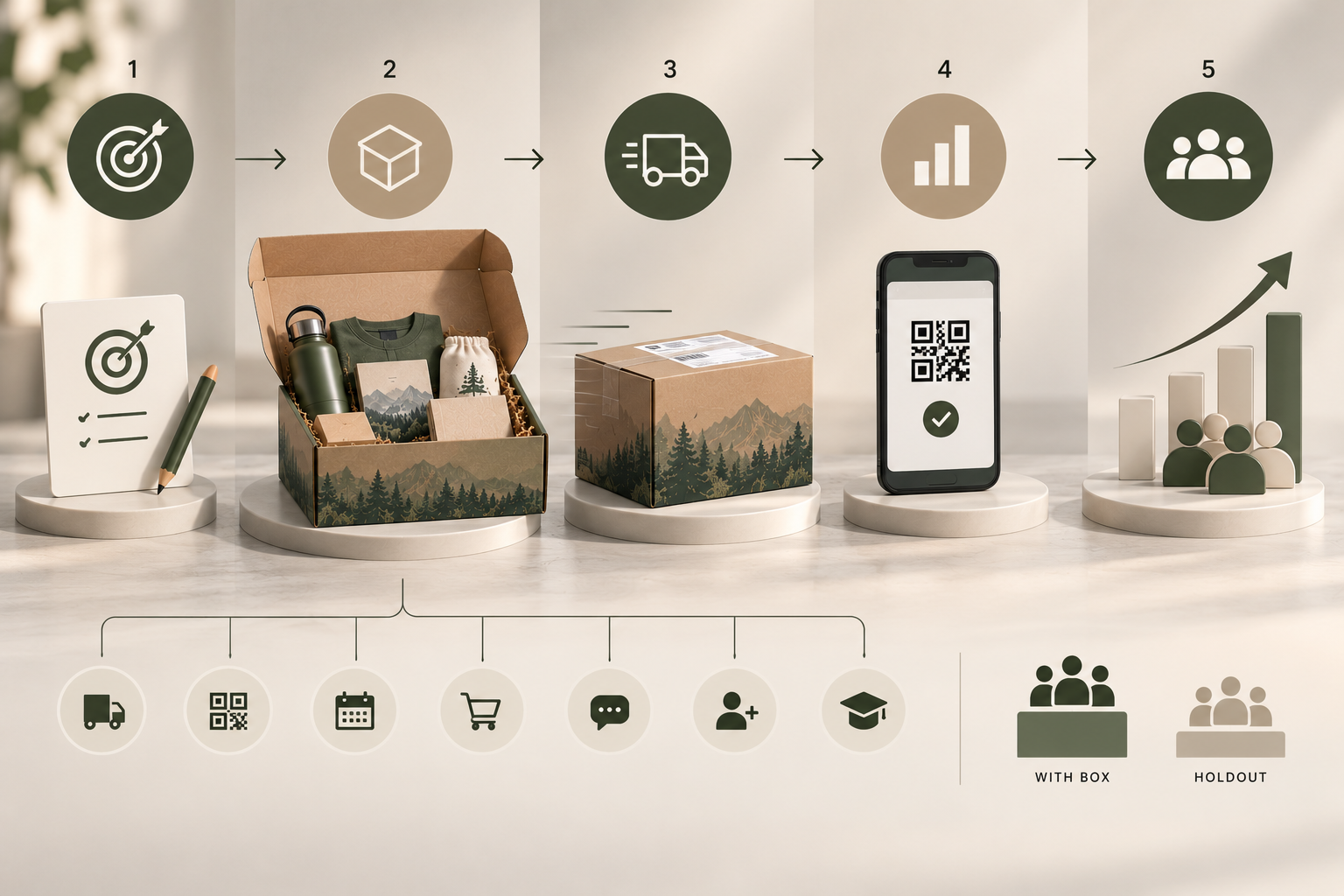
Decide What Success Looks Like Before You Buy Anything
The metric has to be chosen before the box is designed, because it changes what goes in it. A program measured on trial completion needs a sample and an instruction. A program measured on account progression needs a reason for a conversation. Those are different boxes.
Useful measures: delivery success rate, QR or landing-page response, event attendance, trial completion, feedback rate, qualified follow-up, onboarding completion. Creator reach and organic posts are secondary signals at best, since a box that shipped is not an impression and an impression is not revenue.
A holdout group is the only thing that separates what the program did from what would have happened anyway. Where that is not possible, a baseline from a comparable period is the next best thing.
One Audience, One Job, One Next Step
The programs that work are narrow. One audience, one thing the box is supposed to do, one hero item, one next step, and a pack-out simple enough that the person assembling it cannot get it wrong.
Everything else is variants, and variants are where the budget goes.