A retailer compares two quotes for custom shopping bags. The first offers 250 bags at a higher unit price. The second offers 1,000 bags at a significantly lower price per unit.
On paper, the larger order appears to be the better deal. Yet it requires more upfront cash, occupies more storage space, and leaves the retailer holding more inventory if the design or product mix changes.
That difference matters for boutiques, specialty retailers, and small CPG brands, where packaging expenses are tied to both sales volume and day-to-day operations.
The real question isn't simply how much a custom shopping bag costs. It's how much the business will spend to receive, store, and use the bags it actually needs.
Why Two Similar Shopping Bags Can Have Different Prices
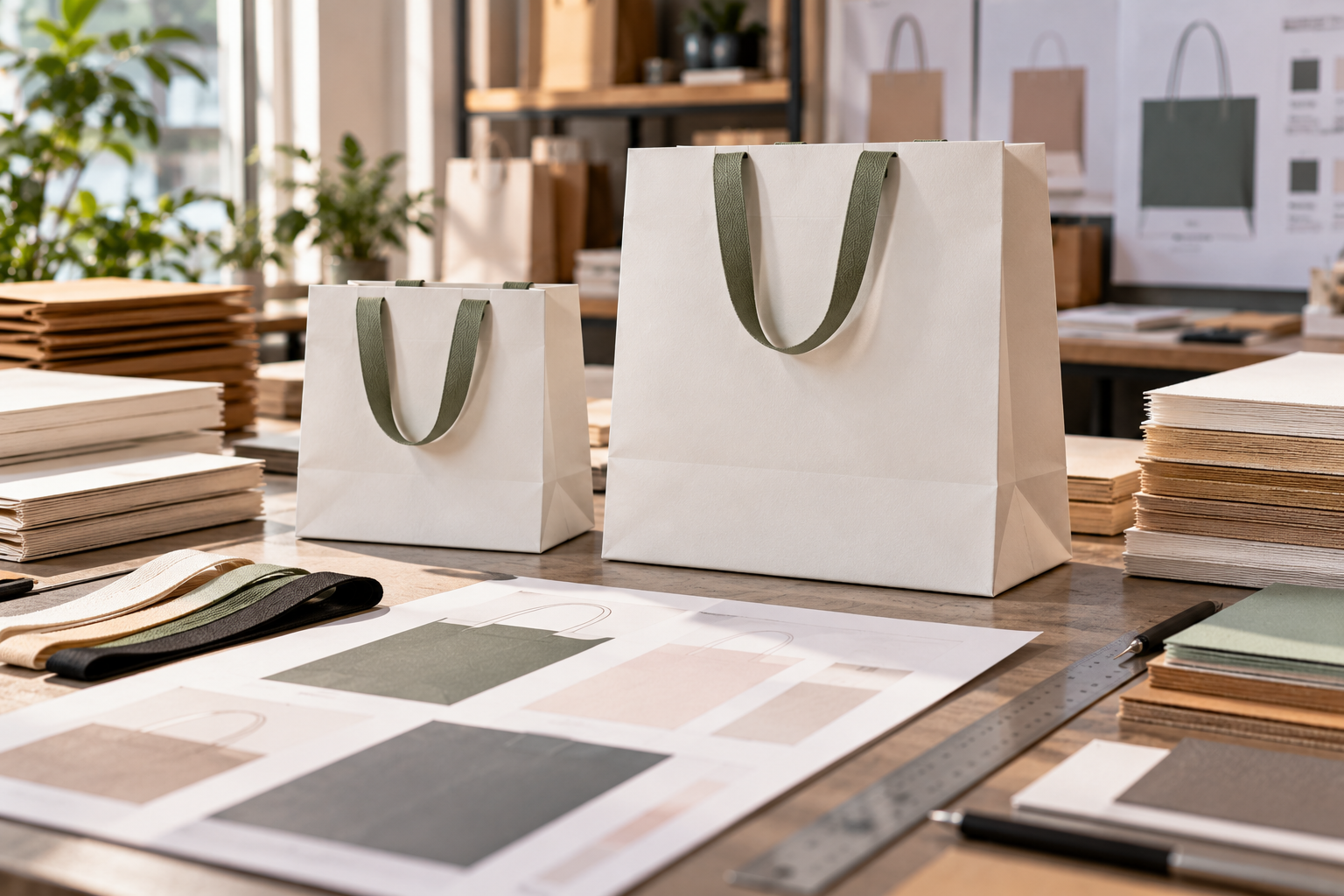
The price of a shopping bag starts with the physical specification.
A larger bag generally consumes more material than a smaller one. A heavier paper structure can change material consumption and converting requirements. Printing and finishing introduce additional production steps, while order quantity affects how fixed setup costs are spread across units.
For custom printed shopping bags, these variables interact.
For example, changing a bag from a smaller everyday retail size to a larger apparel format affects more than its dimensions. It may also change paper consumption, carton packing, and transportation volume.
Similarly, moving from a simple printed paper surface to a laminated construction changes both the manufacturing process and the finished product.
This is why comparing prices without matching specifications can be misleading.
A meaningful quote comparison should use the same finished dimensions, paper grade, handle construction, print requirements, and delivery terms.
The Order Quantity Problem
Bulk purchasing often improves the quoted unit price. However, it also changes how much inventory the buyer must finance and store.
Consider a hypothetical retail business planning its first order of shopping bags.
Smaller Order | Larger Order | |
|---|---|---|
Quantity | 250 | 1,000 |
Illustrative manufacturing price per bag | $1.20 | $0.75 |
Manufacturing total | $300 | $750 |
Illustrative freight | $100 | $220 |
Total delivered cost | $400 | $970 |
Delivered cost per bag | $1.60 | $0.97 |
All figures are hypothetical and provided solely to illustrate the calculation. They are not Dylign quotations or current market averages. Import duties, taxes, and other possible charges are excluded.
The larger order has a substantially lower delivered cost per bag, but the buyer must spend $570 more upfront.
If the retailer uses 100 bags per month, the smaller order represents approximately two and a half months of demand. The larger order represents ten months.
The appropriate choice depends on more than the unit price.
An established retailer using a stable design may have good reasons to purchase a larger quantity. A newly launched brand still testing its identity may place greater value on flexibility.
This is particularly relevant to custom shopping bags for small business orders, where storage capacity and working capital may be limited.
Materials and Finishes: Where Costs Begin to Diverge
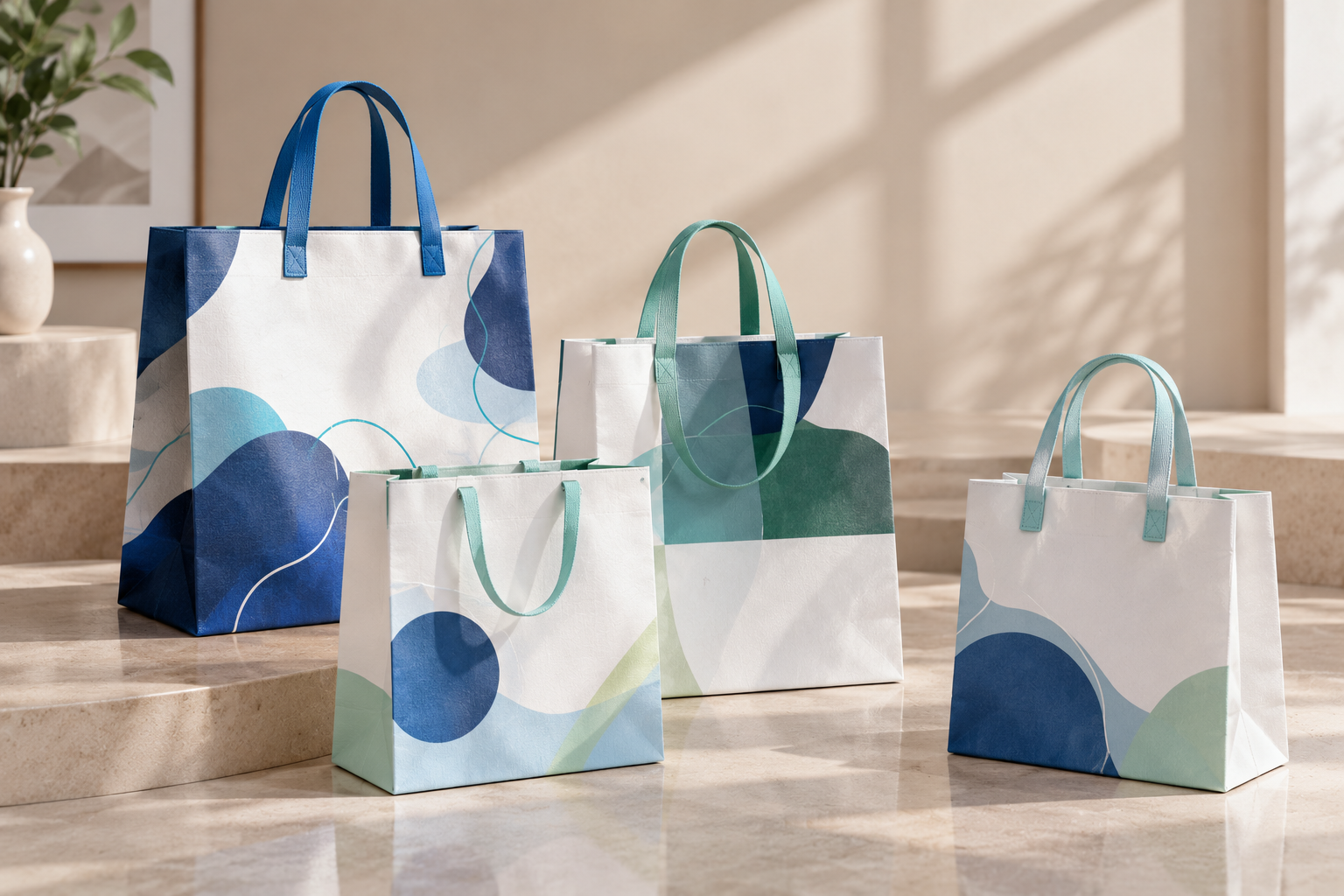
Paper weight and surface treatment are two important specification choices.
A lighter paper construction may be suitable for everyday retail products such as clothing and accessories. A heavier construction may offer a more substantial feel and a different level of shape retention.
But paper weight alone does not establish finished-bag strength. Handle attachment, bottom construction, dimensions, and the intended product load must also be considered.
Finishes introduce another cost decision.
Gloss and matte plastic-film lamination can provide different visual and surface characteristics. Uncoated or varnished paper may be appropriate when a business prefers a simpler construction or is evaluating paper recycling compatibility.
A buyer considering eco-friendly shopping bags should avoid assuming that a heavier bag, a natural brown appearance, or a paper-based substrate automatically has the lowest environmental impact.
The complete construction, material sourcing, actual reuse, and end-of-life pathway all matter. In the United States, environmental marketing claims should be specific and supported rather than relying on broad, unqualified terms such as "eco-friendly."
For cost planning, the practical question is whether the selected material and finish offer value for the intended retail application.
Premium finishing may be worth considering for high-end gifting. It may be unnecessary for temporary promotional packaging or everyday store transactions.

Printing Costs Depend on More Than the Logo
A simple logo printed on a paper bag and a complex full-color design may require different production considerations.
However, it would be misleading to assume that printing cost always rises in direct proportion to the number of colors. The outcome depends on the printing process, artwork, production volume, and supplier configuration.
Important quote details include:
The approved print method and artwork specifications
The number and placement of printed surfaces
Color requirements, including any special color matching
Additional effects such as foil, spot UV, or embossing
Proofing or sample requirements
The goal is not necessarily to minimize every individual production step. It is to understand whether the added design complexity contributes enough value to justify its cost.
For a boutique whose bag is part of a premium gifting experience, a special finish may be appropriate. For a high-volume retail promotion, straightforward full-color printing may be sufficient.
Freight: The Cost Buyers Sometimes Compare Too Late
A shopping bag quote can appear inexpensive until transportation is included.
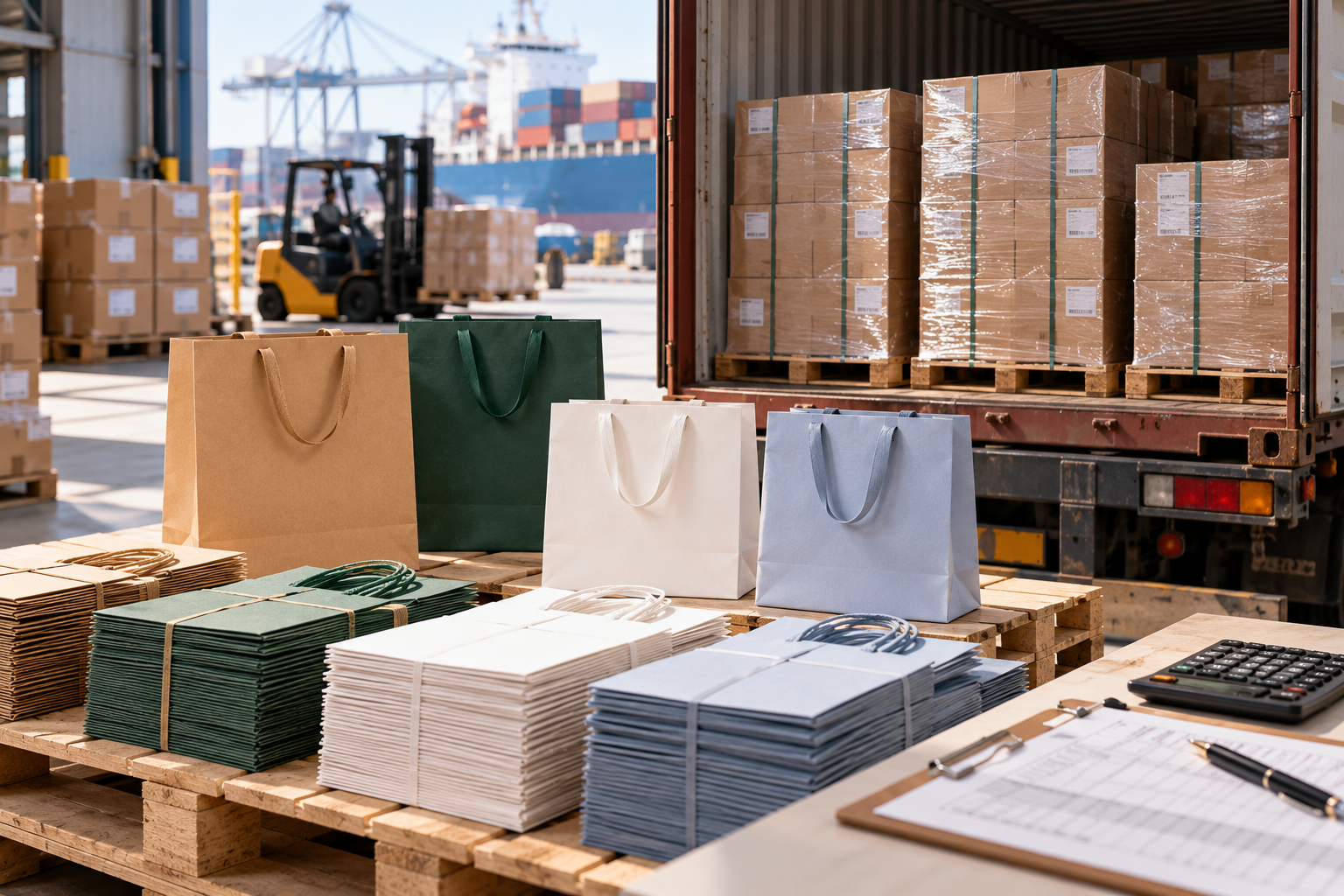
Freight is influenced by shipment dimensions, weight, destination, delivery speed, and the commercial terms agreed with the supplier.
Paper shopping bags are often shipped flat, but they still occupy carton and pallet space. Changes to size, material, or order quantity may affect shipping volume as well as manufacturing cost.
For buyers comparing local production with overseas sourcing, manufacturing price alone is not enough.
An overseas supplier may quote an attractive factory price while leaving transportation, import-related charges, and delivery arrangements to the buyer. A local supplier may quote a higher production price but include different services or delivery terms.
Neither sourcing model is universally cheaper.
The appropriate comparison is the landed cost of the same finished product delivered to the same destination.
A simplified calculation is:
Landed cost per bag = Total applicable purchasing and delivery costs ÷ Accepted usable bags
Depending on the transaction, total costs may include manufacturing, freight, insurance, duties, taxes, and other relevant charges.
For a broader explanation of international trade terms and purchasing responsibilities, see Dylign's article on FOB versus landed cost.
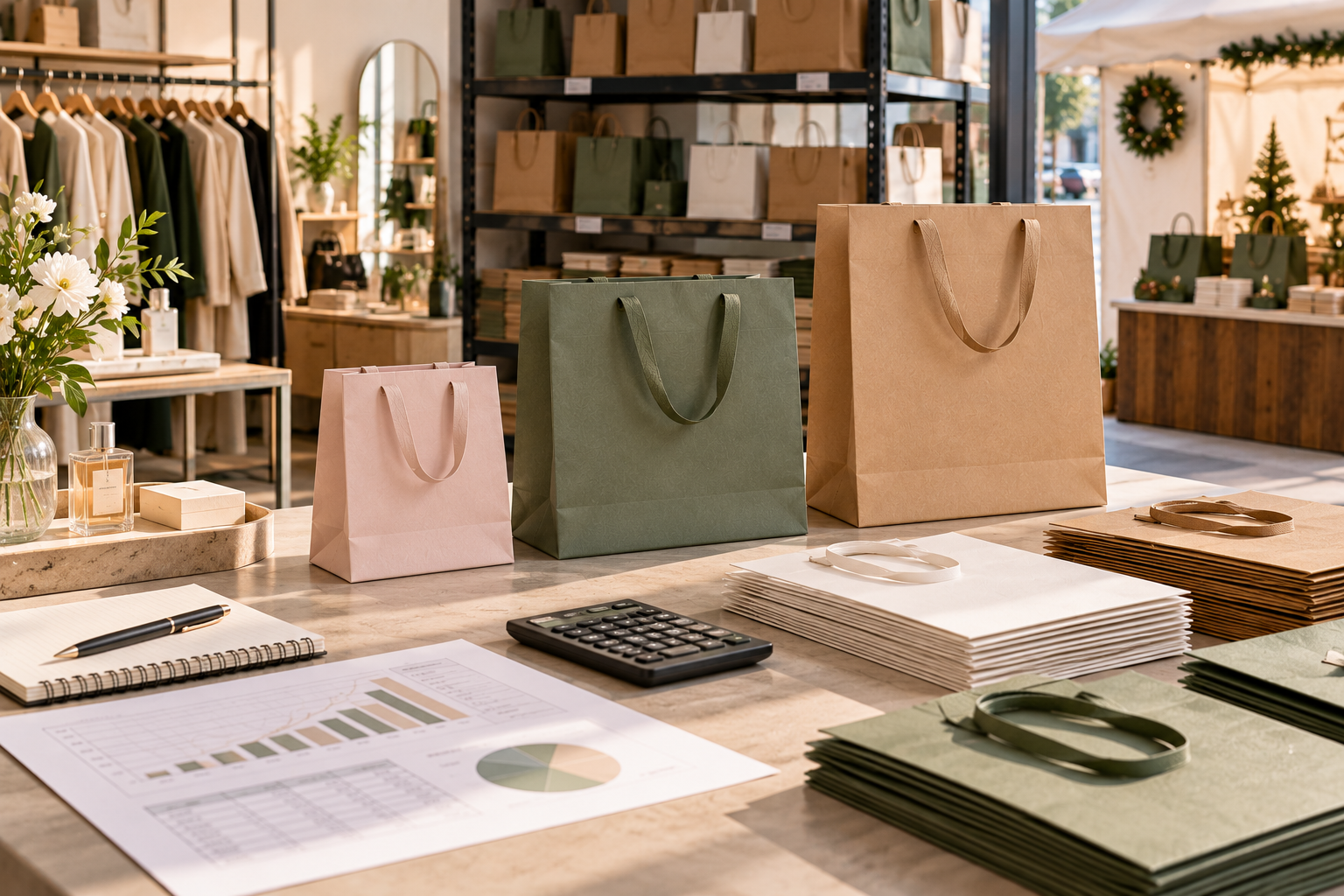
When Buying More Makes Sense—and When It Doesn't
Quantity discounts can be valuable, but only when the retailer can use the resulting inventory.
A useful planning metric is months of supply:
Months of supply = Bags ordered ÷ Expected monthly bag usage
This calculation is intentionally simple. It does not account for seasonal spikes, promotions, multi-store inventory, or unexpected demand changes.
Those factors should be considered before selecting a production quantity.
Three situations illustrate how the decision can change.
A new boutique testing its first branded bag
The business has limited sales history and may still change its logo or product assortment. A smaller order provides an opportunity to evaluate the bag before committing to a longer inventory period.
An established specialty retailer
The store has predictable demand and an approved design. Larger quantities may reduce purchasing frequency and improve per-unit economics, provided storage and cash requirements are manageable.
A seasonal pop-up operation
Demand may be concentrated in a short period. Ordering substantially more bags than expected sales require can leave the business with inventory that has limited use after the event.
In each case, the best order size depends on the role of the packaging in the business, not simply the supplier's largest discount tier.
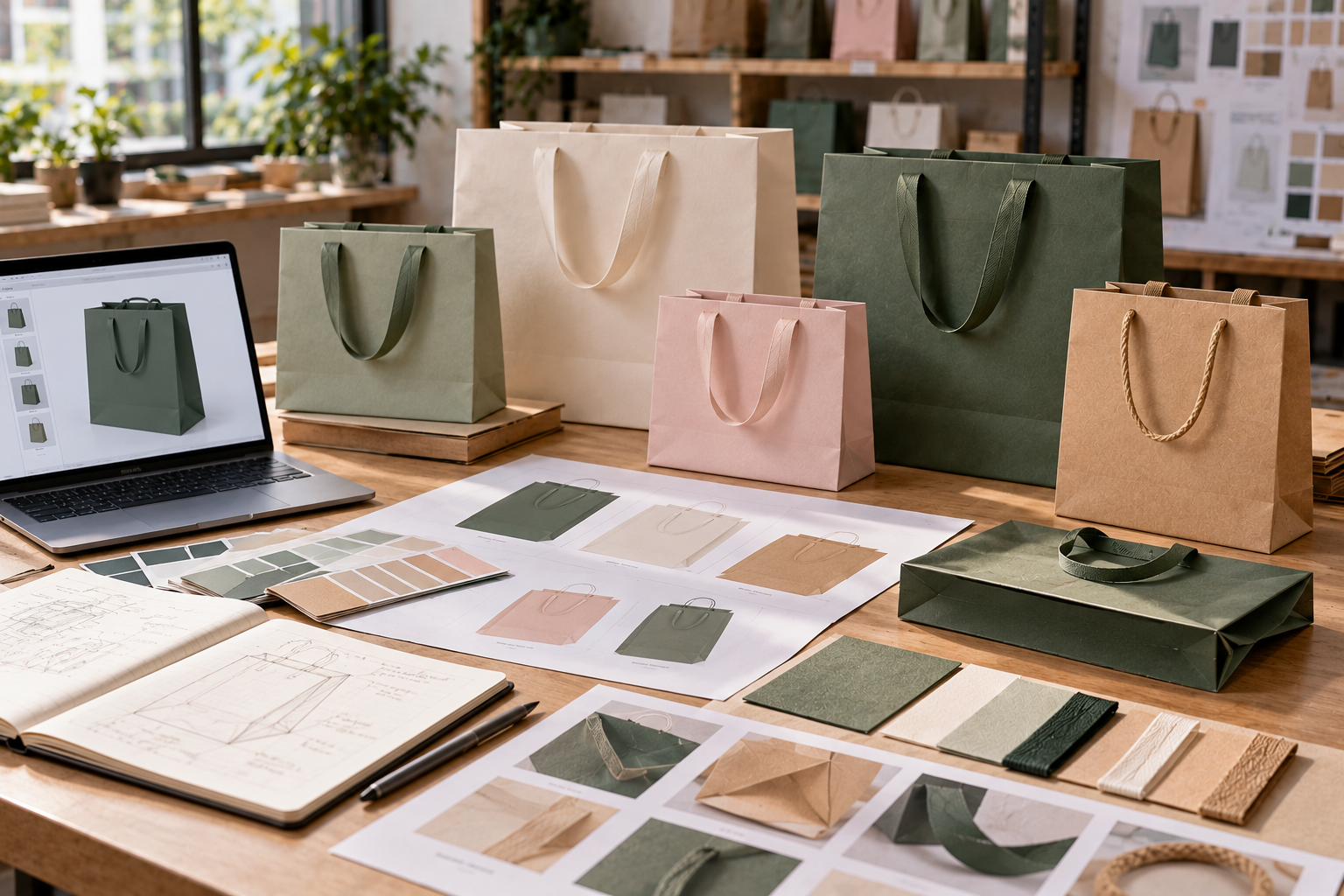
A Sample Can Protect More Than Print Quality
Before approving a large order, the buyer should understand what the supplier's sample or proof actually demonstrates.
A digital proof can confirm artwork layout, wording, and placement. A physical sample can reveal issues that are difficult to evaluate on a screen, such as handle comfort, folding behavior, surface finish, and how the bag performs when loaded.
These checks are important because rejected or unusable bags change the real cost per usable unit.
For example, an order with an attractive price becomes less economical if some bags cannot be used due to a printing or construction defect.
The buyer should agree on specifications, inspection expectations, and approval requirements before production.
Dylign's shopping bag ordering process includes a 3D preview, proof approval, and custom sample option. Its product page also provides configurable landed pricing based on selected specifications.
How to Compare Shopping Bag Quotes More Effectively
Rather than asking each supplier for the cheapest custom shopping bag, prepare one clear specification and request comparable quotations.
The specification should identify the finished size, material, paper weight, printing requirements, handles, finish, quantity, and delivery destination.
When reviewing responses, separate the following:
Cost Component | Question to Ask |
|---|---|
Manufacturing | What specification is included in the quoted unit price? |
Quantity | How do costs change between order tiers? |
Artwork and tooling | Are setup, proofing, or finishing charges included? |
Freight | Is delivery to the final destination included? |
Import costs | Which charges and responsibilities apply? |
Samples | Is a physical sample available before production? |
Quality | How are approved specifications and defects handled? |
This approach makes the trade-offs easier to understand and reduces the risk of selecting a quote for a product that does not meet the business's needs.

What This Means for Retail and CPG Brands
For procurement teams, the lowest unit price should be considered alongside total delivered cost and inventory exposure.
For store operations, the bag must fit common purchases and work reliably at checkout.
For brand teams, printing and finish choices should support the retail experience without introducing unnecessary complexity.
These perspectives are connected, but they do not always lead to the same preferred option.
A more useful purchasing decision considers all three before committing to production.
Common Questions About Custom Shopping Bag Costs
How much do custom shopping bags cost?
Pricing varies with bag size, paper weight, construction, artwork, finish, order quantity, and shipping. A quote based on the actual specification and destination is more useful than a generic average.
Are custom printed shopping bags cheaper in bulk?
Larger quantities often reduce the manufacturing price per unit. However, buyers should also consider total order value, storage requirements, expected demand, and the risk of unused inventory.
Are reusable shopping bags always more cost-effective?
Not necessarily. A bag that customers can reuse may provide additional utility, but the value depends on its durability, cost, and actual reuse. Paper bags should not be assumed suitable for unlimited repeated use.
How does shipping affect custom shopping bag prices?
Shipment weight, carton dimensions, delivery speed, destination, and purchasing terms can change the delivered price. Buyers should compare total landed costs when evaluating suppliers.
Final Thoughts
Custom shopping bag purchasing is a balance between cost efficiency and flexibility.
A larger order may deliver a lower price per bag, but it also increases inventory commitments. Heavier materials and elaborate finishes may improve the desired presentation, but they should be selected for a clear purpose. Freight and quality requirements can change the economics of an otherwise attractive quote.
The most useful purchasing decision is based on the cost of receiving and using the right bags—not simply buying the largest quantity at the lowest advertised price.