

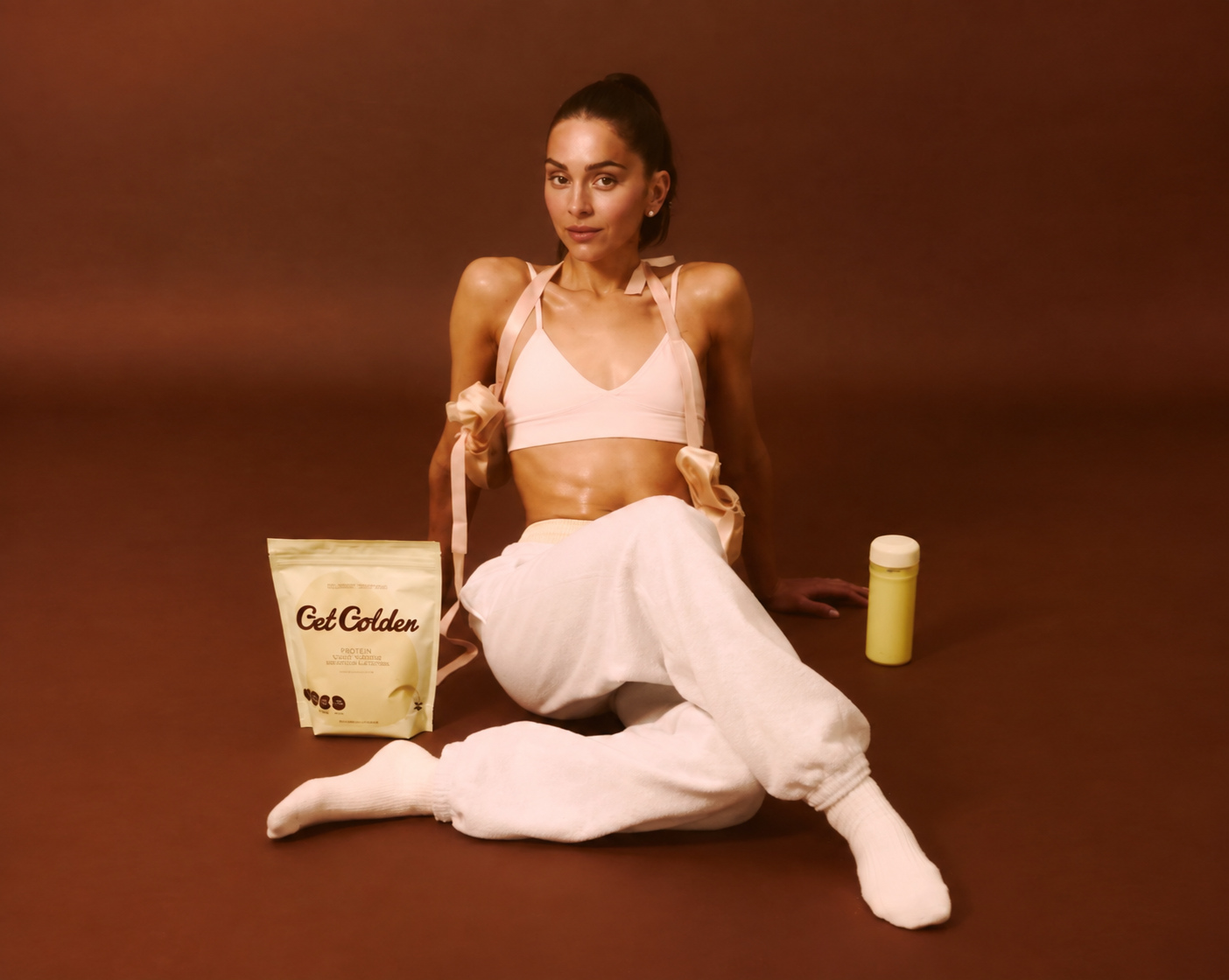
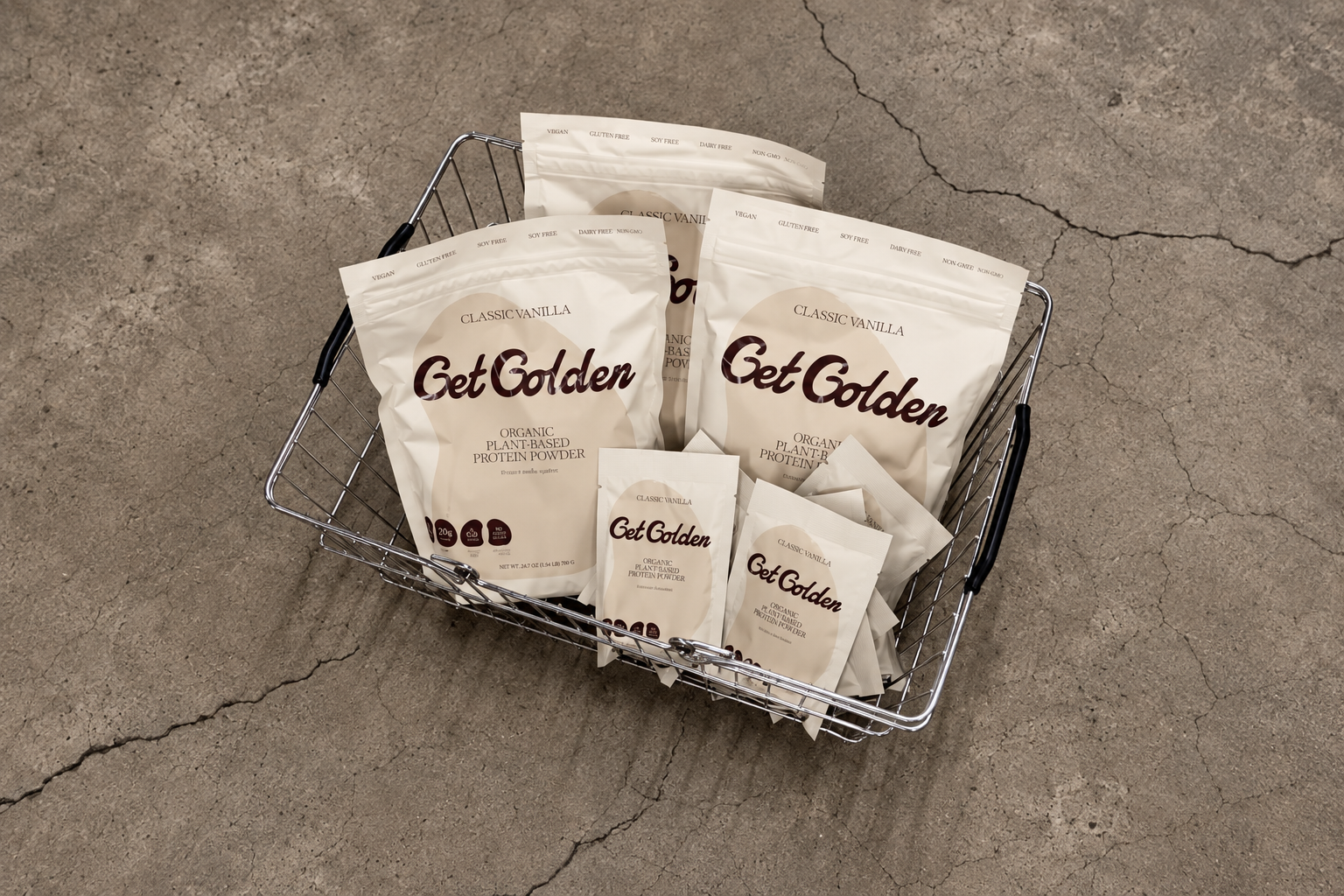
The Brand
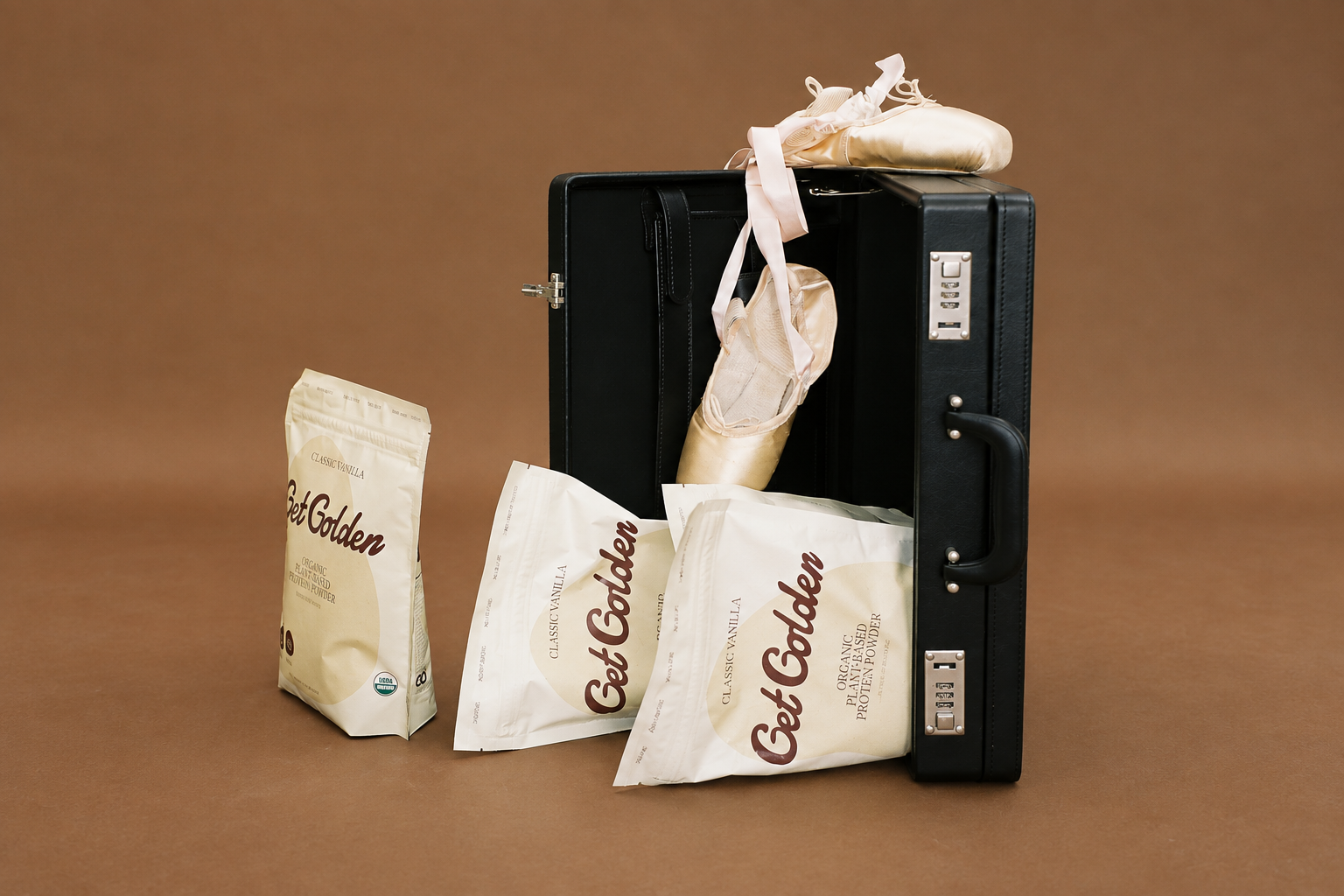
Get Golden makes wholesome, nutrient-dense snack bars and energy treats for active lifestyles, sold in individual flat pouches. Expanding into retail meant adding a second layer of packaging: a multi-pack display carton to hold those pouches on shelf.
The Challenge
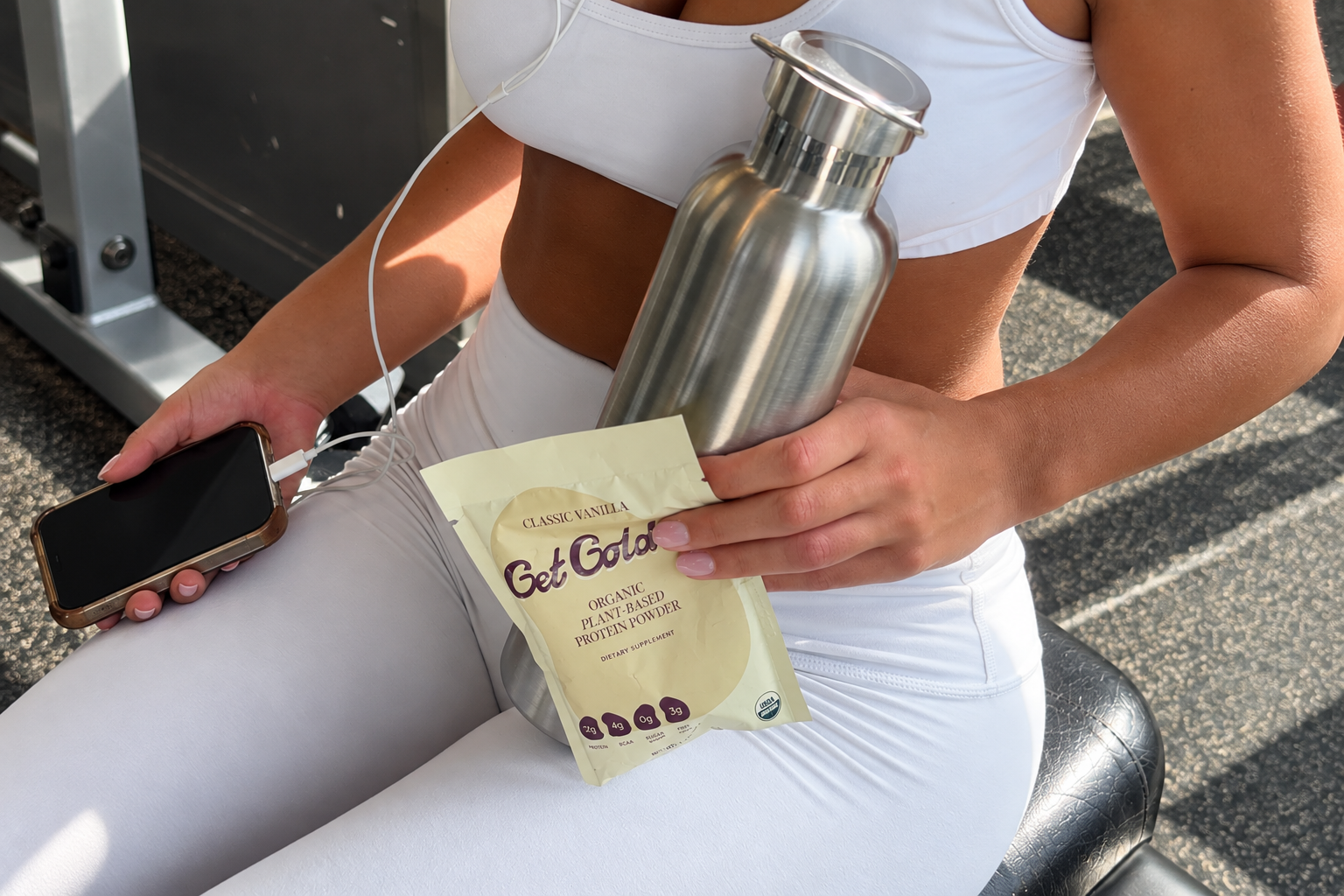
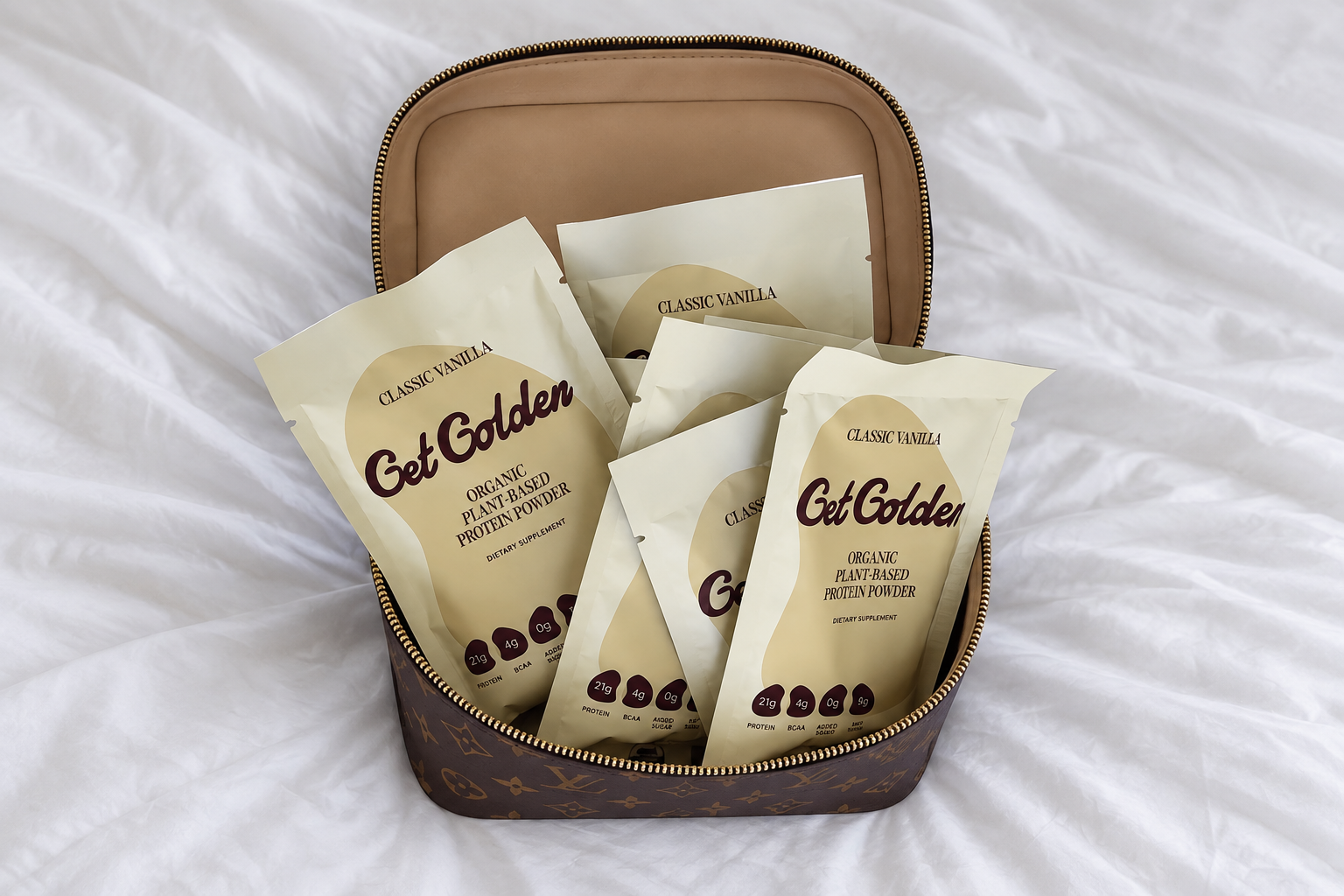
At that point the product dimensions were not finalized, so there were no dielines, no CAD files and no specs to work from. What arrived instead was an envelope of physical sample pouches.
That is a better starting point than it sounds, because a flat pouch drawing would have produced the wrong carton anyway. A filled pouch is not flat. It bulges, and a stack of them accumulates that volume in a way no drawing of an empty pouch accounts for. Build the carton too tight and the side panels bow while restocking becomes a fight. Build it too loose and the pouches slump, so the display looks half empty on a shelf where it is supposed to look full.
The Process
We measured the filled pouches, calculated the stacked volume, and set the carton's dimensions and internal clearances against how the product actually behaves rather than how it is drawn.
The brief stopped at dimensions, but the carton had a second job to do. Looking at the flat pouches and where the brand sits, we proposed a spot UV treatment on the logo on the front of the carton. It is a small addition and it does a specific thing: it gives the front panel a point of focus and a change in surface, which is what separates a carton that holds product from a carton that presents it.
The Result
A counter display carton with rigid side panels, no slumping, and a fit that makes restocking straightforward. The whole structure was reverse-engineered from physical product, with no technical drawings involved at any point.
Get Golden started with an envelope of pouches. What came back was a retail-ready carton that looks like it was planned around the product from the beginning, because it was.
“Dylign made the display feel like part of the brand—not just something that held the product.”

