Packaging rarely fails because one step is wrong. It fails between the steps.
The designer works from an outdated dieline. A material changes after the sample is approved. The first 500 packages look right, but the next production method cannot reproduce the same finish. A new artwork version reaches production while old packaging is still sitting in inventory. Or a brand spends weeks coordinating design, quoting, proofing, manufacturing, and freight across different suppliers before a single finished package arrives.
Every vendor did their job. The packaging program is still a mess.
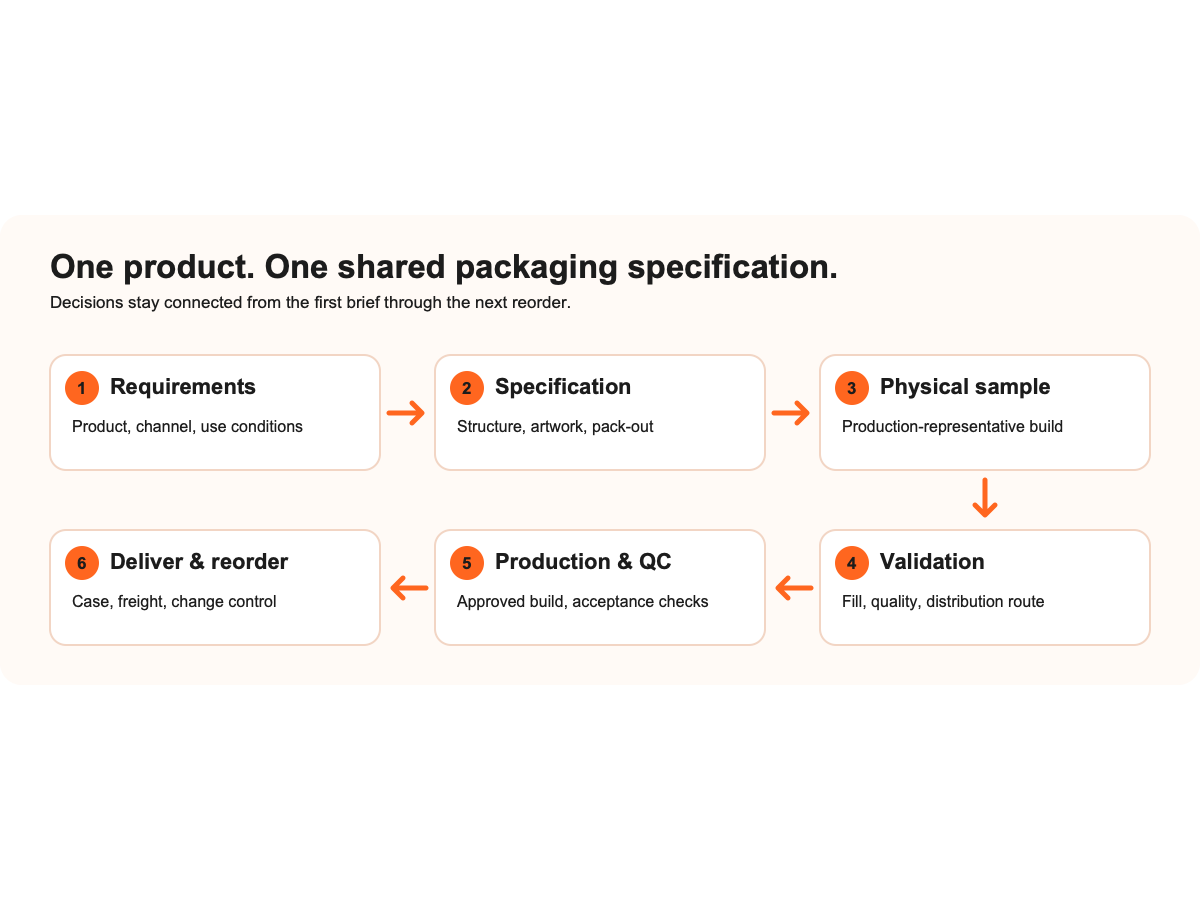
Integrated packaging solutions connect the decisions from first idea through production and delivery, so nobody rebuilds the same information at every handoff.
Growing CPG brands need one more thing: a process that works while demand is still uncertain, and keeps working once it is not.
A packaging system that works for the first 100 units but has to be replaced at 10,000 is not truly end-to-end. Neither is a large-volume production model that forces a new brand to commit to more packaging than it can reasonably use.
Start small, verify the package, produce what you need, then scale without starting over.
What Are Integrated Packaging Solutions?
Integrated packaging solutions coordinate the decisions required to move a package from concept to commercial use.
Depending on the product, that can include:
packaging format and structural design;
dimensions and material selection;
artwork and production files;
printing and finishing;
pricing and quantity decisions;
digital proofs and approvals;
physical samples;
converting and manufacturing;
quality control;
packing requirements;
inventory planning;
freight and delivery;
and the transition from short runs to larger production volumes.
A supplier can offer design, printing, boxes, pouches, logistics and warehousing, and still run all of it as separate departments with separate files, separate approvals and repeated handoffs. A long service list is not integration.
Integration means the package you priced is the package you designed, the sample reflects the production spec, what goes to press matches the approved proof, and scaling up keeps the decisions that made the first run work.
Where Traditional Packaging Workflows Break Down
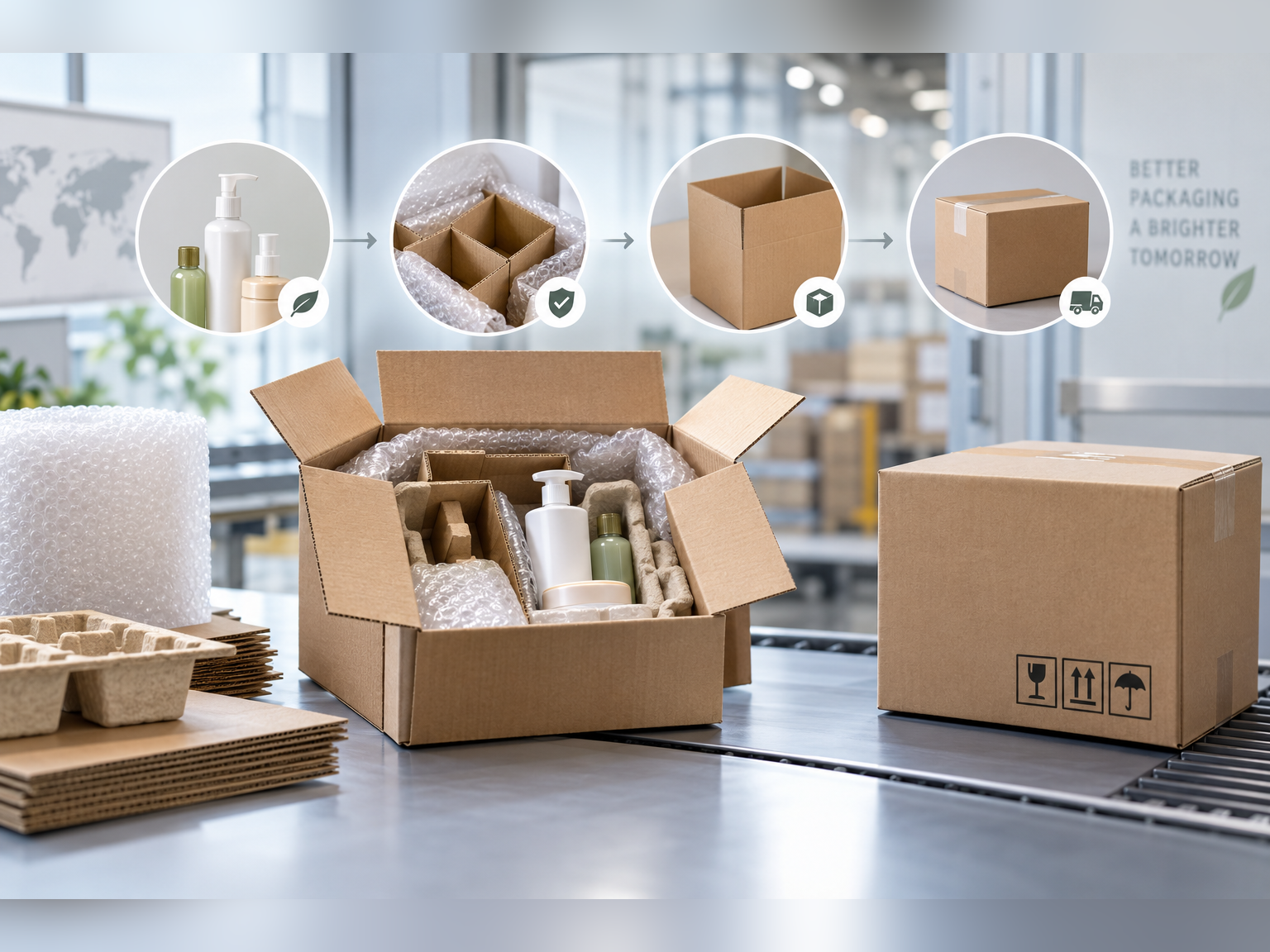
A conventional packaging process often looks simple on paper:
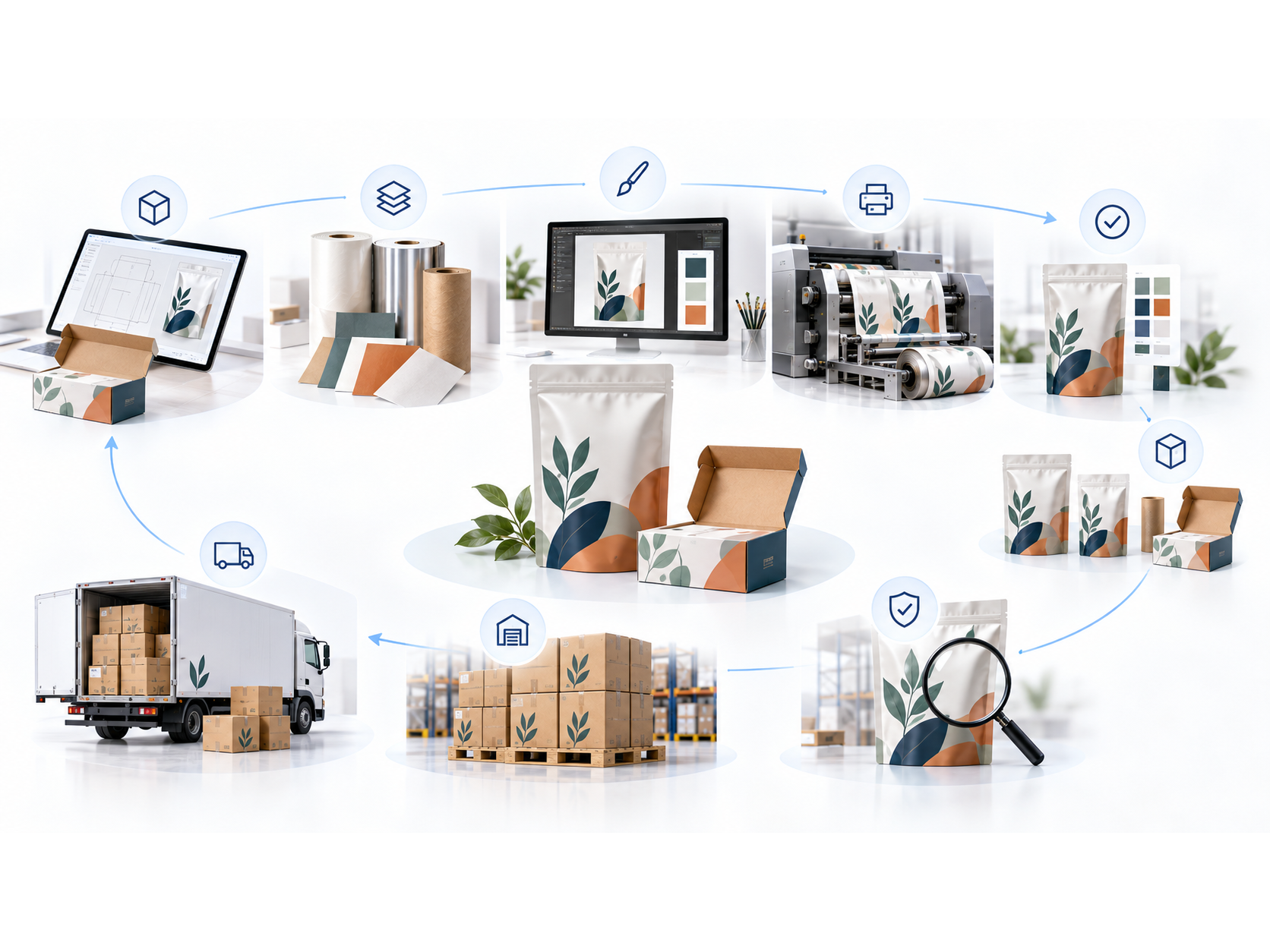
design → quote → proof → sample → manufacture → ship
In practice, each arrow can hide another handoff.
The designer needs a dieline from the supplier. The supplier needs specifications before quoting. Procurement compares prices that may not include the same freight assumptions. Artwork is sent back for adjustment. A sample is made. A finish changes. The file is revised. Production begins. Freight is quoted separately.
Every transfer creates opportunities for delays or misunderstandings.
Consider a few common examples:
The artwork is right, the structure moved
You approve artwork on a 5.5-inch carton. Two weeks later the fill volume changes and the carton goes to 5.8. The artwork gets repositioned, re-proofed and re-approved, and the four weeks you gained by starting early are gone.
The quoted price is not the final cost
A low production quote looks attractive until tooling, finishing, freight, duties, or delivery are added later.
The sample is not representative of production
A visually attractive prototype may answer branding questions while telling the brand little about the materials, printing, feel, or construction of the real commercial package.
The short run becomes a dead end
The brand successfully tests 500 units, then discovers that the next supplier requires new tooling, different materials, new proofs, and another round of packaging development.
None of this is because packaging is complicated. It is because the decisions are disconnected.
Ignore the capability list for a moment and follow the information instead.
Packaging stage | What needs to be controlled | What happens when it is disconnected |
|---|---|---|
Product brief | Product, channel, quantity, cost target and performance needs | Packaging development starts against incomplete assumptions |
Structure | Format, dimensions, dieline, material and pack-out | Artwork or production is built around the wrong package |
Design | Artwork, copy, graphics, finishes and identifiers | Multiple revisions circulate without clear ownership |
Pricing | Specification, quantity, production and shipping assumptions | Buyers compare numbers that do not represent the same delivered product |
Proofing | Approved artwork and production details | Manufacturing uses a file different from the one stakeholders reviewed |
Sampling | Production-intent material, print and finish | A prototype passes review but the commercial package looks or behaves differently |
Production | Approved specification and quantity | Changes enter manufacturing without controlled review |
Delivery | Freight method, destination and timeline | The apparent unit cost changes significantly after logistics are added |
Scale-up | Process, material, quality and color bridge | The successful short run must be redeveloped for higher volumes |
A provider does not need to own every machine in those stages, but someone has to connect them.
Suppliers use "integrated", "end-to-end", "complete" and "turnkey" more or less interchangeably, so the label tells you very little. Two questions tell you more. Can this packaging move from idea to finished order without recreating the same decisions? And can the same model still work after demand becomes predictable?
The second question is where short runs stop being a purchasing detail.
Short Run Packaging Is More Than a Small Order
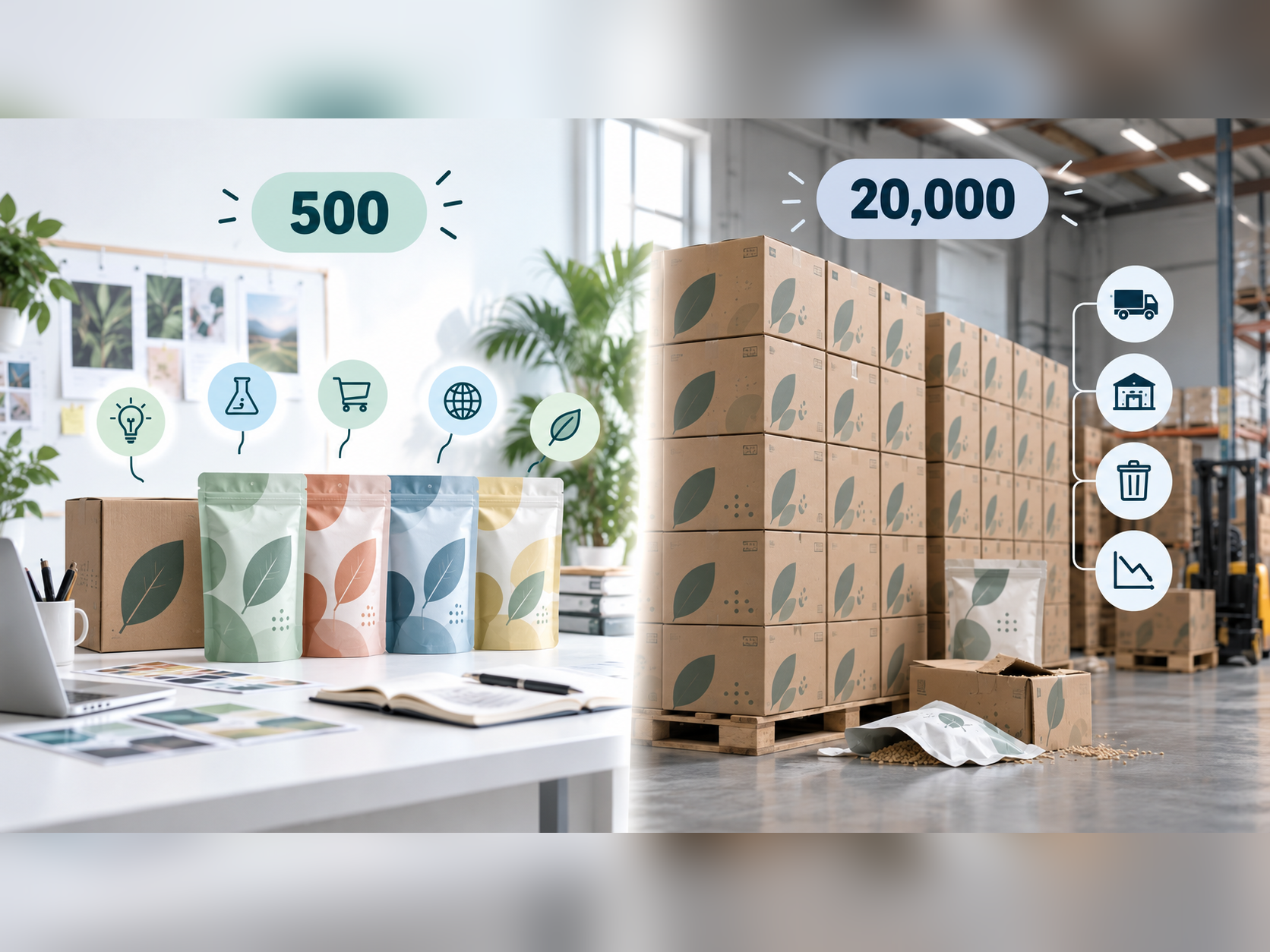
Short-run printing gets discussed as an MOQ problem, which misses most of what it is for. A short run is a way to buy information before you commit inventory.
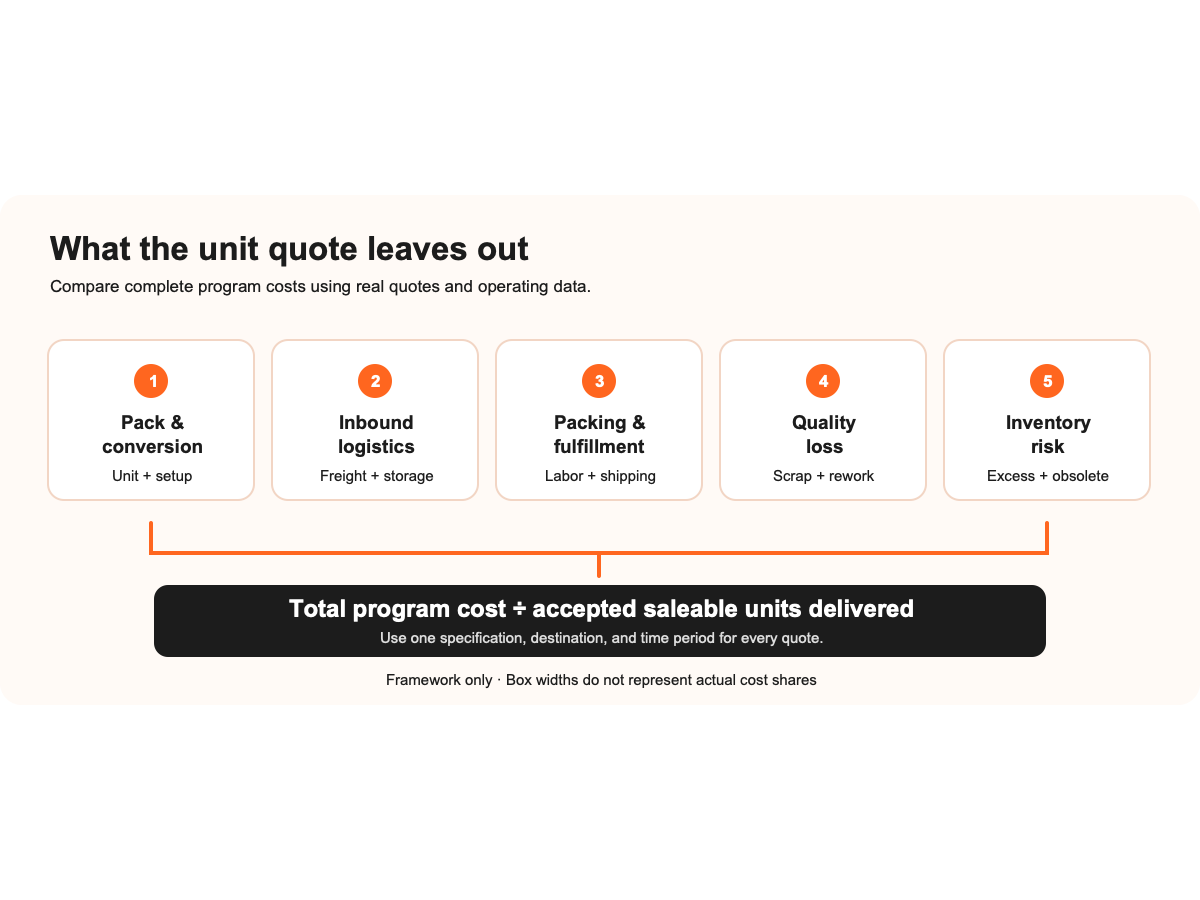
The reason it pays is that unit price is not the cost.
usable packaging cost = production + setup + tooling + freight + expected waste + obsolete inventory risk
Most quotes only show you the first term.
Suppose one option costs less per pouch but requires 20,000 units. Another costs more per pouch and lets you launch with 500. If the artwork, the flavor, the retailer program or the forecast is still being tested, the second option carries far less risk.
That is worth doing for a new SKU, a redesign, a seasonal run, a retailer-specific version, a language variation, or bridge inventory while artwork changes.
The question is what happens after the 500.
The Real Test: Can a Short Run Scale?
A low MOQ solves the first order. The hard part is the second one.
When production volume changes, several things may also change:
Decision | Early or short run | Scaled production |
|---|---|---|
Quantity | Minimize inventory exposure | Optimize repeat production economics |
Print process | Prioritize flexibility and versioning | Optimize consistency and volume economics |
Tooling | Keep commitments appropriate to early demand | Introduce production tooling where needed |
Materials | Confirm product and visual requirements | Lock repeatable production specifications |
Color | Establish the approved target | Maintain target across repeat runs or process changes |
Quality | Identify critical defects | Formalize production acceptance limits |
Packing | Confirm fit and usability | Confirm production-line performance |
Logistics | Optimize the first delivery | Optimize freight, replenishment and inventory |
Validation | Learn whether the package works | Confirm the production-intent package still works |
Make the first 500 in a way that teaches you how to make the next 50,000. A short-run supplier can do the first half of that sentence. Not all of them can do the second.
What Integrated Packaging Looks Like in Practice
From the buyer's perspective, integration should be visible.
You should not need one workflow to choose the packaging, another to obtain the dieline, another to visualize the artwork, another to request pricing, and another series of emails to figure out what will actually be manufactured.
A more connected journey looks like this:
choose the format → configure the specifications → visualize the package → understand the landed cost → review the production details → approve the proof → verify a physical sample → move into production → deliver the finished packaging → increase volume when demand grows
Each step should preserve information from the previous one.
Operationally that means fewer handoffs, fewer duplicate files and fewer places for a spec to drift. Commercially it means the design, the quantity, the price and the sample are one conversation instead of four, so the decisions get made earlier.
For a growing CPG brand, that is especially valuable.
You may not know today whether a new SKU will sell 500 units or 500,000. Your packaging system should not require you to know.
The Trade-off nobody mentions
Integration has a cost. You are concentrating more of the project with one party, which means less price tension on any single line item and more exposure if that party gets something wrong. The trade is fewer handoffs against fewer independent checks.
For a brand running five formats with two people, that trade usually makes sense. For a brand buying one high-volume SKU where half a cent matters, it may not.
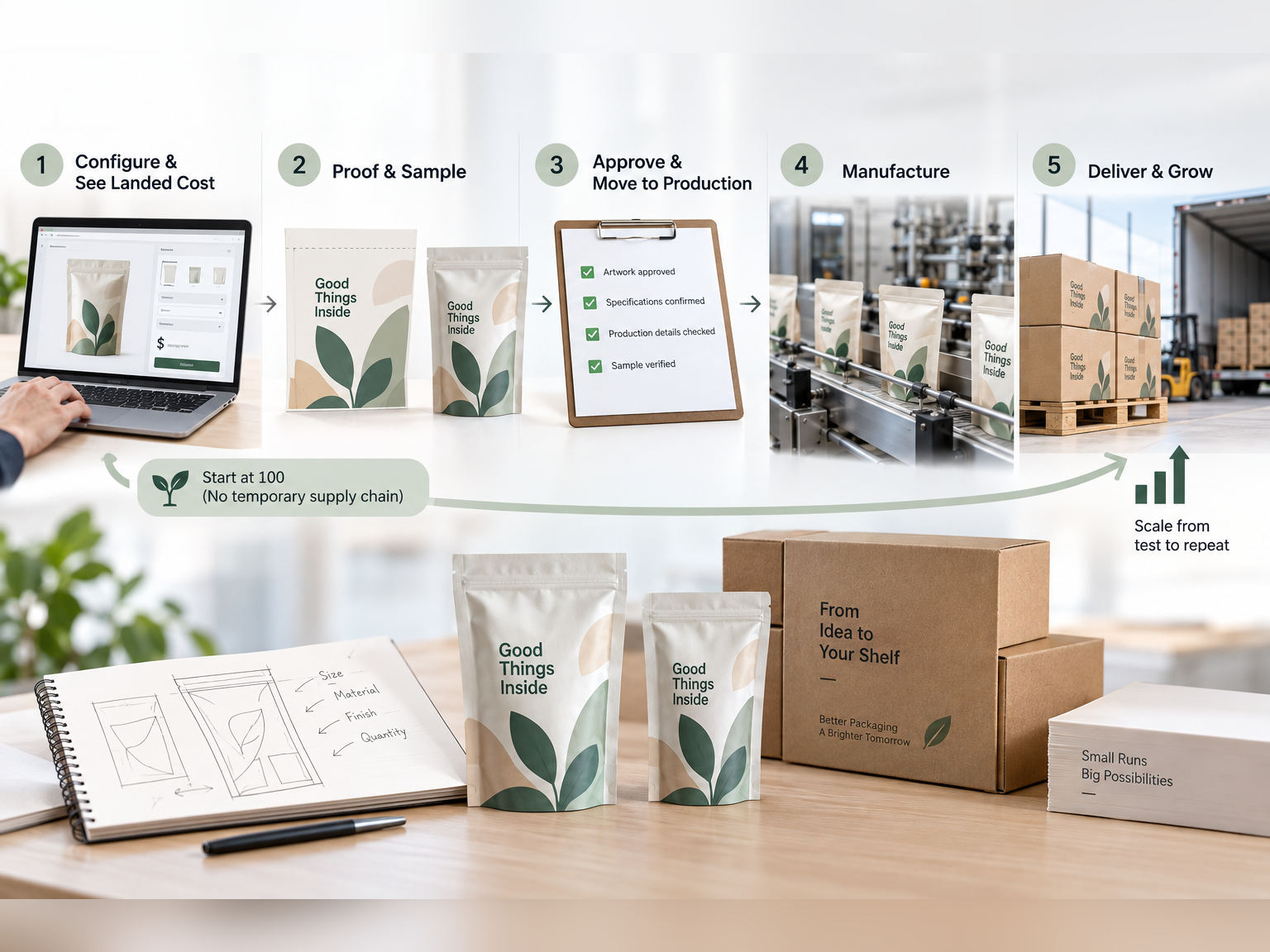
How Dylign Connects the Packaging Journey
Dylign exists for that problem: getting a growing brand into custom packaging without building a fragmented sourcing process first. Configuration, 3D design, landed pricing, digital approval, production samples, manufacturing and delivery run as one journey, and every product starts at 100 units.
Landed cost while you are still deciding
Packaging development usually starts with emails. Can you make this. What sizes do you have. Can you send a dieline. What is the MOQ. How much for 1,000.
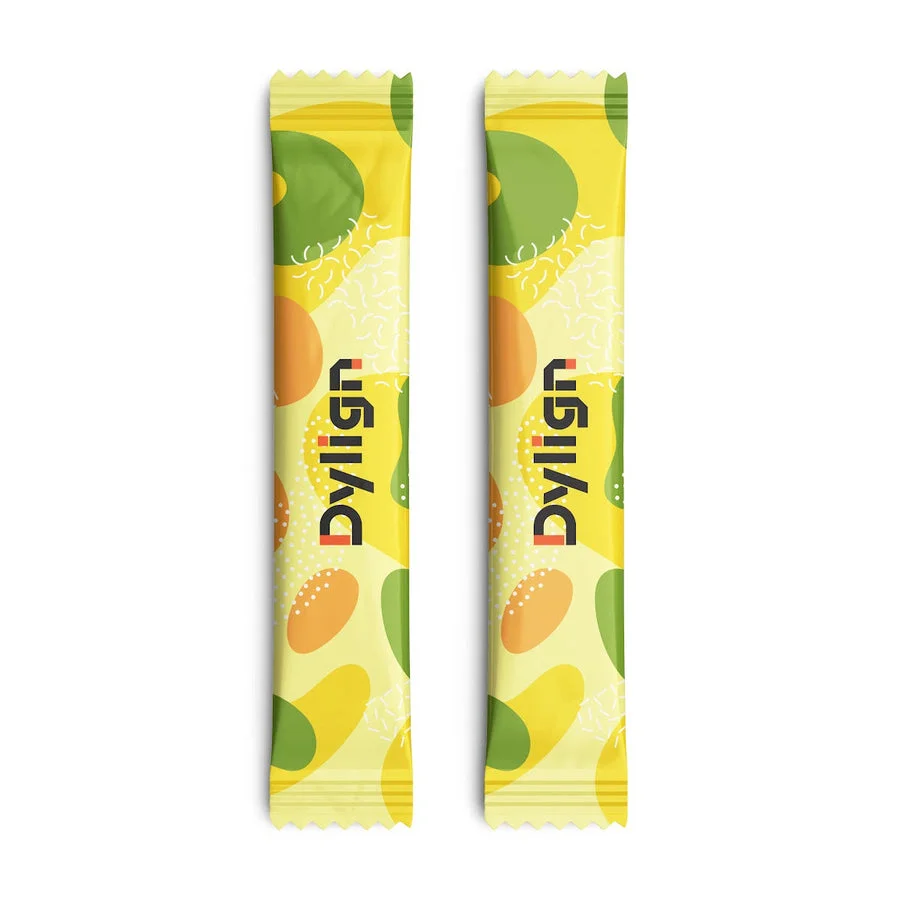
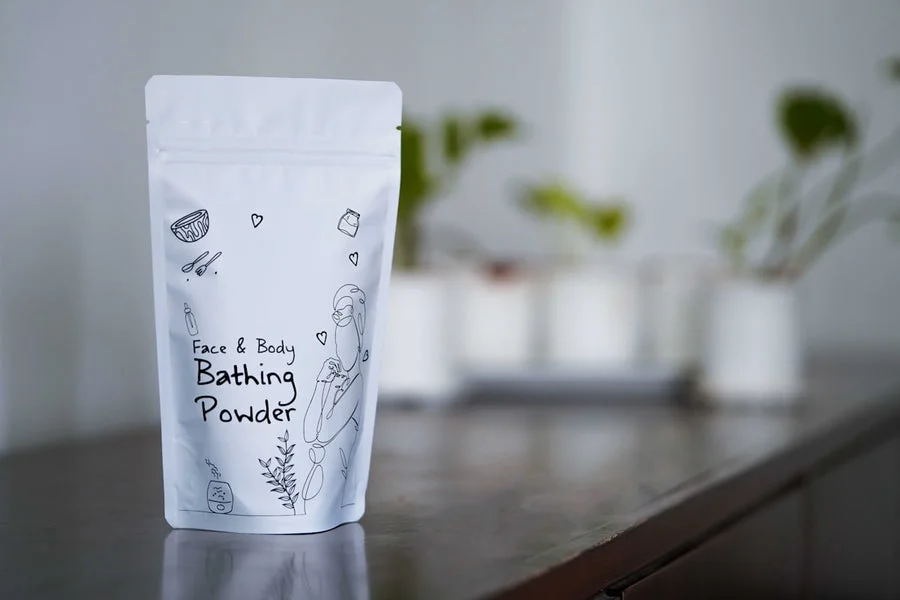
Dylign moves those decisions forward. You choose a format, configure dimensions, materials, finishes, quantity and shipping method, and the landed price updates as you go. Current formats include stand-up pouches, flat-bottom pouches, flat pouches, stick packs, folding cartons, mailer boxes and retail formats.
Landed price covers materials, printing, finishing and delivery, with taxes or duties identified separately before you order. That changes when the cost conversation happens. Instead of finalizing a design and then finding out whether the delivered package fits the budget, you can see the number while the specification is still moving.
For a short-run program that matters more than usual, because quantity is part of the experiment. What does 100 look like. What about 500. What happens to the unit economics when this SKU starts working.
A proof and a sample that show what production will do
A flat artwork file does not tell you much about a finished package. Dylign's 3D workflow lets you configure the package and preview it in the browser before ordering. If you already have artwork or a dieline, upload those instead of rebuilding the project.
Then the proof. Once artwork is submitted, the production details get checked page by page before manufacturing starts, so the package being made is the package you approved.
Then the physical sample, which answers a different set of questions. How does the material feel. Is the package the right size for the actual product. Does the pouch open and close the way you expect. Does the printed result match what everyone signed off on screen. Dylign's samples use the same design, materials, finishing and production process intended for the bulk order, within normal manufacturing tolerances.
Three checks, each one closer to the real thing than the last. A sample should tell you what production will do, not what a presentation can do.
One order, not one project
After approval the workflow should get simpler. Dylign connects the approved order to manufacturing and delivery, and you pick the shipping method while seeing what it does to the landed cost.
In a fragmented program that continuity is where things go wrong. The supplier quoting the job may not be the one manufacturing it. Freight gets estimated later. Files get resent to production. Approvals live in different inboxes. The practical value of integration is how many times you have to explain the same packaging project.
Start at 100 without building a temporary supply chain
A low MOQ matters most when it connects to what comes next. Dylign starts every product at 100 units and runs the same platform up from there, so a 100-unit test run is the beginning of a path into larger repeat production rather than a separate packaging system.
That gives you permission to learn before demand is certain. Test the flavor, the SKU, the format, the artwork. Put the product in customers' hands. Then increase the packaging commitment once the business knows more.
Boxes and pouches are the easy part. The work is everything between the idea and the finished package on a pallet, and that is what we have been putting into one journey.